Tips for Everyday Battles with Sensory
Recognizing the signs of sensory processing challenges can be difficult, but understanding how to support a child who struggles with sensory input makes a big difference. My friends Sharla and Heather, authors of Sensory Processing Explained, shared these practical ideas with me, and I think you’ll find them helpful.

10 Things You Can Do to Make Each Day Easier for a Sensory Child
Children with sensory needs can find everyday tasks—like getting dressed, brushing hair, or tolerating certain textures—overwhelming. For example, our son avoided jeans for years and preferred soft joggers because of their texture. That’s okay: we found what worked and stuck with it. As a parent or caregiver it’s hard to watch your child struggle, so here are practical strategies to reduce meltdowns and lower daily stress.
Using these approaches can help your child feel calmer, more regulated, and better able to participate in daily routines.
Practical tips for everyday sensory challenges
- Use a visual schedule. A clear visual plan helps children know what to expect and eases transitions. For many kids, breaking tasks into smaller steps reduces anxiety and prevents meltdowns.
- Give advance warnings before transitions and allow extra time for your child to adjust. A few minutes’ notice can make a big difference.
- Offer scheduled sensory breaks throughout the day. Short, targeted activities provide the sensory input your child needs and can serve as bridges between tasks.
- Keep a Sensory Triggers Log. Tracking situations, environments, noises, or textures that provoke distress helps you anticipate triggers and adapt the environment to reduce problems.
- Build an emotional vocabulary. Teach words for feelings so your child can describe what they’re experiencing instead of acting it out.
- Teach calming breathing techniques. Simple, steady breathing exercises are a portable tool a child can use whenever they feel overwhelmed.
- Provide sensory activities and heavy work opportunities during the day. These supports can reduce overall reactivity and often improve sleep at night.
- Be flexible about clothing. Let your child wear what’s comfortable while you investigate why certain fabrics or seams bother them. Solving the root cause helps you find workable solutions rather than creating daily battles.
- Try a vibrating toothbrush. Adding gentle oral input can decrease oral sensitivity over time and reduce resistance around toothbrushing and eating.
- Teach your child about sensory processing and the eight sensory systems. When children understand their own sensory needs, they can better identify and communicate what helps them stay regulated.
Bonus tip: Carry a pack of Post-It notes to cover automatic flush sensors in public restrooms. That simple step can prevent sudden loud noises from startling a child.
Sensory Resources for Actionable Strategies
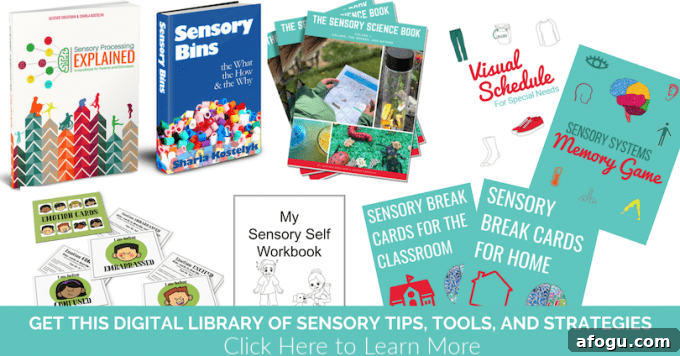
As a therapist and affiliate, I’ve reviewed the Sensory Essentials Collection and found it full of useful resources. The digital collection includes a specialized visual schedule, sensory break cards, a sensory triggers log, activities to teach kids about sensory processing, emotion cards, and other practical tools to manage everyday sensory challenges.
I hope these tips help make tomorrow morning—and many other moments—a little smoother in your home.