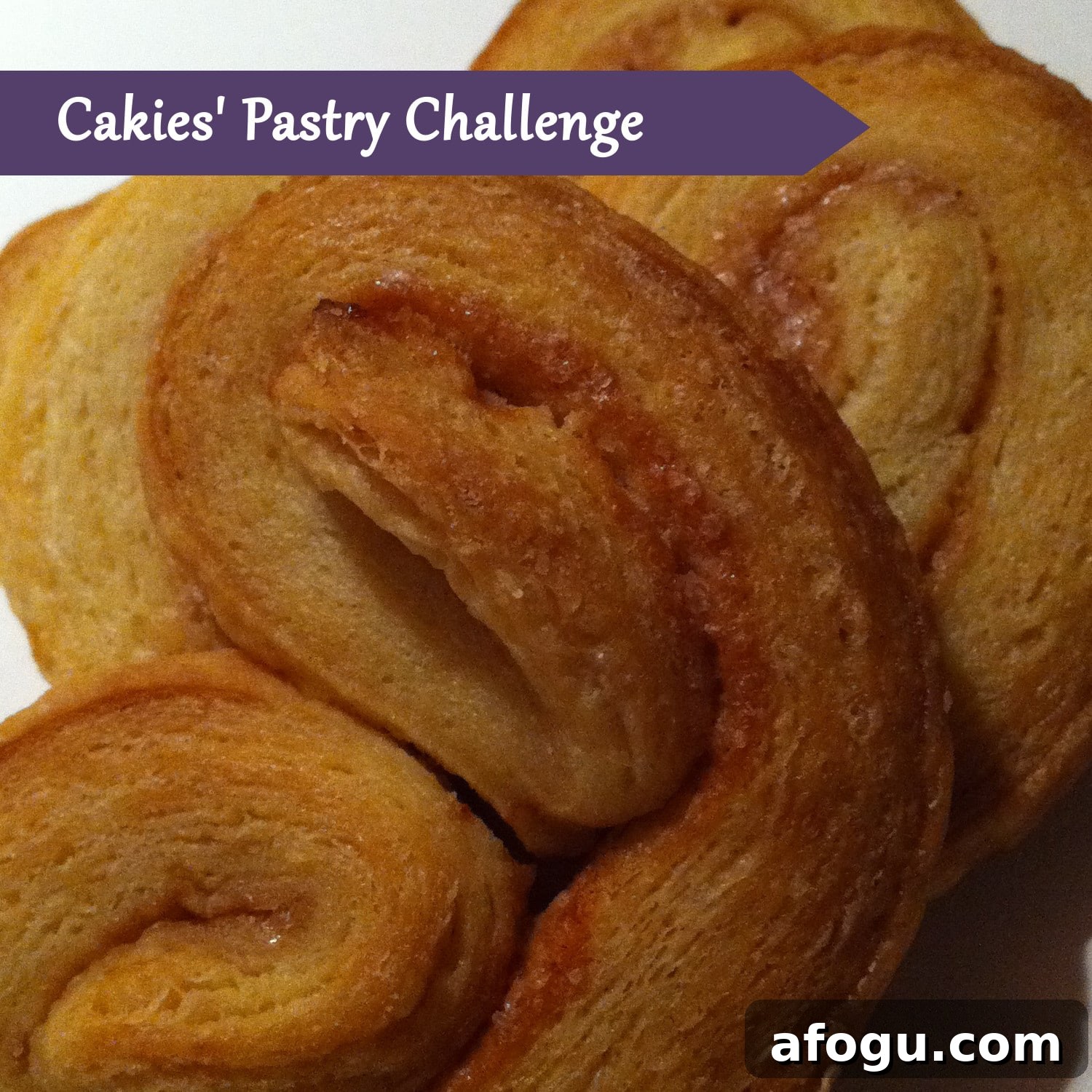
At our third pastry lesson we focused on puff pastry, a light, flaky dough created by repeatedly folding and rolling layers of dough and solid fat. This lamination produces the delicate, paper-thin layers that puff up during baking.
Puff pastry is versatile. It works well in savory dishes like meat pies and sausage rolls, and in sweet creations such as apple turnovers, palmiers, and vanilla slices (napoleons).
The dough handling went fairly smoothly. Between each turn the pastry needed to rest for about half an hour. While it rested, we practiced piping techniques and prepared a basic pastry cream to fill our baked items. During the final turn the chef reminded us of an important detail he had omitted earlier: any excess flour on the dough must be completely brushed off before folding. Leftover flour between the layers can prevent the pastry from rising to its full potential. Unfortunately, I had already completed three turns by that point and likely had some trapped flour. It wasn’t catastrophic, but it was disappointing to learn that tip too late.
I shaped several items: Victoria-style pastries, a Dutch cookie called Arnhemse meisjes (girls from Arnhem), palmiers, palters, and a cream horn. Everything went into the oven without issue, but then things went sideways. We were instructed to watch one another’s trays while baking, and my partner and I managed to rescue a few pieces before they burned. Others weren’t so lucky, and many of our pastries overbaked and had to be discarded. Only the palmiers came out looking acceptable.
Fortunately, the chef allowed us to take some of his finished pieces home, so we at least got to taste the proper result and compare it to our attempts.
We walked away having learned valuable techniques and the importance of small details like removing excess flour. Next time I’ll be more vigilant with my own trays. It’s frustrating to see your work go to waste, but the lesson was worthwhile: new skills were learned, and I’m already planning many puff pastry projects to try at home.