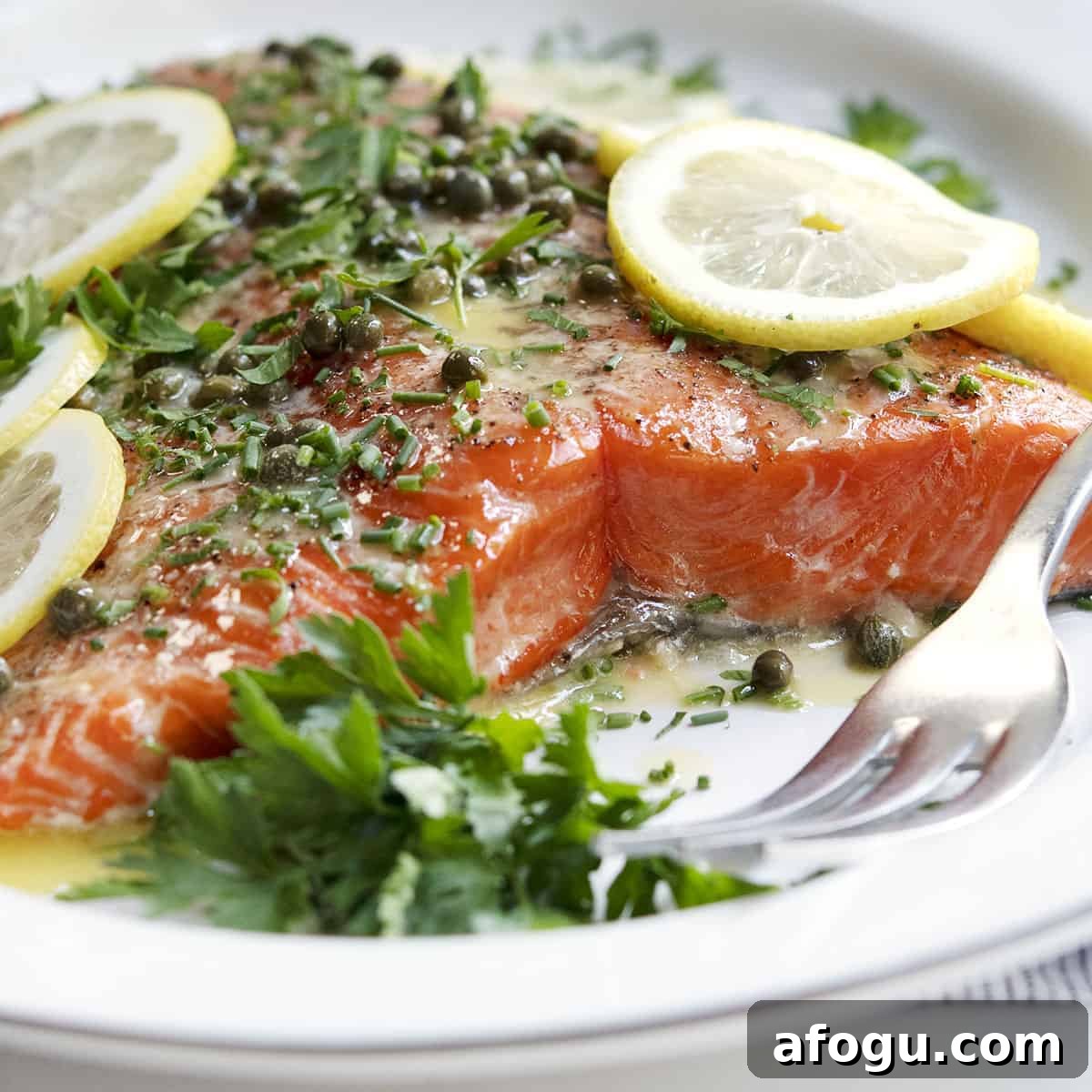
Slow roasted salmon is one of my go-to recipes. Cooking at a low temperature yields tender, buttery fillets that flake gently and stay moist. Because the oven is set low, you have a forgiving window between perfectly cooked and overcooked salmon, which makes this method ideal for everyday dinners or company.
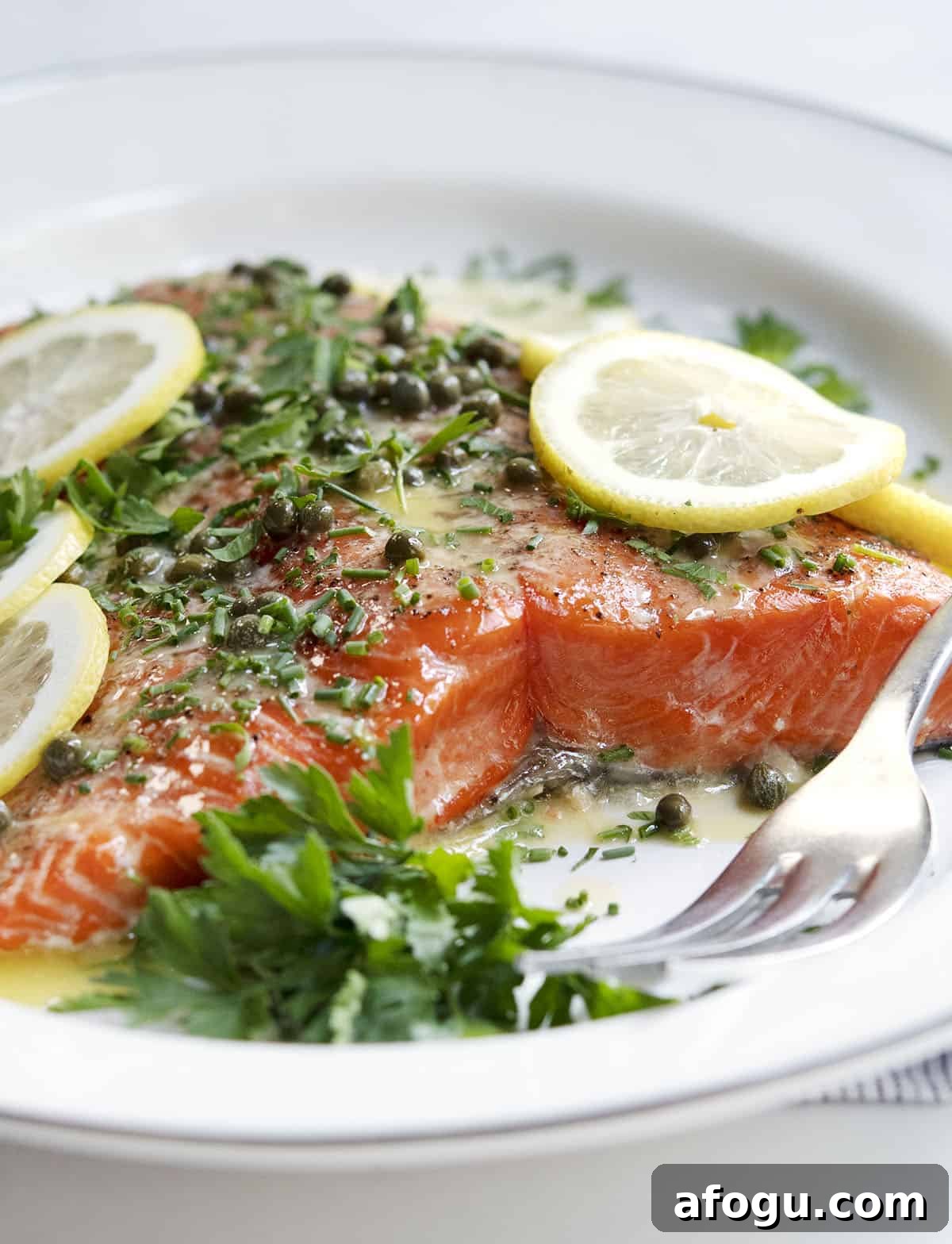
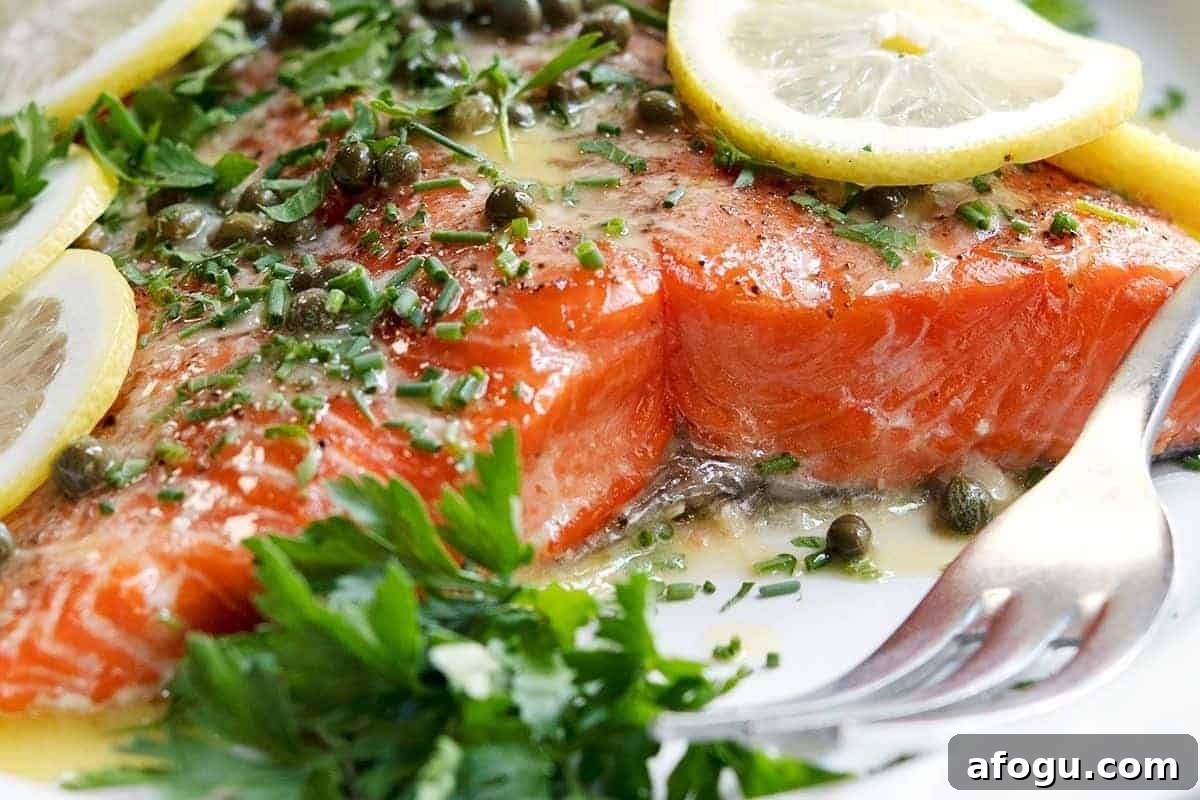
Brush the salmon with olive oil, season simply with salt and pepper, and let it roast slowly until the flesh turns just opaque. I like to finish mine with a quick lemon-caper butter and a sprinkle of fresh herbs, but this basic technique works with many finishes — try an Asian-style glaze, a spicy harissa topping, or a simple herb vinaigrette. The slow-roast method is reliable; the toppings are where you can personalize the dish.
Table of Contents
- Ingredients to Make Slow Roasted Salmon
- Salmon Cooking FAQ
- Recipe Options:
- What To Do with Leftovers
- What to Serve Alongside
- How to Make Slow Roasted Salmon
- Slow Roasted Salmon Recipe
Ingredients to Make Slow Roasted Salmon
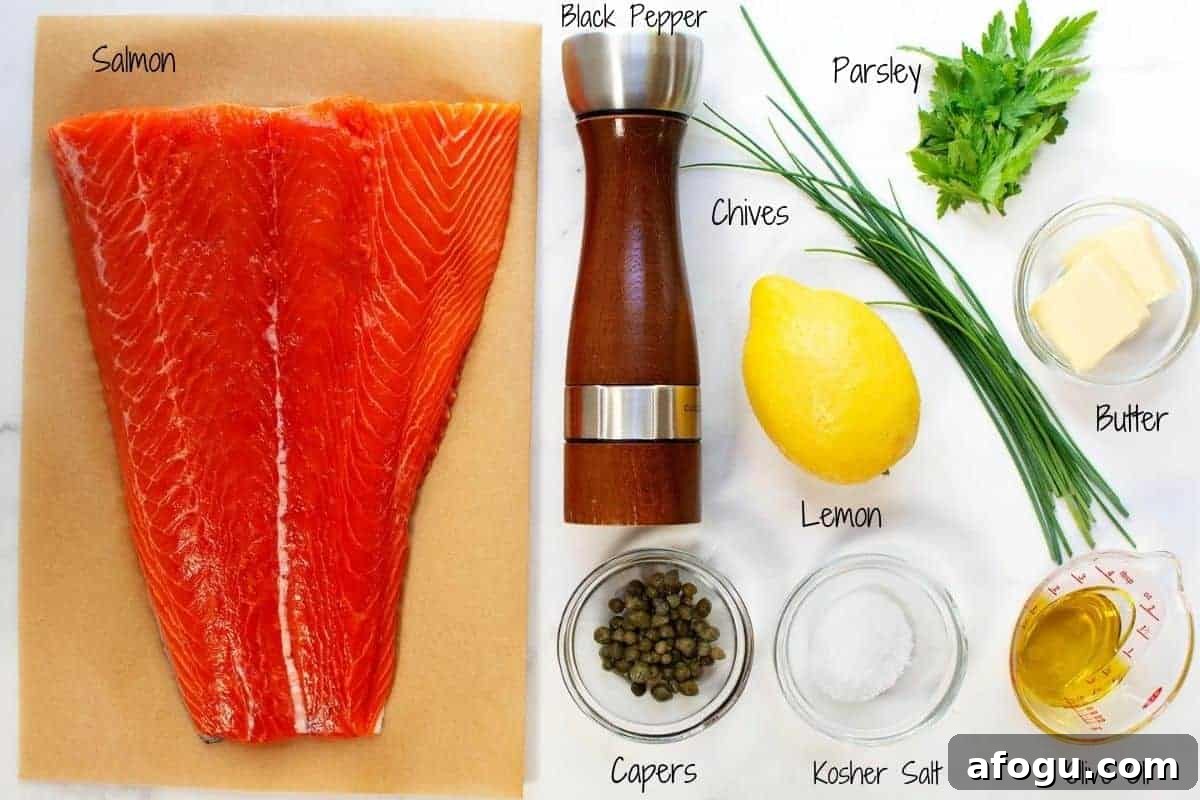
- Salmon: Choose a wild fillet with a relatively even thickness. Tail cuts work but will have thinner sections that cook faster. Good varieties include King (Chinook), Coho, or Sockeye.
- Olive oil: Extra-virgin is preferred.
- Kosher salt and freshly ground black pepper
- Butter: Salted or unsalted, whichever you have.
- Capers: Small, firm non-pareil capers, rinsed and drained, add a bright briny note.
- Lemon: One for juicing into the sauce and an extra one for serving wedges, if desired.
- Chives: Finely minced for a mild onion flavor and fresh color.
- Parsley: Flat-leaf or curly, chopped for garnish.
Salmon Cooking FAQ
Both approaches are valid. High heat (including broiling) creates a crisp exterior and cooks quickly, while low heat produces a more tender, evenly cooked fillet. Recipes range from about 200°F to 550°F depending on the desired result.
Yes — salmon can go from perfectly cooked to dry quickly, especially at high temperatures. Remember it continues to carryover cook after you remove it from the heat, so take it out a bit before your final target.
Salmon skin is edible and tasty when crisped. Pan-searing is best for crisp skin; with slow-roasted salmon you can crisp the skin briefly in a hot skillet at the end, but that risks overcooking the flesh.
Finished salmon yields easily to the tip of a knife and looks slightly opaque. Slow-roasted salmon will appear less opaque than high-heat cooked fish. Internal temperature recommendations vary — the FDA recommends 145°F, while many chefs prefer pulling salmon at about 125°F for a moist texture.
For slow roasting, 275°F is an ideal temperature.
Slow roasting is one of the best ways to retain moisture when baking salmon.
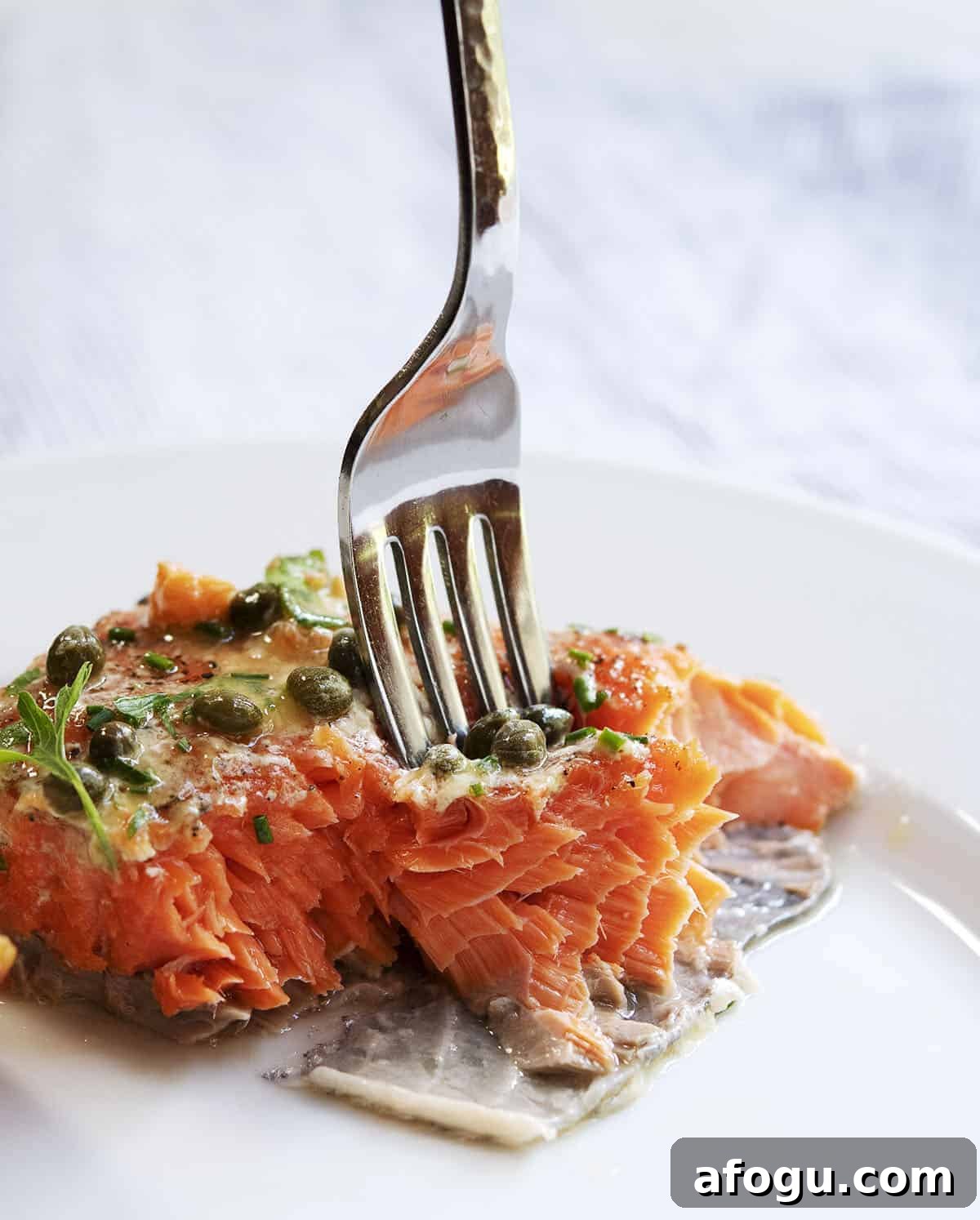
Recipe Options:
Use this recipe as a base and change the finishing flavors to suit your meal. A few ideas:
- Replace capers with minced garlic in the butter, then finish with fresh dill or mixed herbs and lemon zest for a bright, herb-forward sauce.
- Top the cooked salmon with a fresh mango-avocado salsa or pico de gallo for a lively, fresh contrast.
- For an Asian twist, drizzle with a mix of soy sauce, toasted sesame oil, and a little honey, then finish with sesame seeds and sliced green onions.
What To Do with Leftovers
Leftover slow-roasted salmon is versatile. Serve it cold over a salad, flake it into pasta with sautéed vegetables, or use it in fish cakes. It reheats gently and pairs well with many simple preparations.
What to Serve Alongside
- Arugula salad for a peppery, refreshing contrast.
- Sugar snap pea salad for a crisp spring side.
- Lemon garlic asparagus for a quick, bright vegetable.
- Strawberry spinach salad when berries are in season.
- Creamy cucumber salad, especially if you top the salmon with dill.
How to Make Slow Roasted Salmon
Step 1: Preheat the oven to 275°F. Line a rimmed baking sheet with parchment paper. Place the salmon skin-side down, brush with olive oil, and season with kosher salt and freshly ground black pepper. Bake for 25–35 minutes, until the flesh is slightly opaque and a knife tip meets no resistance. Remove from the oven and let the fish rest for about 5 minutes.
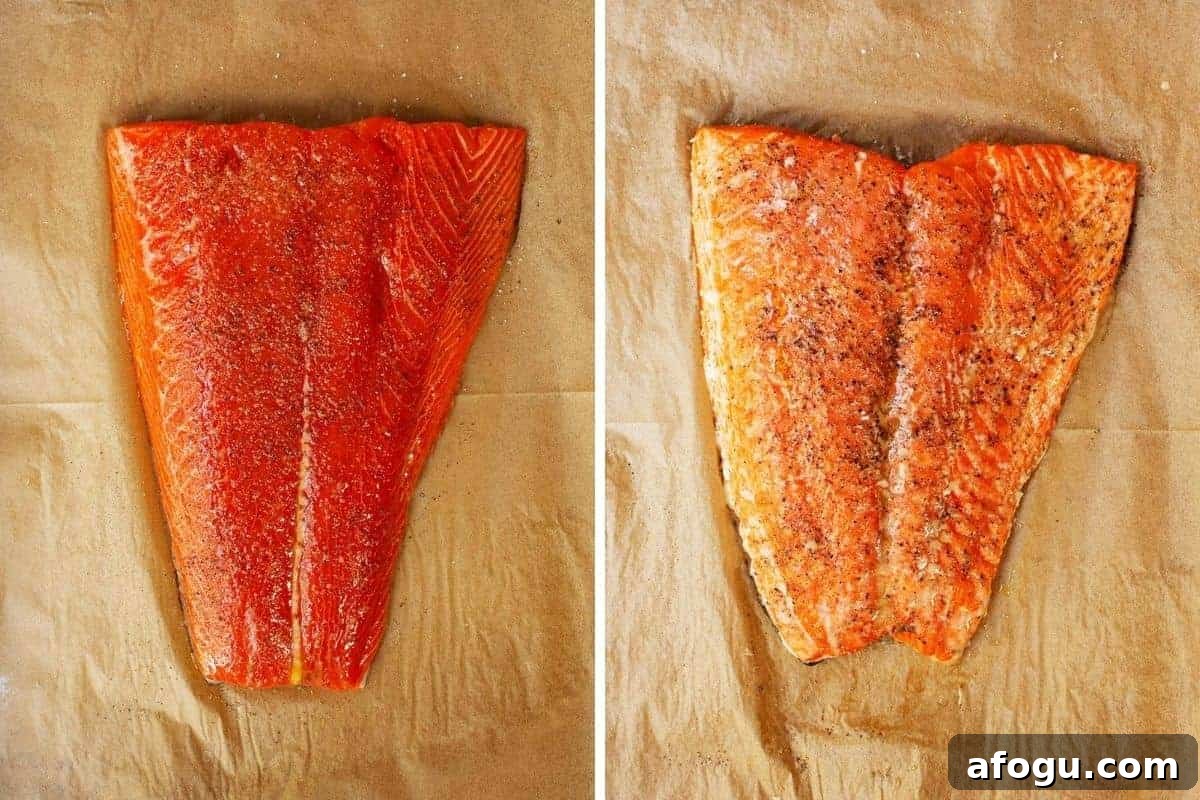
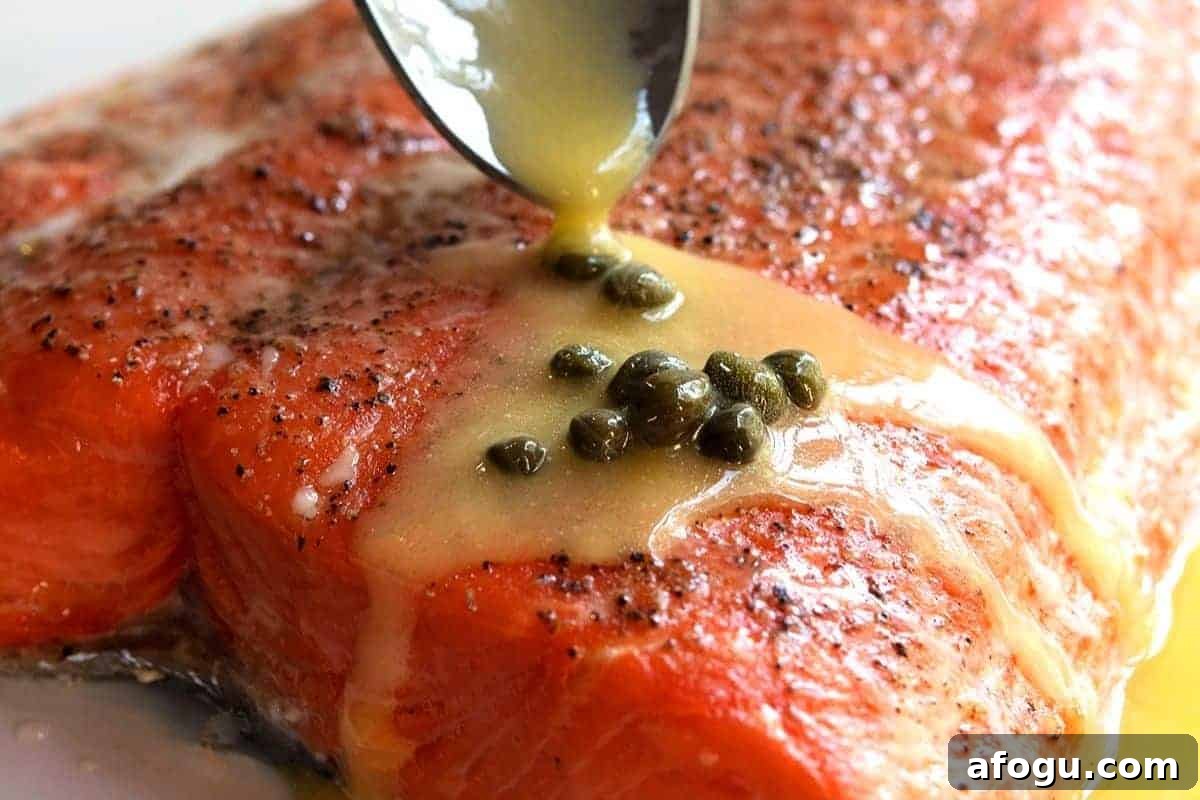
Step 2: While the salmon rests, melt butter in a small skillet over medium heat. Stir in capers and lemon juice, then remove from the heat.
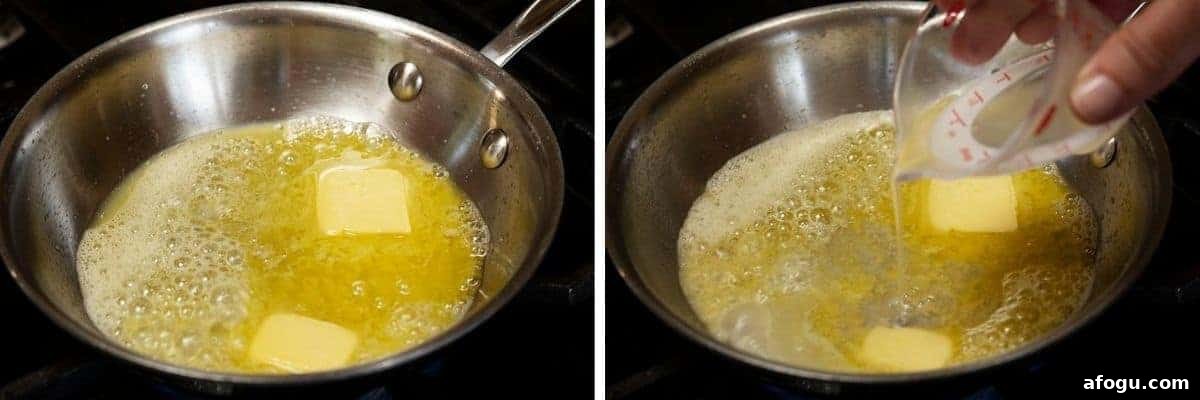
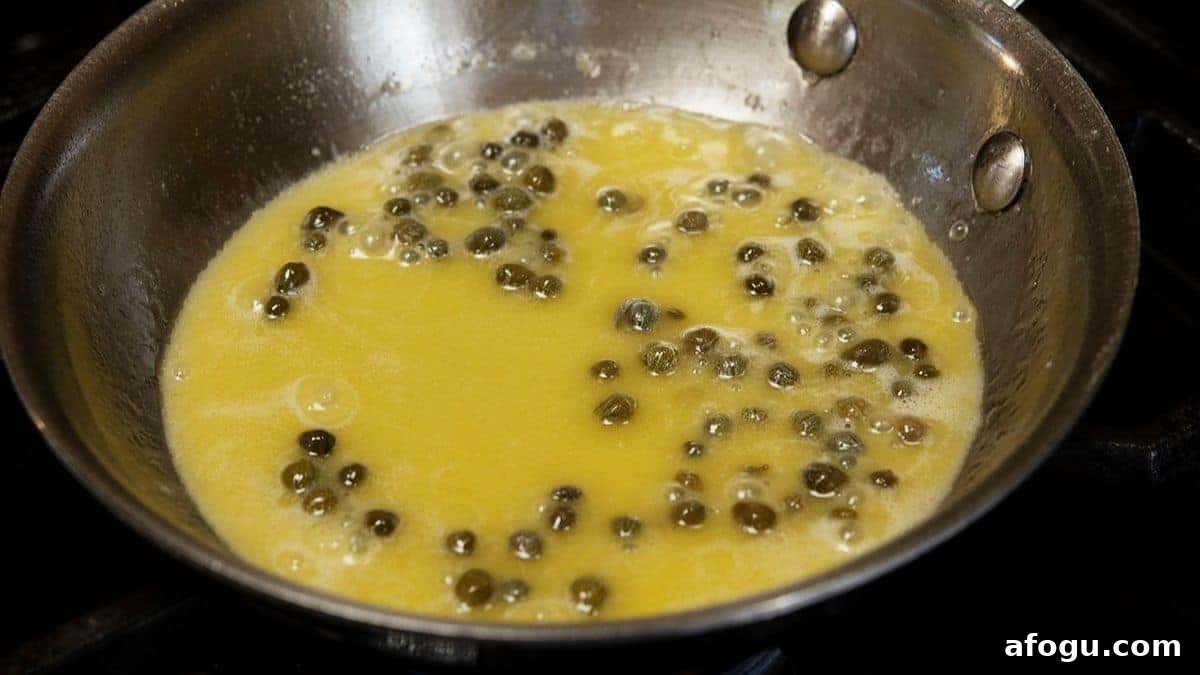
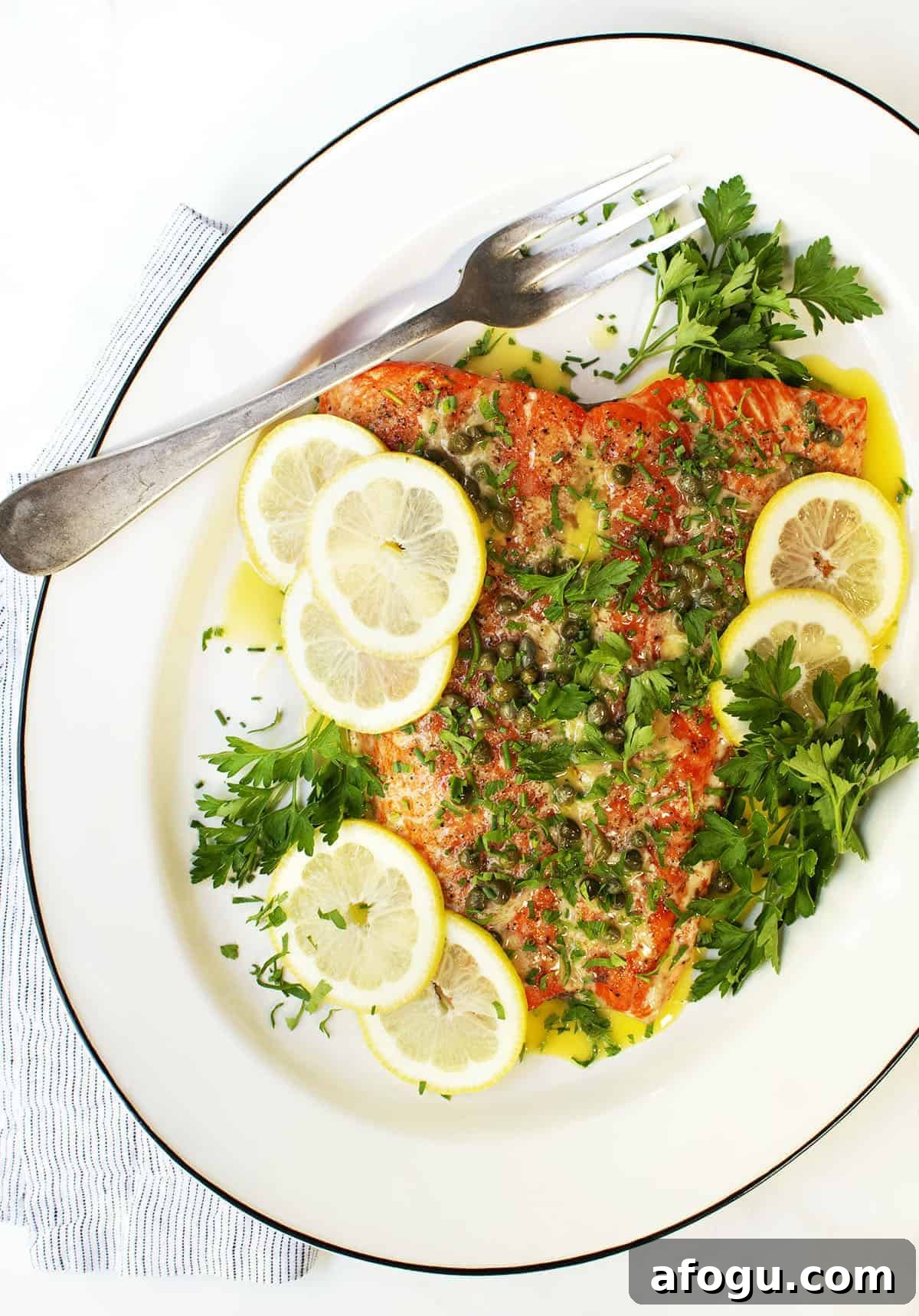
Step 3: Transfer the salmon to a serving platter, drizzle with the butter-caper-lemon sauce, and finish with minced chives and chopped parsley. Serve with lemon wedges if you like.
Slow Roasted Salmon
Ingredients
- 1 1/2 pound salmon filet ideally wild
- 1 tablespoon extra-virgin olive oil
- Kosher salt and freshly ground black pepper
- 2 tablespoons butter
- 1 tablespoon capers
- 1 small lemon juiced, 2–3 tablespoons
- fresh lemon wedges for serving, optional
- 1 tablespoon minced chives
- 1 tablespoon minced flat-leaf parsley
Instructions
-
Preheat oven to 275˚F. Line a rimmed baking sheet with parchment paper.
-
Place the salmon on the prepared sheet, brush with olive oil, and season with salt and pepper.
-
Bake skin-side down for 25–35 minutes, until the salmon is slightly opaque and a knife meets no resistance. Remove from oven and let stand 5 minutes.
-
While the salmon rests, melt butter in a small skillet over medium heat. Stir in capers and lemon juice, then remove from heat.
-
Transfer the salmon to a platter, drizzle with the butter-caper mixture, and sprinkle with chives and parsley. Add lemon wedges if desired and serve.
Nutrition
Nutrition information is an approximation and provided for reference only.
Leave a comment & rate the recipe below!