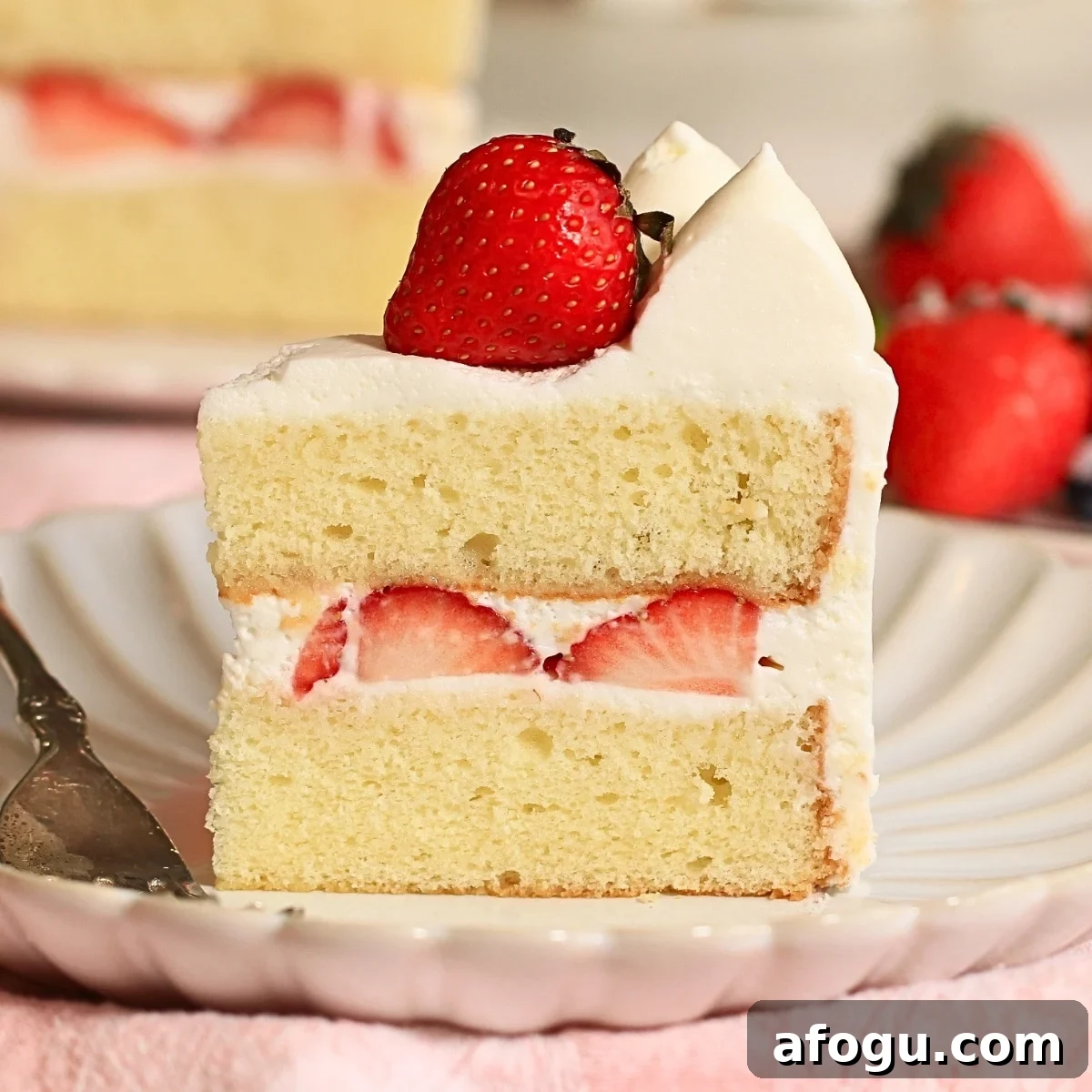
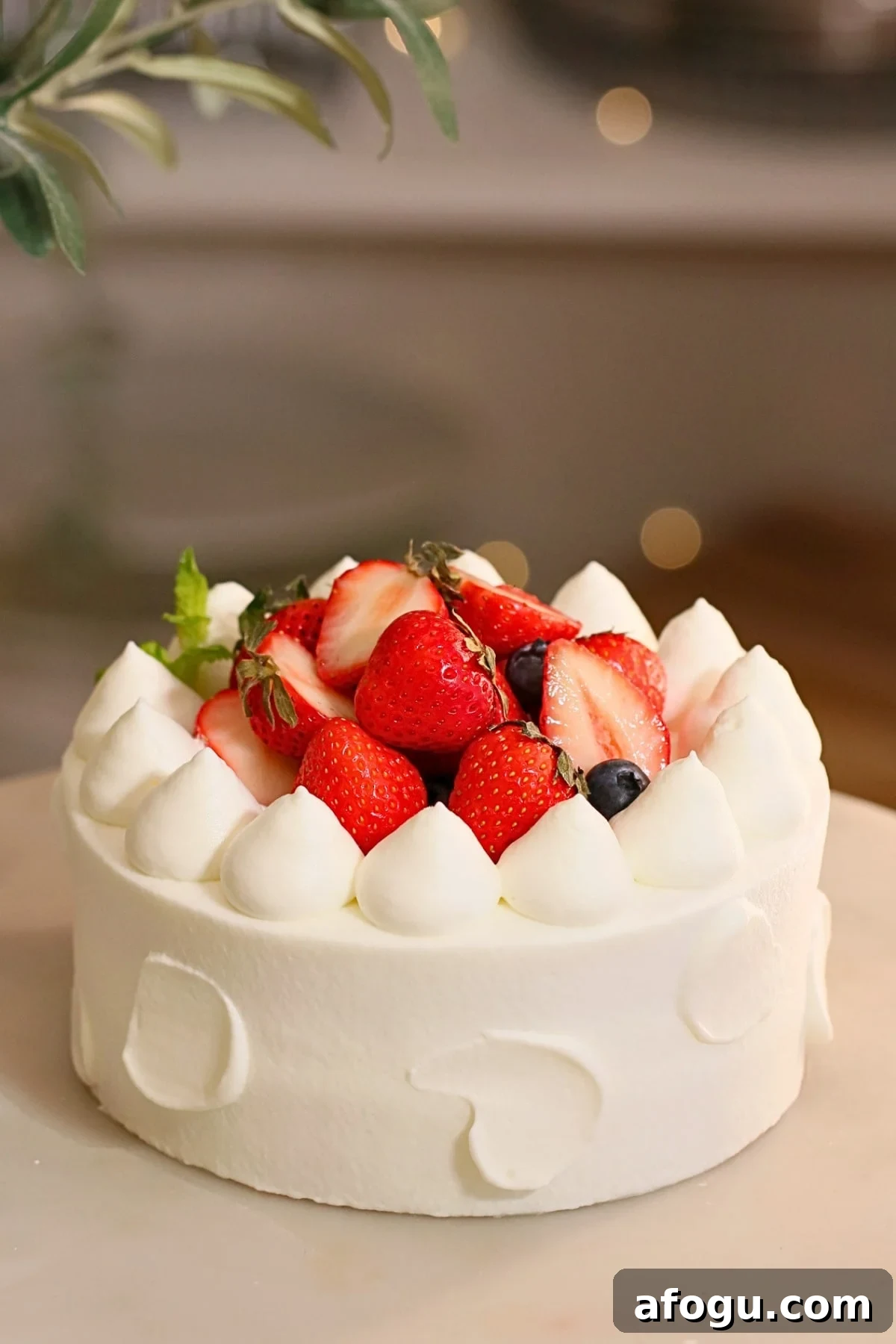
Ready to make the ultimate Japanese strawberry shortcake? This guide walks you through creating a pillowy, fluffy sponge base and teaches the decorating techniques for a smooth whipped-cream finish. A simple “naked cake” variation is included for an easier, rustic look.
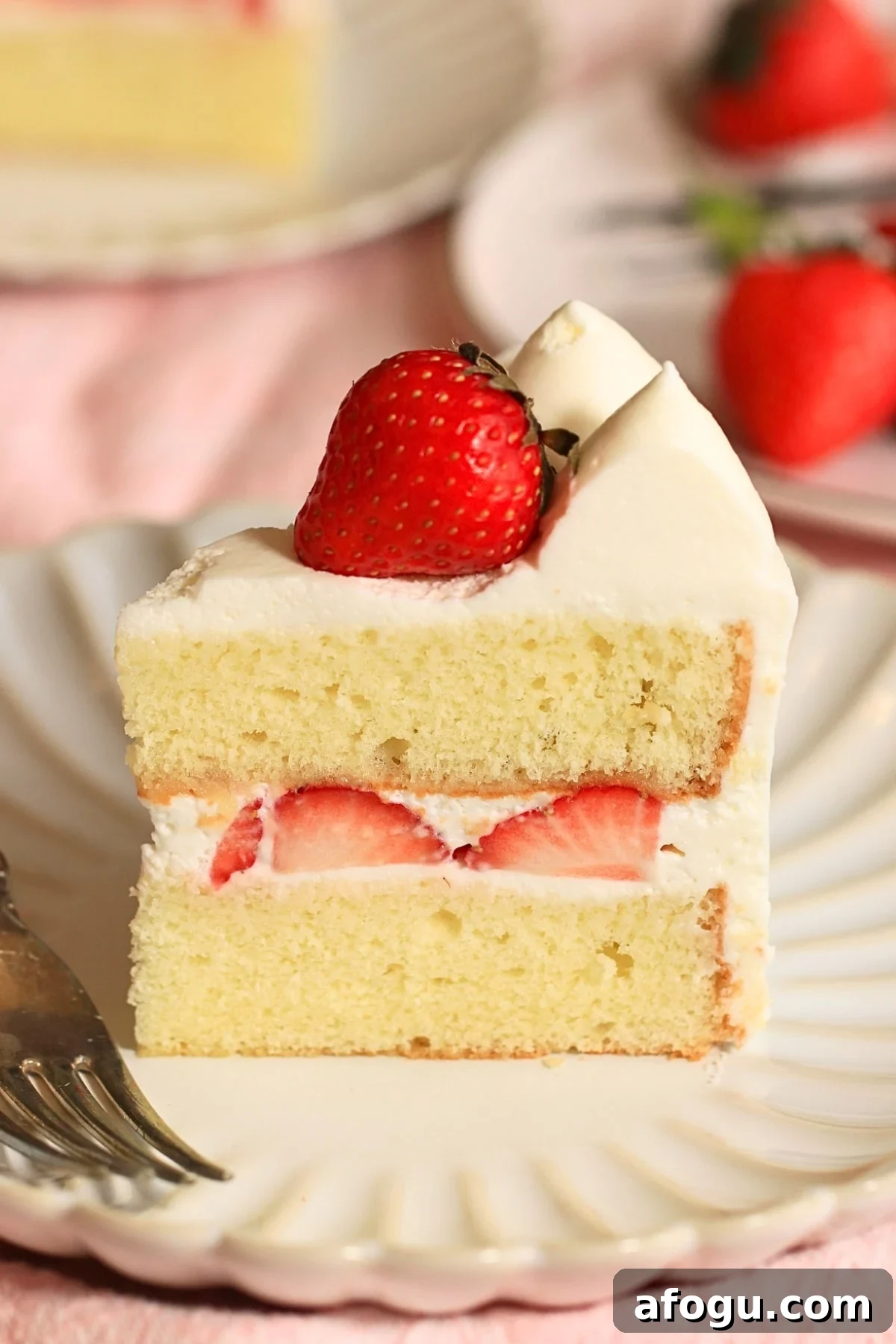
This cake proves that simple ingredients, handled with care, create something extraordinary. Light vanilla sponge, fresh strawberries, and a delicate whipped cream frosting combine into a dessert that is airy, moist, and bursting with strawberry flavor. The sponge layers are soft and melt in your mouth — the hallmark of an authentic Japanese-style shortcake.
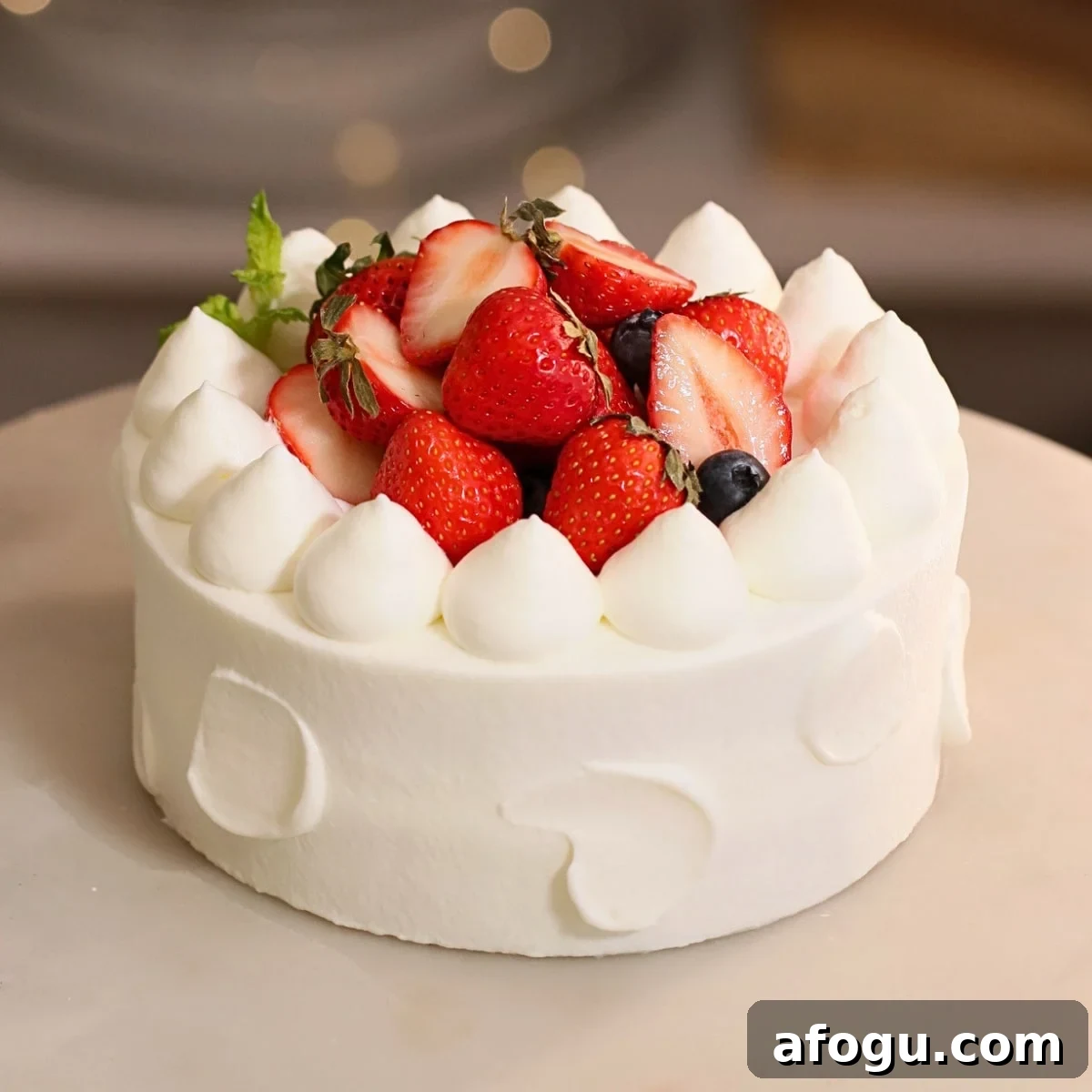
The ultimate Japanese strawberry shortcake
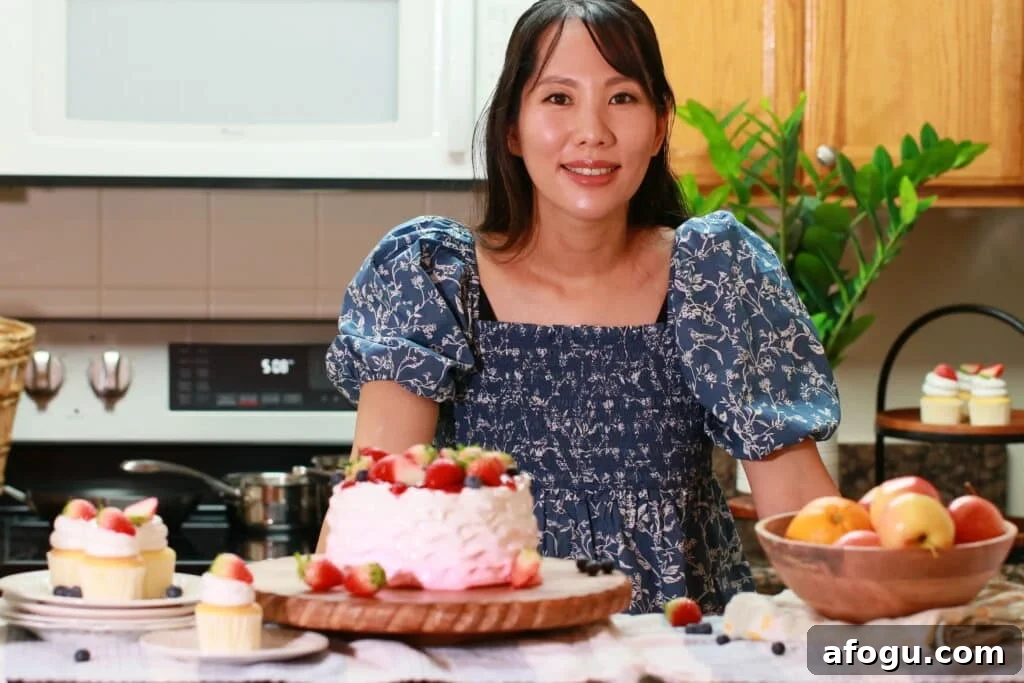
I began my baking career in Japan and refined this recipe over two decades of teaching, selling, and testing. Since relocating to the United States, I adapted the method so home bakers can reproduce the same airy texture using common ingredients and tools. This post shares those adaptations step-by-step so you can achieve professional results at home.
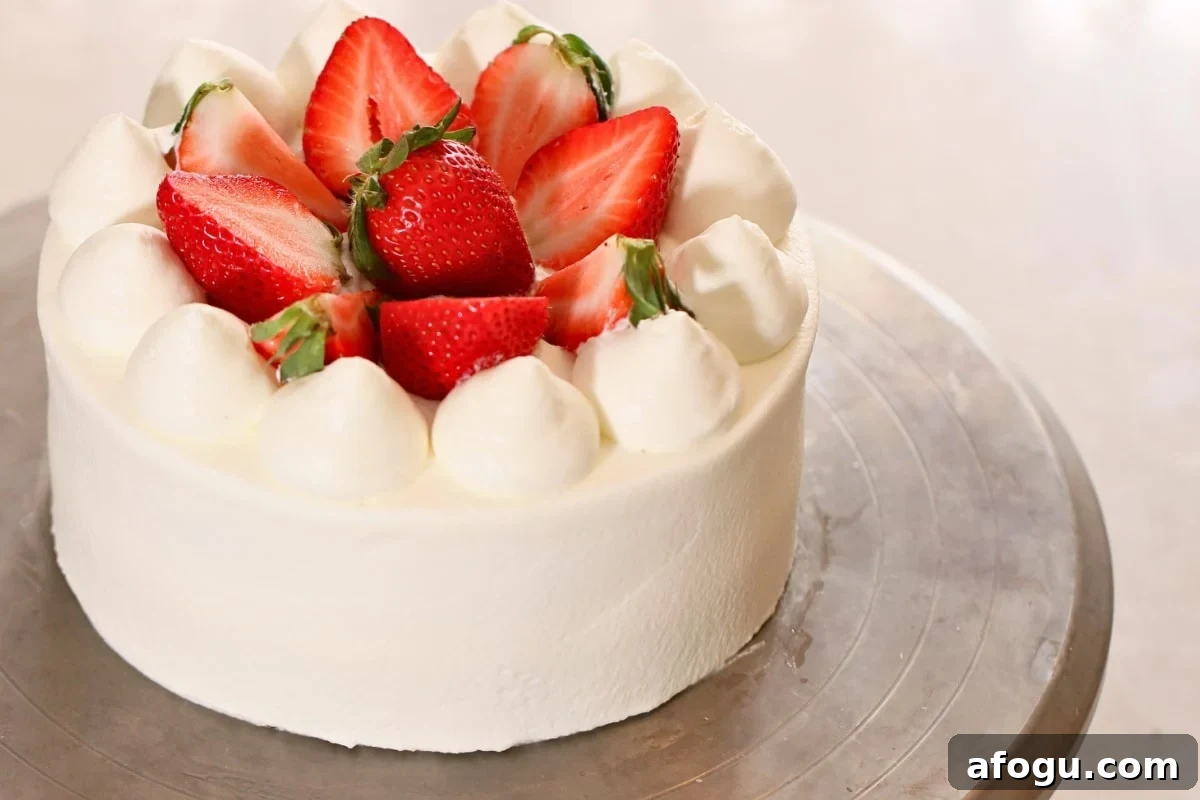
Frosting whipped cream smoothly can be intimidating, but there are reliable techniques that make a visible difference. I wasn’t born a decorator — I learned these tips and they transformed my cakes. If I can do it, you can too.
Ready? Let’s get started.
Two styles of strawberry shortcake
“Strawberry shortcake” can mean different things depending on where you are. The two main styles are:
- Western-style shortcake (biscuits/scones): A more rustic version made with biscuits, scones, or shortbread.
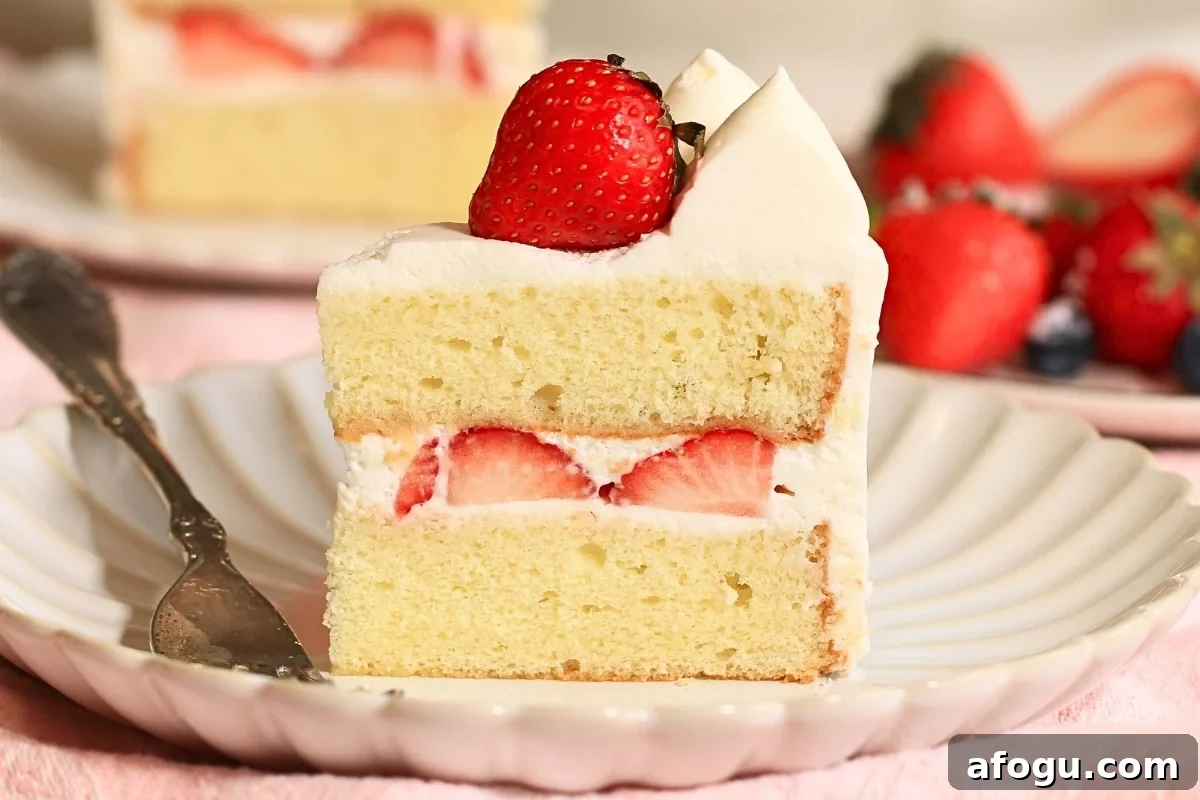
- Japanese-style shortcake (cake): A light, airy sponge layered with whipped cream and fresh strawberries. In Japan, this is the default interpretation of “strawberry shortcake.”
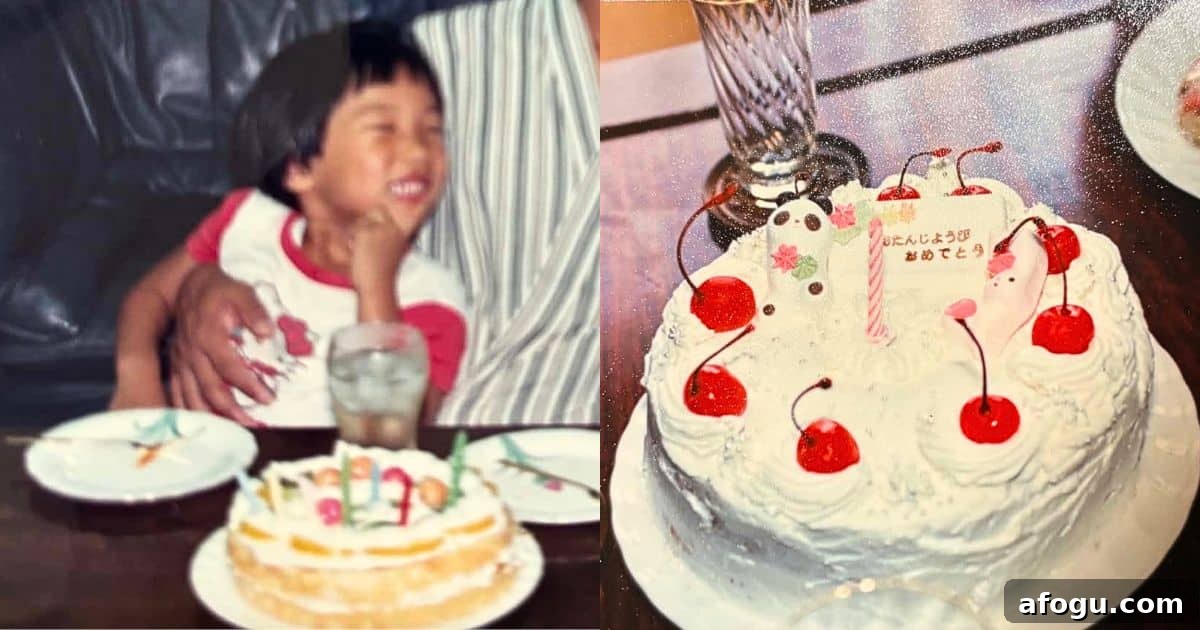
A brief history and my experience
The Japanese-style strawberry shortcake was popularized by pastry shops in the early 20th century and quickly became associated with celebrations, especially Christmas and birthdays. Growing up in Japan, this cake was a favorite at bakeries and family celebrations. The simple red-and-white presentation—fresh strawberries against white cream—remains timeless.
4 tips for perfect whipped cream
Use cream with 40–45% milk fat for the creamiest, most stable whipped cream. Standard 36–37% cream works, but higher-fat creams whip up richer and hold shape longer. Ultra-pasteurized options often remain steadier for decorating.
Stop whipping when the cream is thick but still soft. Overwhipping causes the fat to clump and creates a grainy, “broken” texture that’s hard to fix.
Chill your mixing bowl and tools and, if needed, set the mixing bowl into a larger bowl filled with ice water while whipping. Cold equipment helps the cream maintain structure.
Whip about one-third of the frosting slightly firmer for the crumb coat. This firmer portion locks in crumbs before you apply the soft finishing layer.
4 tips for frosting the cake
Hold the spatula angled toward the direction you’re moving to prevent dragging cream and creating rough patches.
Each touch works the fat more. Make clean, efficient strokes to keep the surface smooth and avoid a grainy finish.
Hold a bench scraper at 90° (4 o’clock for right-handed, 8 o’clock for left-handed), lock your arm, and spin the turntable steadily for smooth sides.
If the cream softens while working, chill the cake and bowl for 15–30 minutes to firm the frosting before continuing.
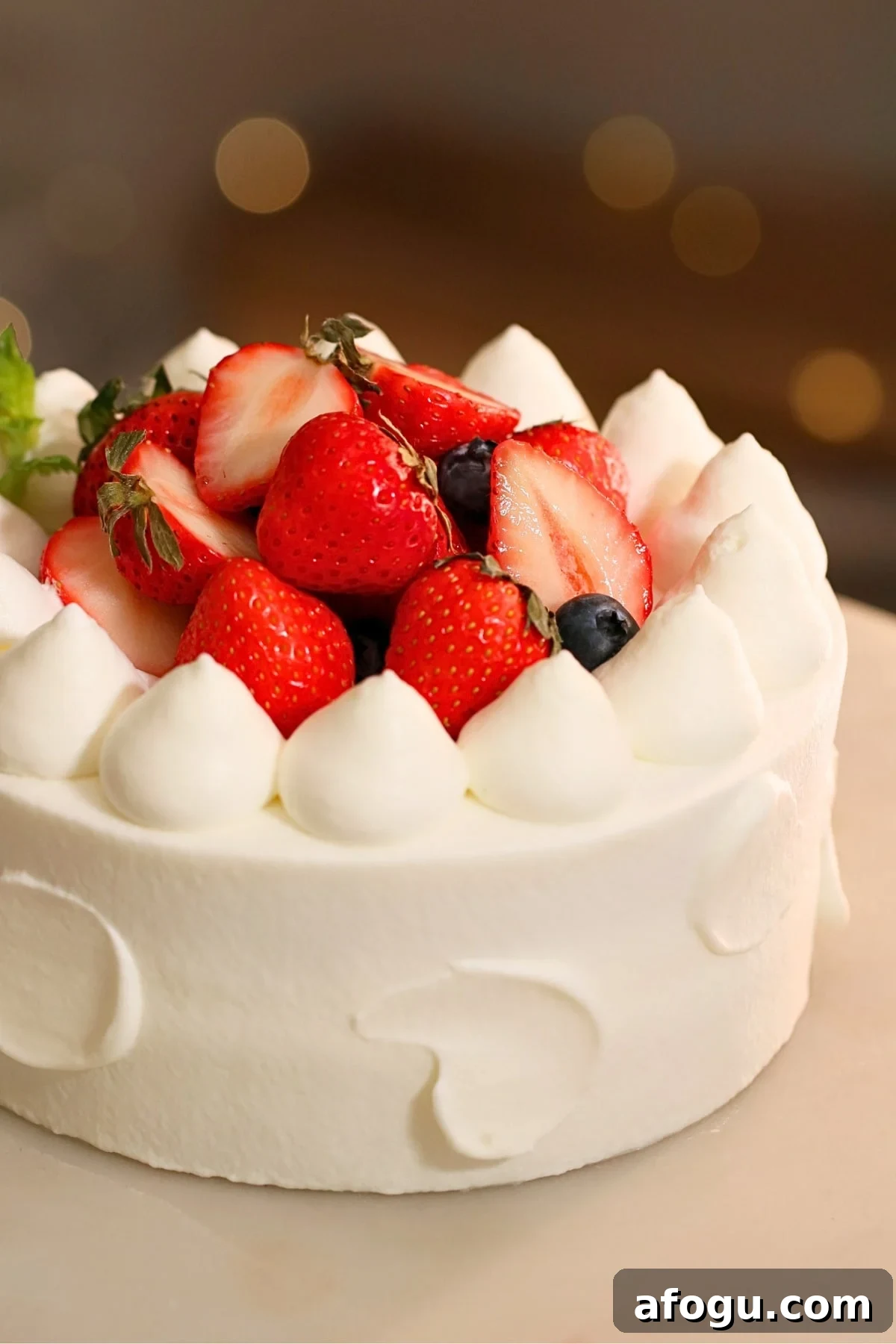
Ingredient tips
Sponge Cake
- Eggs: Whipped eggs trap air and lift the sponge.
- Granulated sugar: Use white sugar for a fine crumb and even structure.
- Cake flour: Produces the softest, most tender sponge.
- Milk: Whole milk adds moisture and tenderness.
- Oil: Neutral oils like vegetable or canola work well; a light olive oil is an option.
- Vanilla extract: Use sparingly to avoid affecting the sponge texture.
Whipped cream
- Heavy cream: Aim for 40% milk fat when possible for stability and richness. Avoid creams under 36% or over 45% for best handling.
- Sugar: Use a small amount to sweeten without overpowering the strawberries.
Filling & Decorations
- Fresh strawberries: Choose ripe, juicy berries for the best flavor and texture.
How to make Japanese strawberry shortcake — detailed guide
Bake the sponge cake
- Warm the eggs: Whisk eggs and sugar over a warm water bath until the mixture reaches about 40–45°C (104–113°F).
- Whip to ribbon stage: Immediately whip at high speed until the mixture forms a ribbon when the whisk is lifted, then finish on low for 5–10 minutes until glossy and smooth.
- Fold in flour: Gently fold sifted cake flour until no streaks remain.
- Emulsify liquids: Add milk and oil, folding to create a smooth, flowing batter.
- Bake: Pour into prepared pans and bake at 170°C (340°F) for 25–30 minutes for two 6-inch pans, or 30–35 minutes for one 8-inch pan, until a toothpick comes out clean.
- Cool completely: Invert pans onto a wire rack and cool fully before slicing.
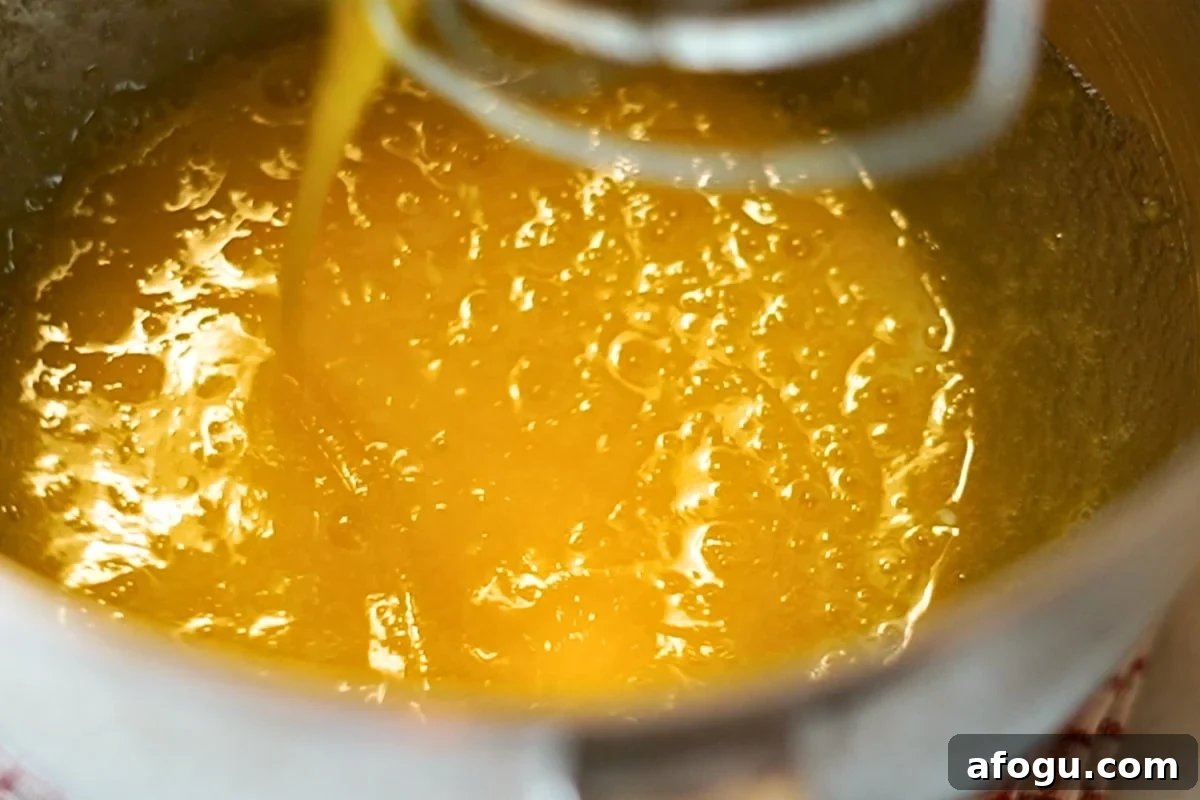
Tip: Review a dedicated sponge cake guide if you want a deeper explanation of the whisking and folding techniques.
Prepare simple syrup and strawberries
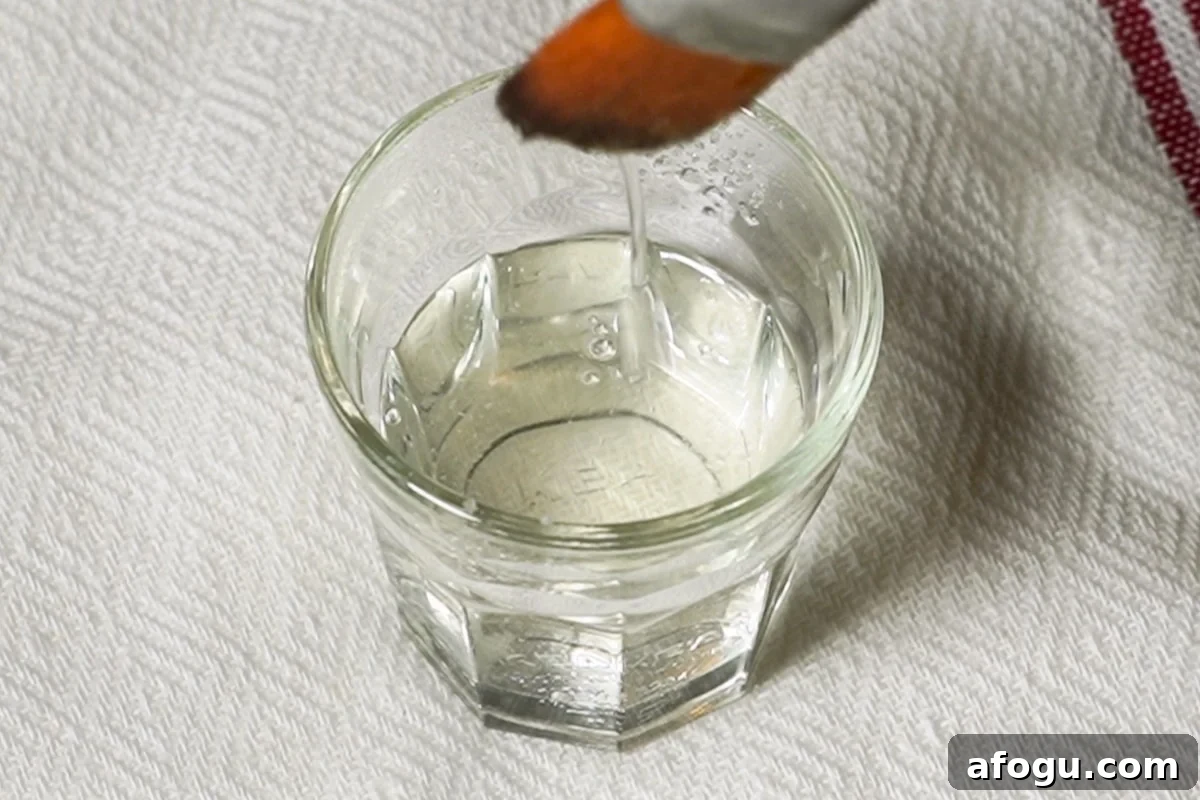
- Make the syrup: Dissolve sugar in hot water and cool completely.
- Slice the sponge: Use a serrated knife to split the cake horizontally.
- Brush with syrup: Apply syrup to the cut surfaces to add moisture and flavor.
- Prep strawberries: Slice to about ½ inch (1.25 cm). Pat dry on paper towels and chill until assembly.
Prepare the whipped cream
- Soft finishing cream: Whip heavy cream and sugar in a chilled bowl until thick but still soft.
- Stiffer cream for filling: Whip roughly one-third of the cream a bit firmer for the filling and crumb coat; keep tools cold while decorating.
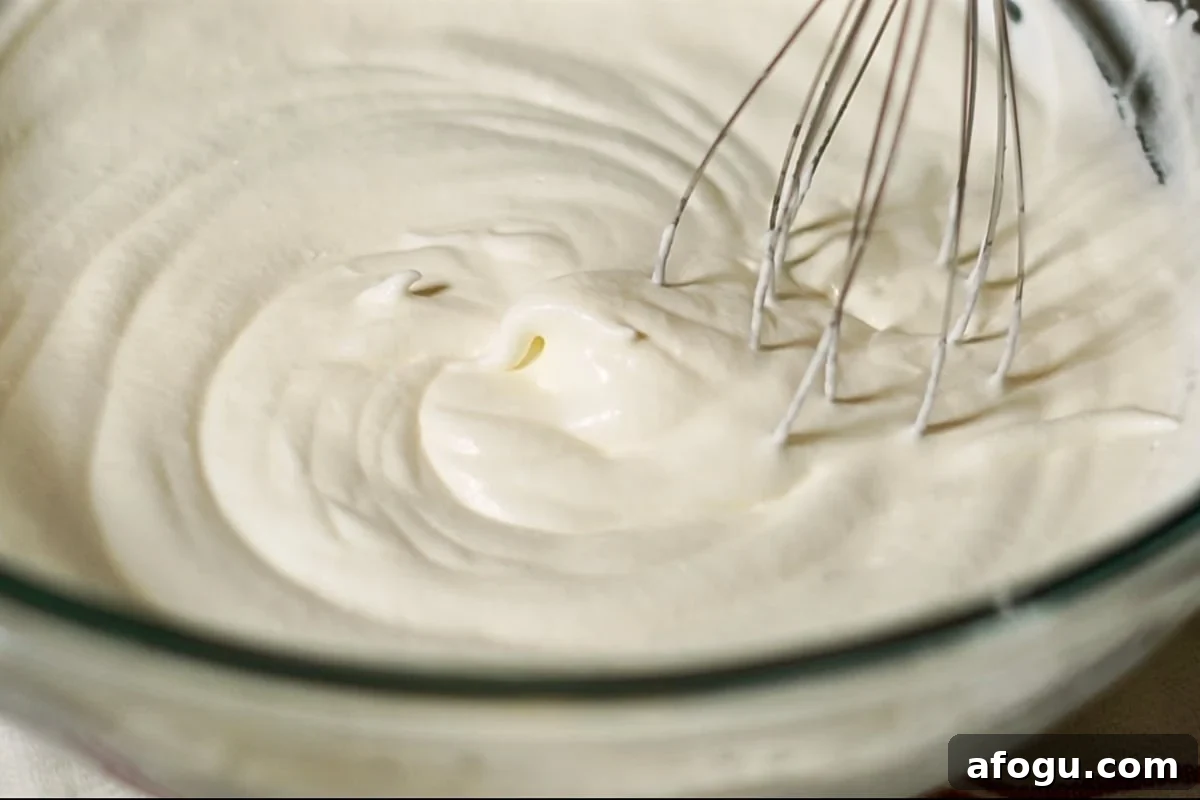
Aya’s Tip
Avoid letting ice water touch the cream — moisture will change the whipping consistency.
Assembling and crumb coating
- Center the bottom layer: Place the bottom sponge on the turntable and keep it centered.
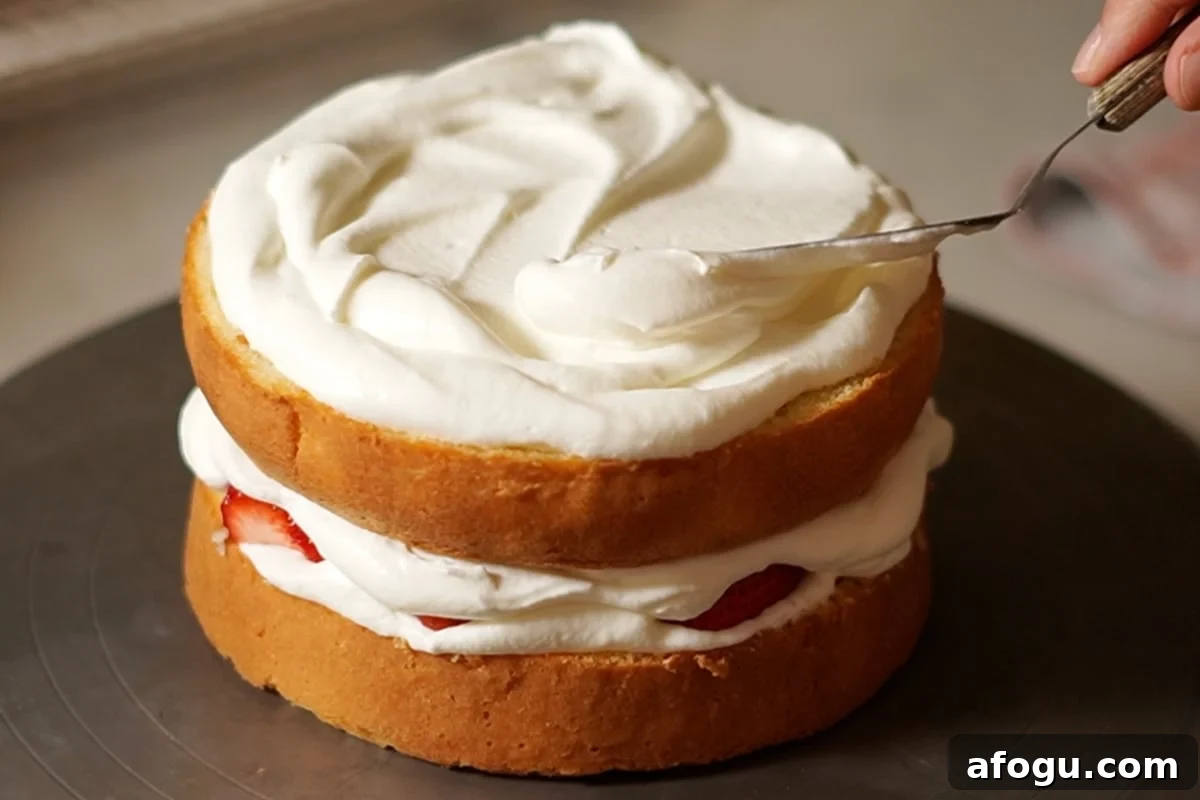
- Layer the filling: Spread a scoop of the stiffer cream thinly, arrange sliced strawberries, then fill gaps with more cream to make an even surface.
- Stack and crumb coat: Place the second sponge on top and apply a thin crumb coat with the firmer cream to trap crumbs.
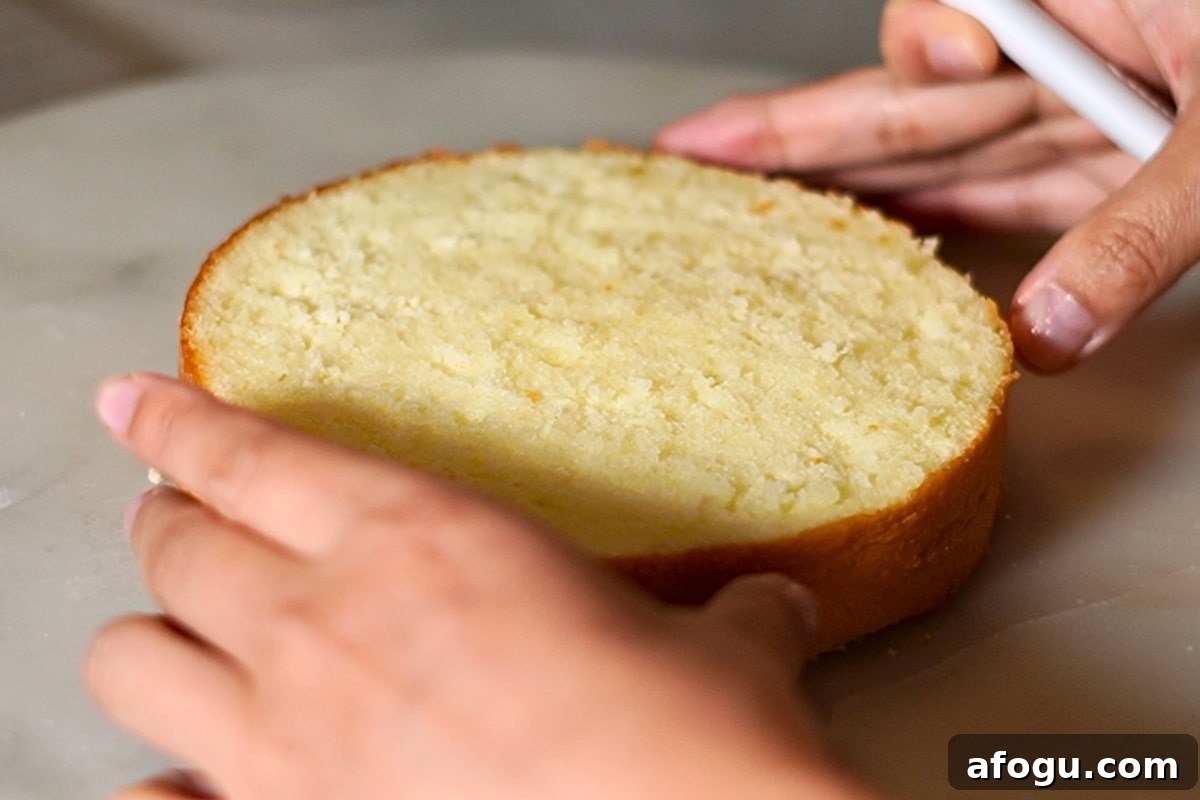
Final frosting
- Top coat: Drop two large scoops of soft finishing cream on top and spread evenly.
- Sides: Apply cream evenly around the sides, allowing slightly more at the top edge to shape clean corners.
- Scraper technique: Hold a bench scraper at 90° and rotate the turntable smoothly to even the sides, then slide the scraper away slowly.
- Sharp corners: Clean the top edges by sliding a spatula inward from the rim; wipe the spatula after each pass for a crisp line.
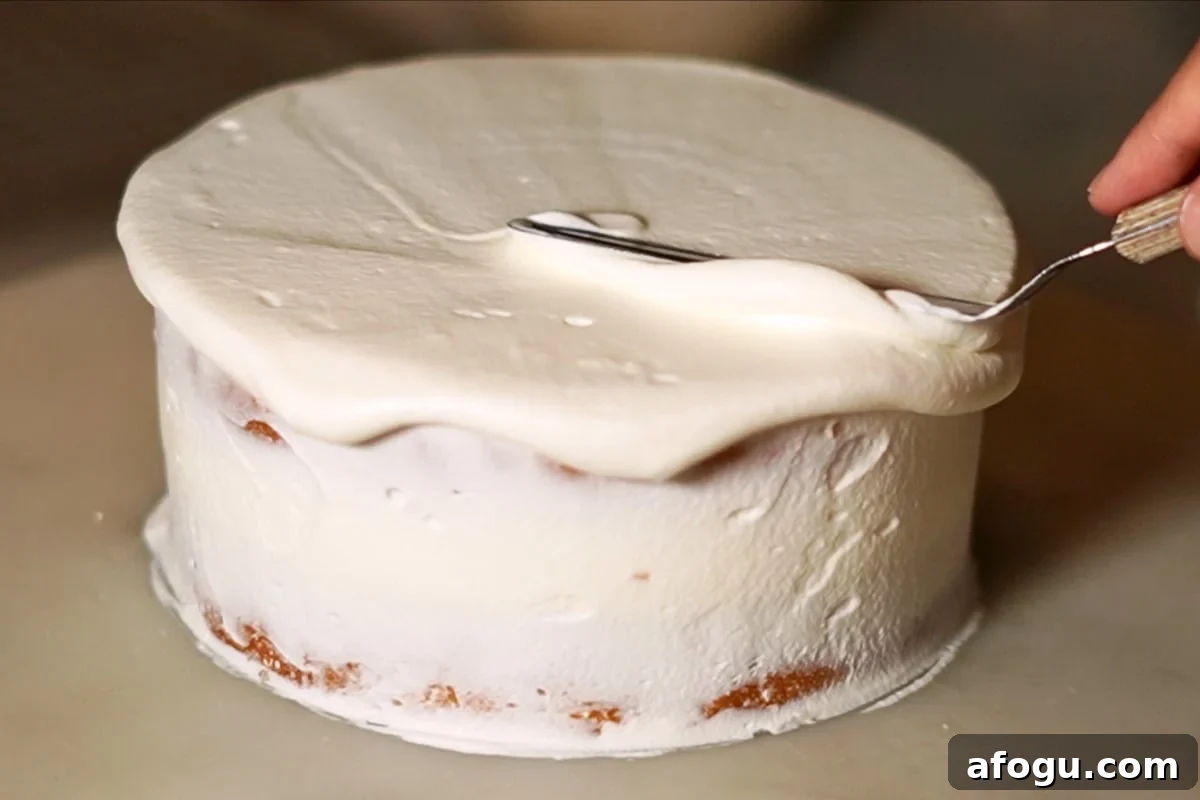
Aya’s Tip
If the frosting softens, chill the cake before continuing — it’s a helpful reset.
Final piping and decoration
- Adjust consistency: If the remaining cream is too stiff, fold in a teaspoon of heavy cream or milk to loosen it slightly.
- Pipe: Use your chosen tip (a 6B is common) to pipe rosettes or teardrops — apply steady pressure and release before lifting the tip.
- Finish: Garnish with fresh strawberries and optional berries or herbs. Chill until serving.
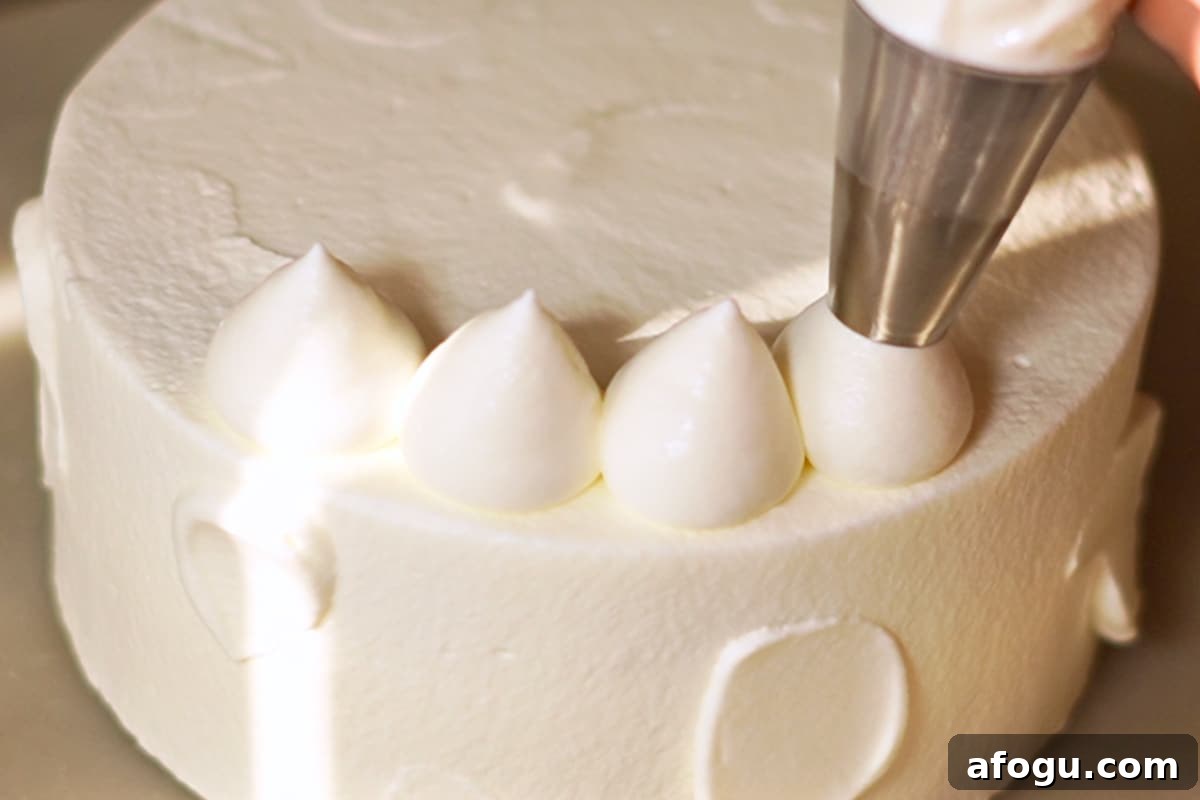
And it’s done — a pillow-soft, moist, and light strawberry shortcake. Enjoy!
Aya xx 🍰🍓
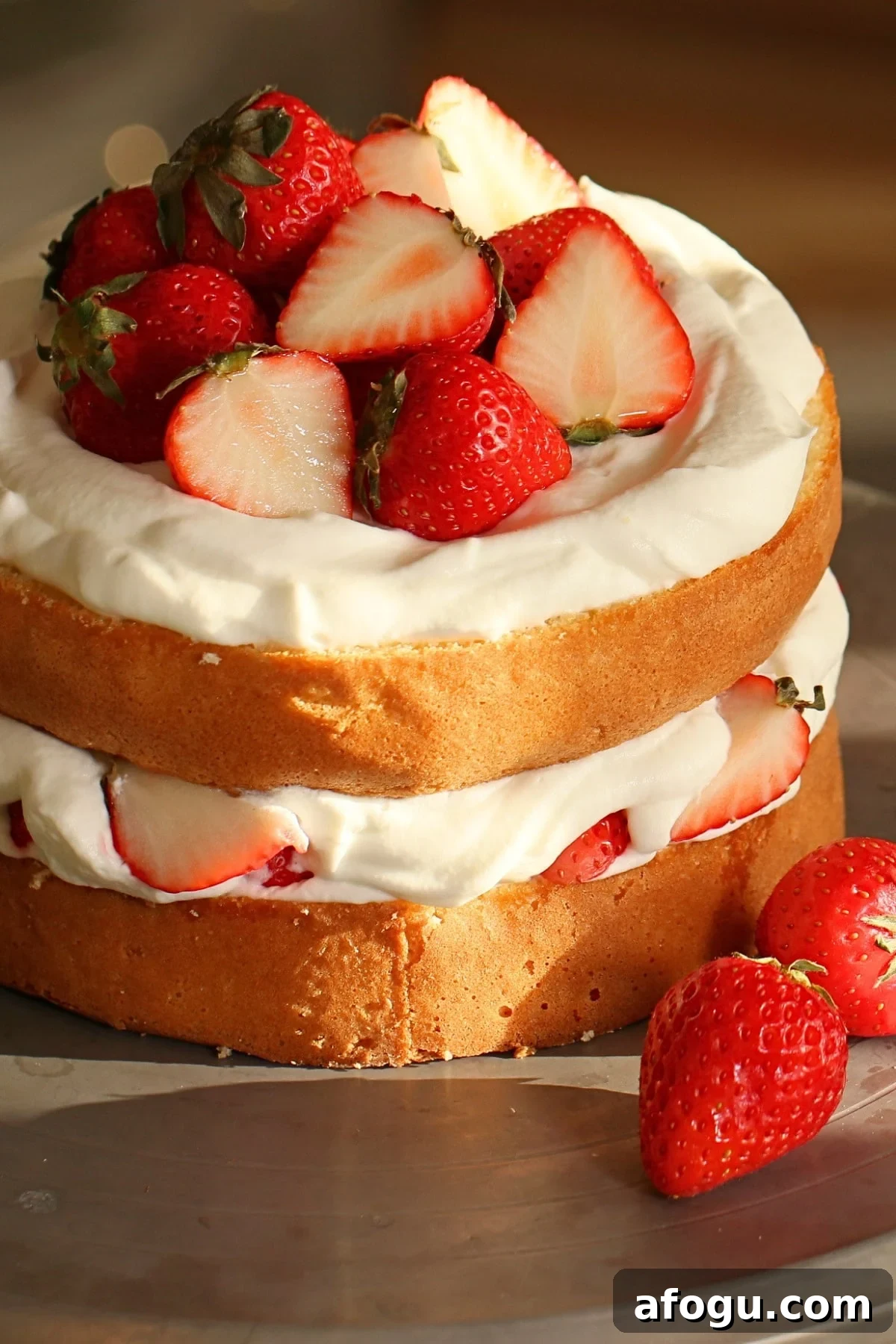
A simple option: naked cake style
For a relaxed, rustic presentation, use a medium-stiff cream for the whole process and skip the crumb coat. The semi-exposed layers and light frosting look elegant and require less precision.
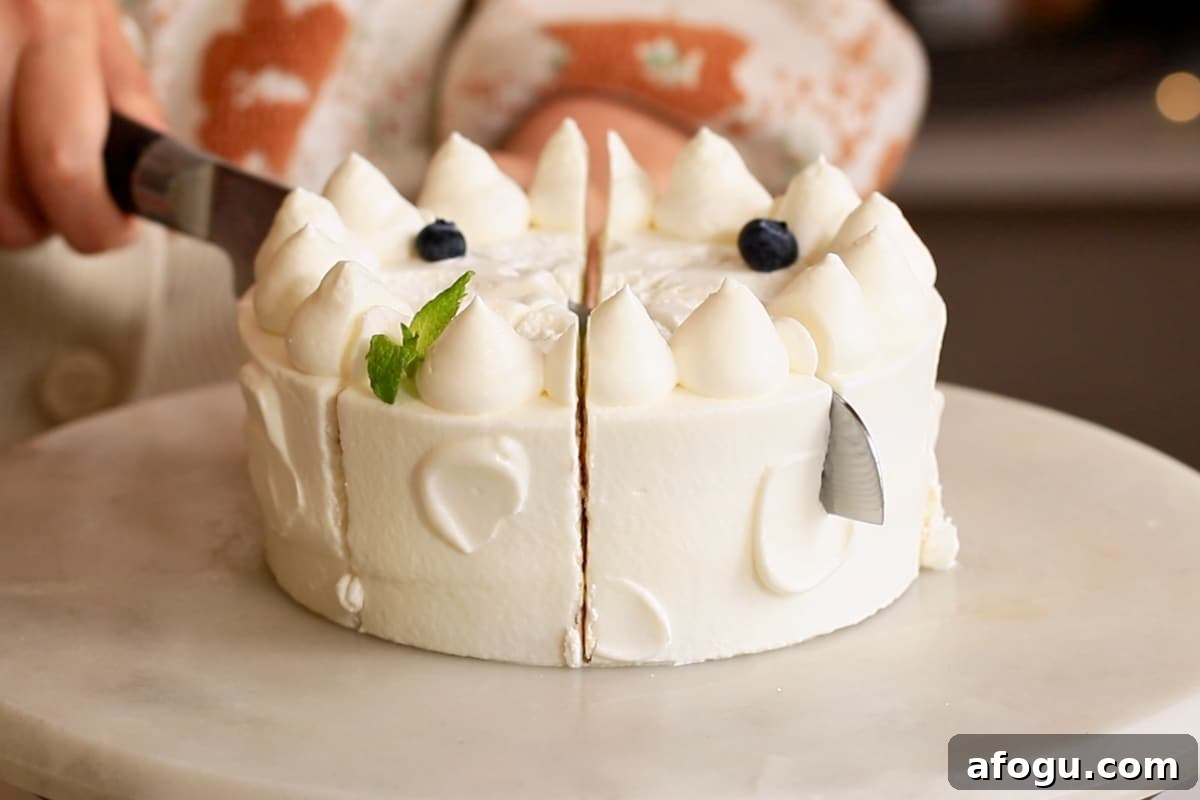
How to slice strawberry shortcake
Use a warm serrated knife and slice with a gentle back-and-forth motion for clean, neat pieces.
Frequently asked questions
Keep the cake in an airtight container in the refrigerator and seal exposed sponge with plastic wrap to prevent drying. Consume within 2–3 days, or within 24 hours for peak freshness.
Yes. Double the recipe proportions and bake in an 8-inch pan following the same steps.
Freezing is possible but not ideal because strawberries become mushy after thawing. If you must freeze, omit fresh berries until after thawing.
Japanese shortcake emphasizes extreme lightness: a delicate sponge, fresh strawberries, and whipped cream. Other cream cakes may use sturdier cake bases or preserves between layers.
Yes. Vanilla chiffon, angel food cake, or a biscuit-style sponge can be used for variations.
Six- or seven-inch cakes (15–18 cm) are common and usually serve 8–10 people.
More Japanese-style desserts
If you enjoyed this recipe, try other light Japanese treats like roll cakes, souffle pancakes, matcha cheesecakes, and no-bake cheesecakes.
- Fluffiest vanilla roll cake
- Japanese souffle pancakes
- Matcha cheesecake
- Matcha sponge cake
- Japanese no-bake cheesecake
More strawberry recipes
Other strawberry favorites to try: no-bake strawberry cheesecake, strawberry mousse, strawberry cinnamon rolls, and mini strawberry cheesecakes.
- No-bake strawberry cheesecake
- Strawberry mousse
- Strawberry cinnamon rolls
- Mini strawberry cheesecakes
Did you try the recipe?
Share your honest feedback in the comment section — I’d love to hear how the cake turned out for your special occasions.
Thank you! – Aya