
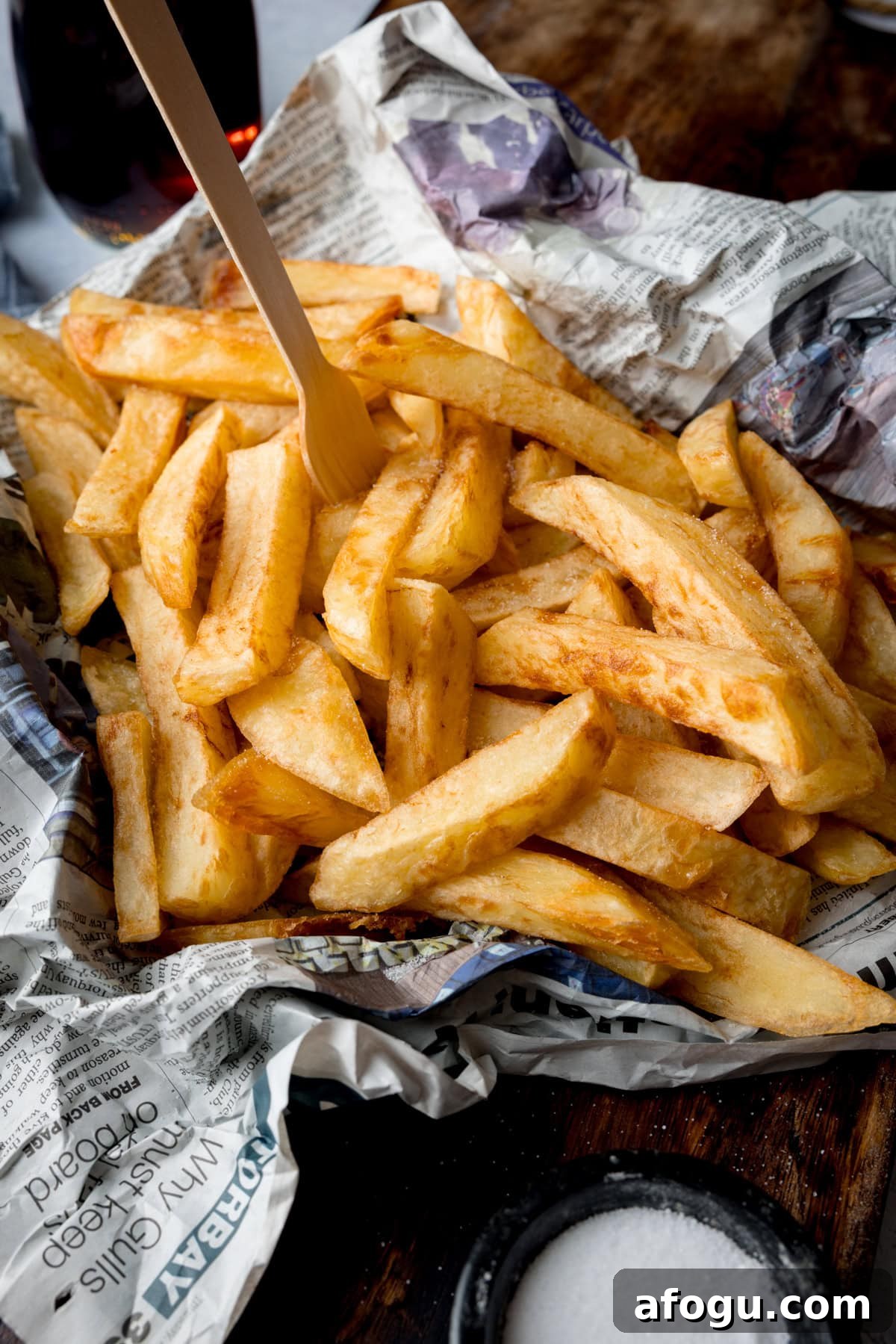
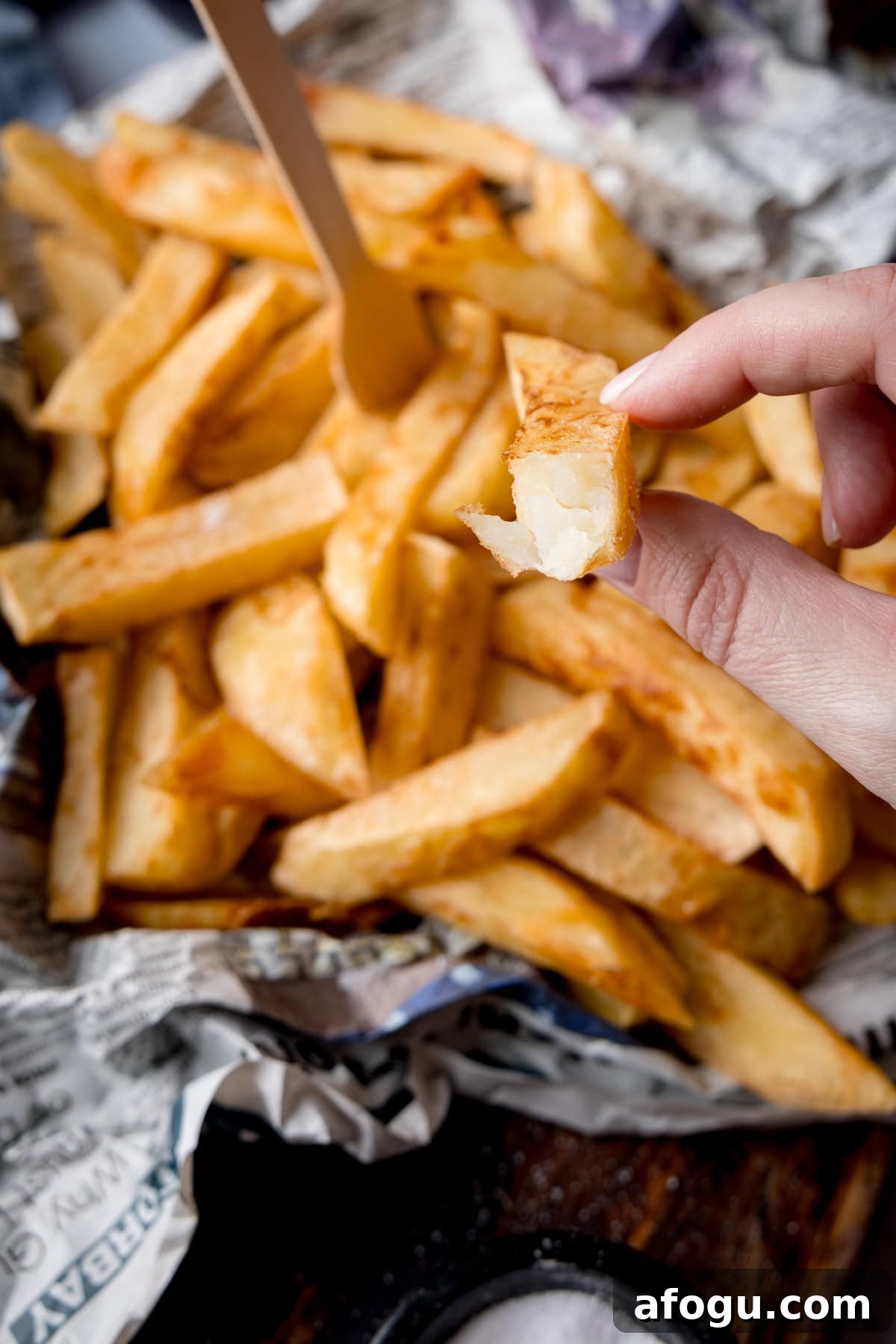
Chip shop-style chips (or chippy chips) are a British classic: thick, lightly golden fries with a slightly crispy exterior and a soft, fluffy interior. You can’t beat a proper chip shop, but this recipe is the closest you can get at home.
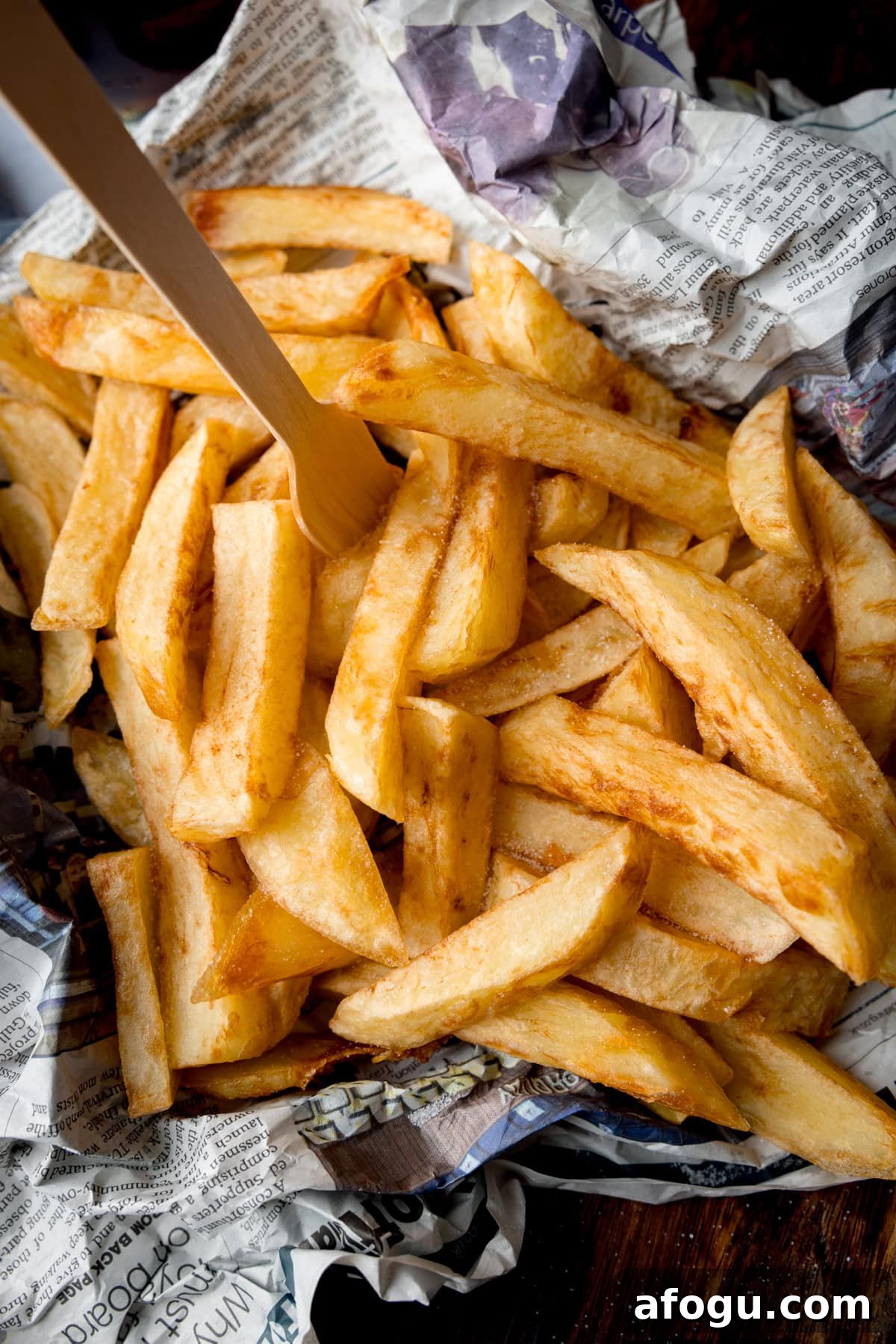
Living in a seaside town, the irresistible smell of chips is always in the air. Sometimes I want that salty, crispy comfort without leaving the house. My favourite way to eat these is smothered in meaty gravy.
This version balances simplicity and authenticity. After testing two approaches, the par-boil method produced chips closest to the chippy classic: light-coloured, fluffy inside and crisp outside.
Table of Contents
- 📋 Ingredients
- Pro Tip
- Double Fry Method
- Par-Boil Method
- 🍽️ What to serve it with
- 🍲 More fantastic British Classics
- Chip Shop-Style Chips Recipe
📋 Ingredients
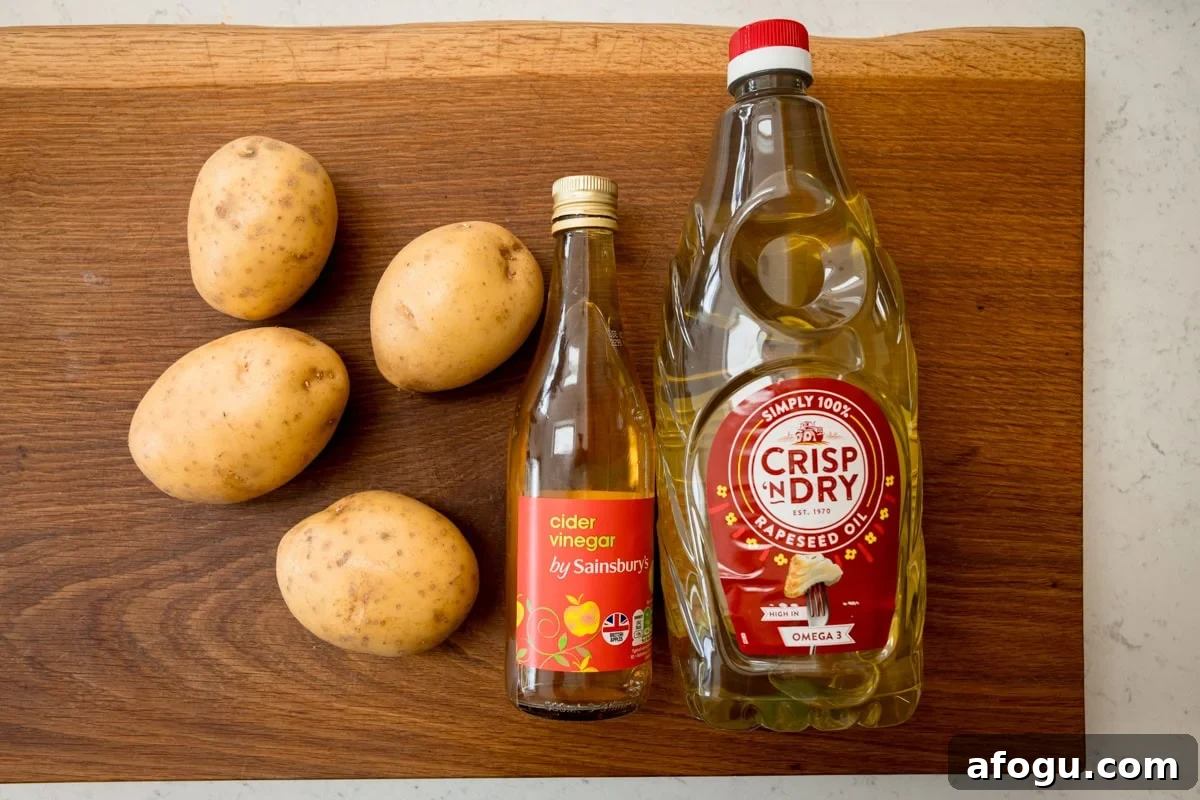
Potatoes – Use floury varieties such as Maris Piper or Rooster for a fluffy interior and crisp exterior.
Vinegar – A splash of cider, white wine or malt vinegar helps keep the chips light in colour when soaking.
Oil – Any neutral frying oil suitable for deep frying.
Pro Tip
After peeling and cutting, submerge the potatoes in cold water promptly. Peeled potatoes oxidize and can darken if left exposed to air.
Traditional chip shops sometimes use additives to keep chips pale during storage, but for home cooking the simple steps below recreate that light, golden finish without special products.
Double Fry Method
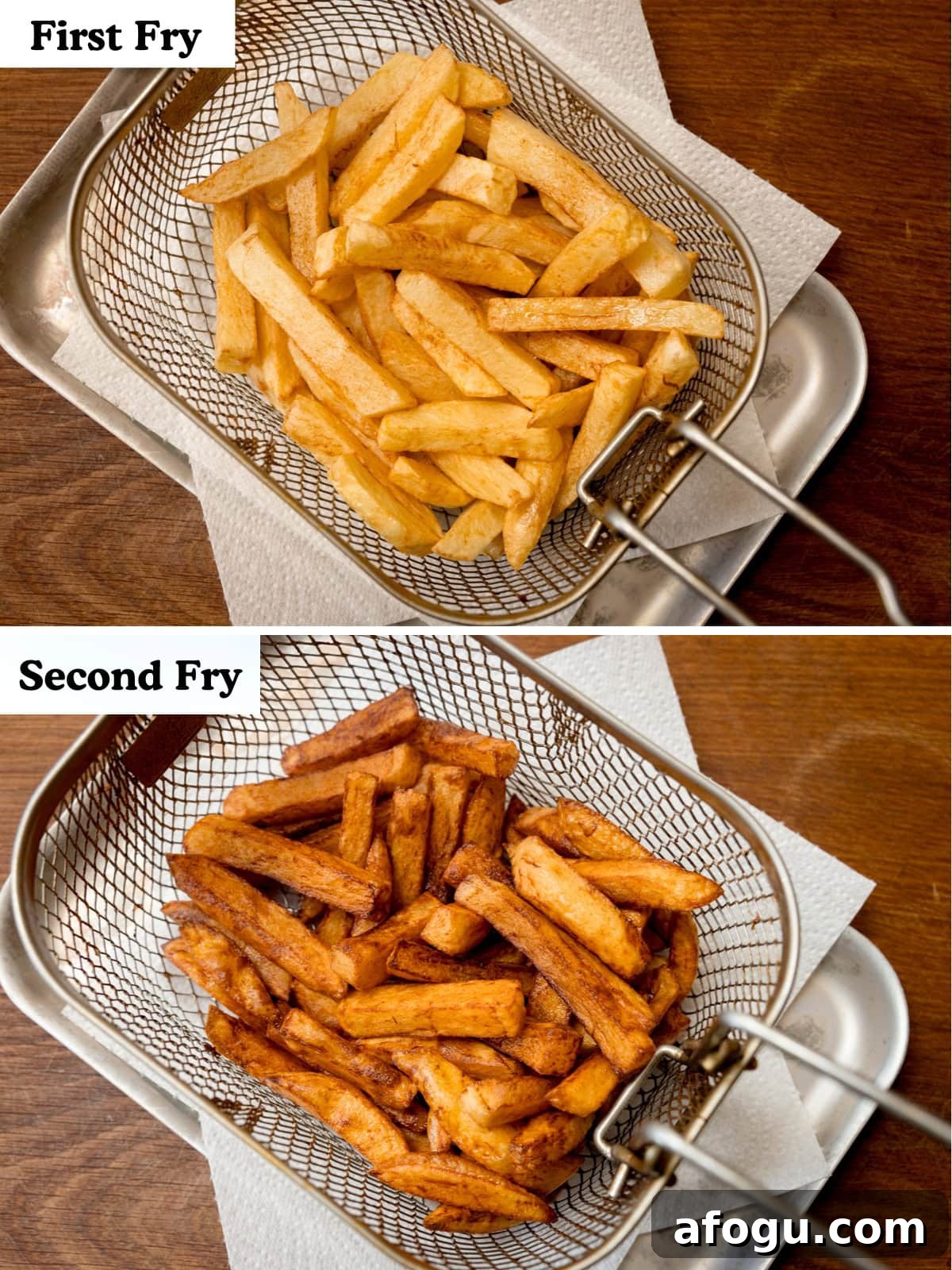
Double frying involves a low-temperature initial fry to cook the chips through, then cooling and frying again at a higher temperature to crisp the outside. It keeps the interior fluffy but can darken the exterior too much for an authentic chippy look. After the first fry the colour is nice and light, but they’re not soft enough to eat yet.
Par-Boil Method
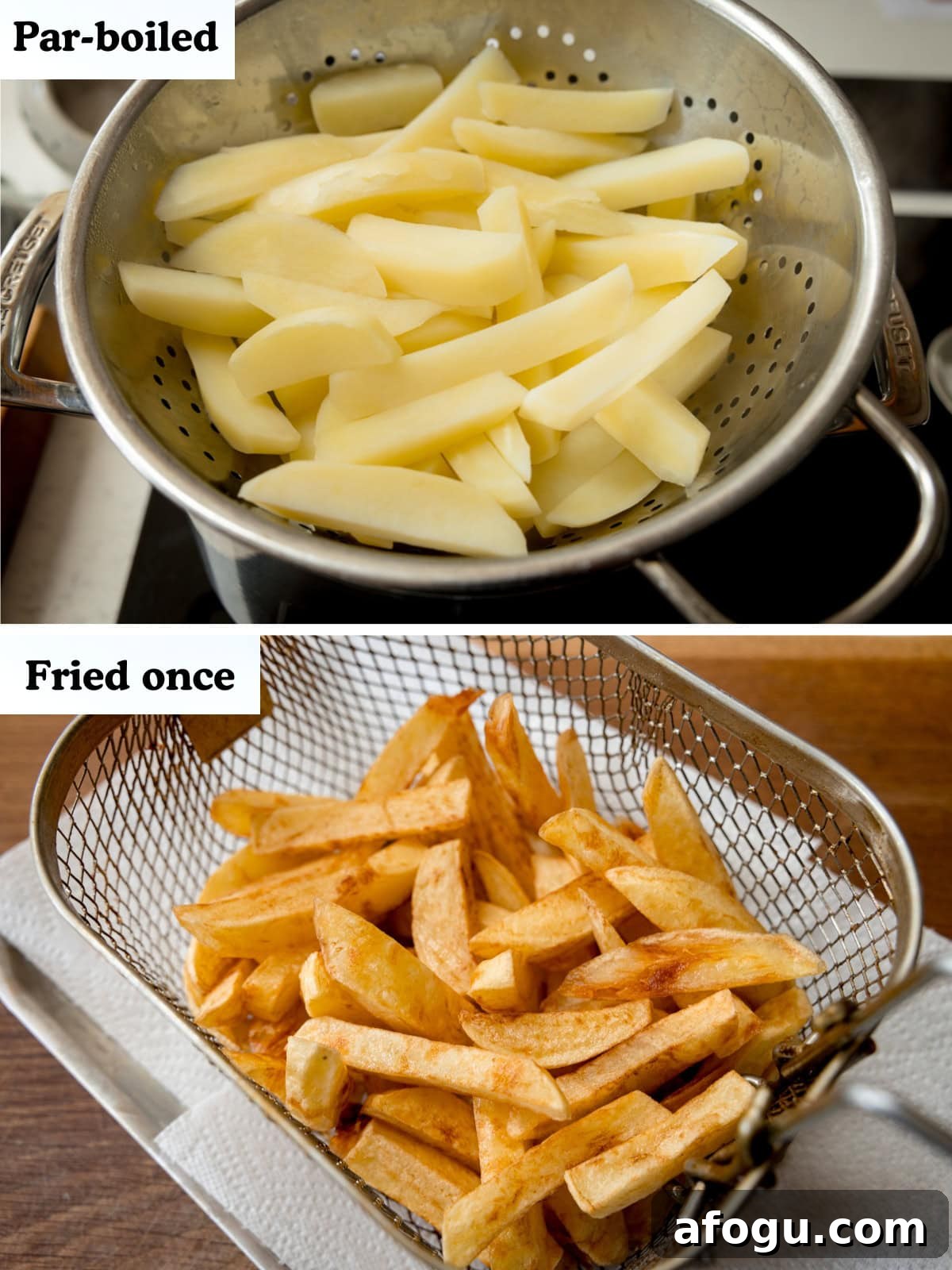
The par-boil method gave the best results. Soak the cut potatoes in cold water with a little vinegar for 30 minutes to remove excess starch, drain and simmer for 8–10 minutes until just tender, then drain, steam dry and deep fry once at 170°C (340°F) until lightly golden. This yields the soft, white interior and pale golden exterior typical of chip shop chips.
Soaking removes surface starch, which reduces browning during cooking. Chippy chips should be light in colour, so removing excess starch helps achieve that pale, golden finish.
Finish with plenty of salt and a splash of tangy vinegar for the authentic experience.
🍽️ What to serve it with
- Smother them in meaty gravy or turn them into poutine.
- Dip in bang bang sauce, sweet and sour, or sweet chilli.
- Make a chip butty using brioche or homemade bread for a classic sandwich.
🍲 More fantastic British Classics
Fish
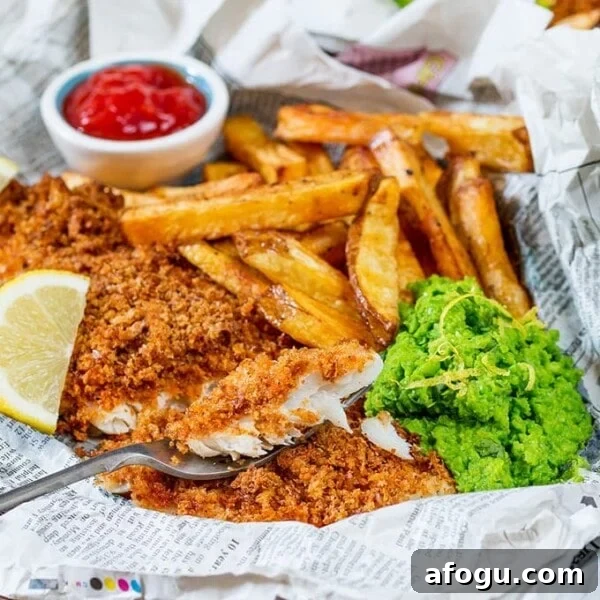
Baked Fish and Chips with Lemon Smashed Peas

British Classic Recipes
Individual Chip Shop Style Cheese & Onion Pie
Dinner
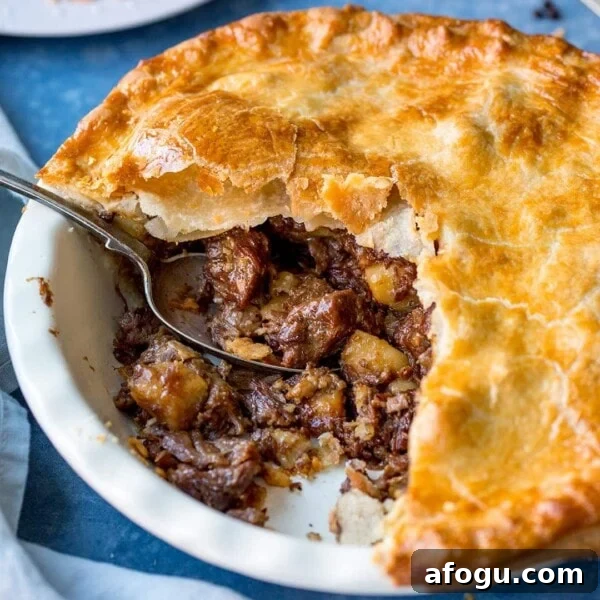
Rich and Tasty Slow-Cooked Steak Pie

Curries
Chicken Tikka Masala Recipe
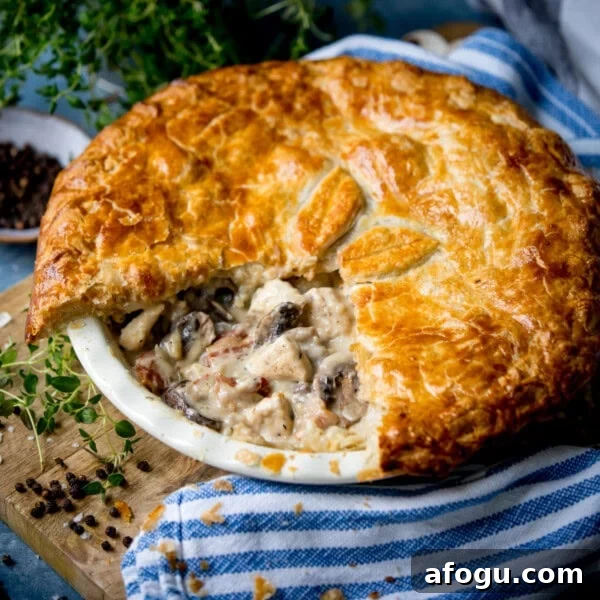
Dinner
Chicken and Mushroom Pie
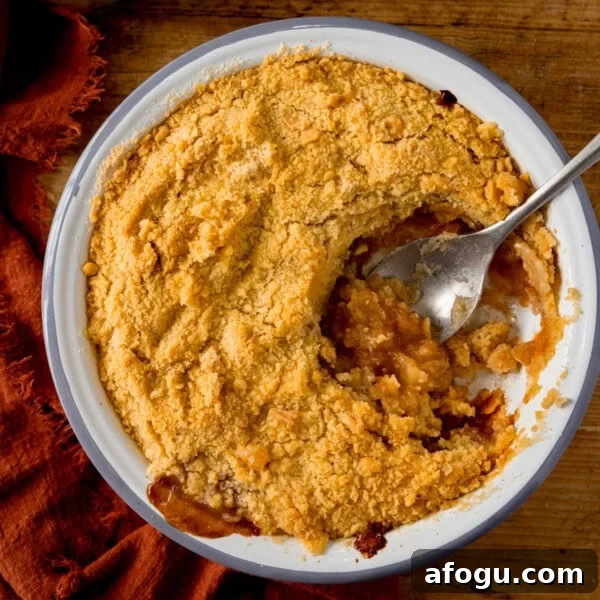
Cakes & Desserts
The Best Apple Crumble
Stay updated with new recipes!
Subscribe to the newsletter to hear when new recipes are posted. I’m also on YouTube (new videos weekly) and Instagram for behind-the-scenes stories and food photos.

Chip Shop-Style Chips
Ingredients
- 1 kg (2.2 lbs) floury potatoes (unpeeled weight)
- 1 tsp vinegar (cider, white wine or malt)
- Oil for deep frying
Instructions
- Peel the potatoes and cut into thick chips about 1.5 cm wide.
- Rinse the chips twice in cold water in a colander.
- Transfer to a bowl, cover completely with cold water and add the vinegar. Soak for 30 minutes.
- Drain, place in a large pan, cover with fresh water and bring to the boil. Simmer 8–10 minutes until just tender.
- Drain in a colander and leave to steam-dry for 5 minutes.
- Heat oil in a deep fryer to 170°C / 340°F.
- Add the chips to the fryer basket and lower slowly into the oil. Fry for 5–6 minutes until lightly golden.
- Turn off the fryer, drain the chips, season with salt and serve with a splash of vinegar.
Notes
Be careful with hot oil. Never leave it unattended.
Potatoes: Use floury varieties such as Maris Piper or Rooster for the best texture.
Why soak? Soaking reduces surface starch that causes excessive browning, helping to keep chips light in colour.
Why par-boil? Par-boiling ensures chips are cooked through so a single fry crisps the exterior without darkening too much.
Make ahead: You can peel and cut chips and keep them submerged in cold water for up to an hour at room temperature, or longer in the fridge. Avoid leaving them in water for more than 8 hours.
Nutritional note: Nutrition is approximate per serving. Oil absorption varies, typically between 8–25% of the food’s weight.
Nutrition
Nutrition information is automatically calculated and should be used as an approximation.
Some links in this post may be affiliate links — I may earn a small commission at no extra cost to you. Nutrition information is approximate. For more details see our Terms & Conditions.