
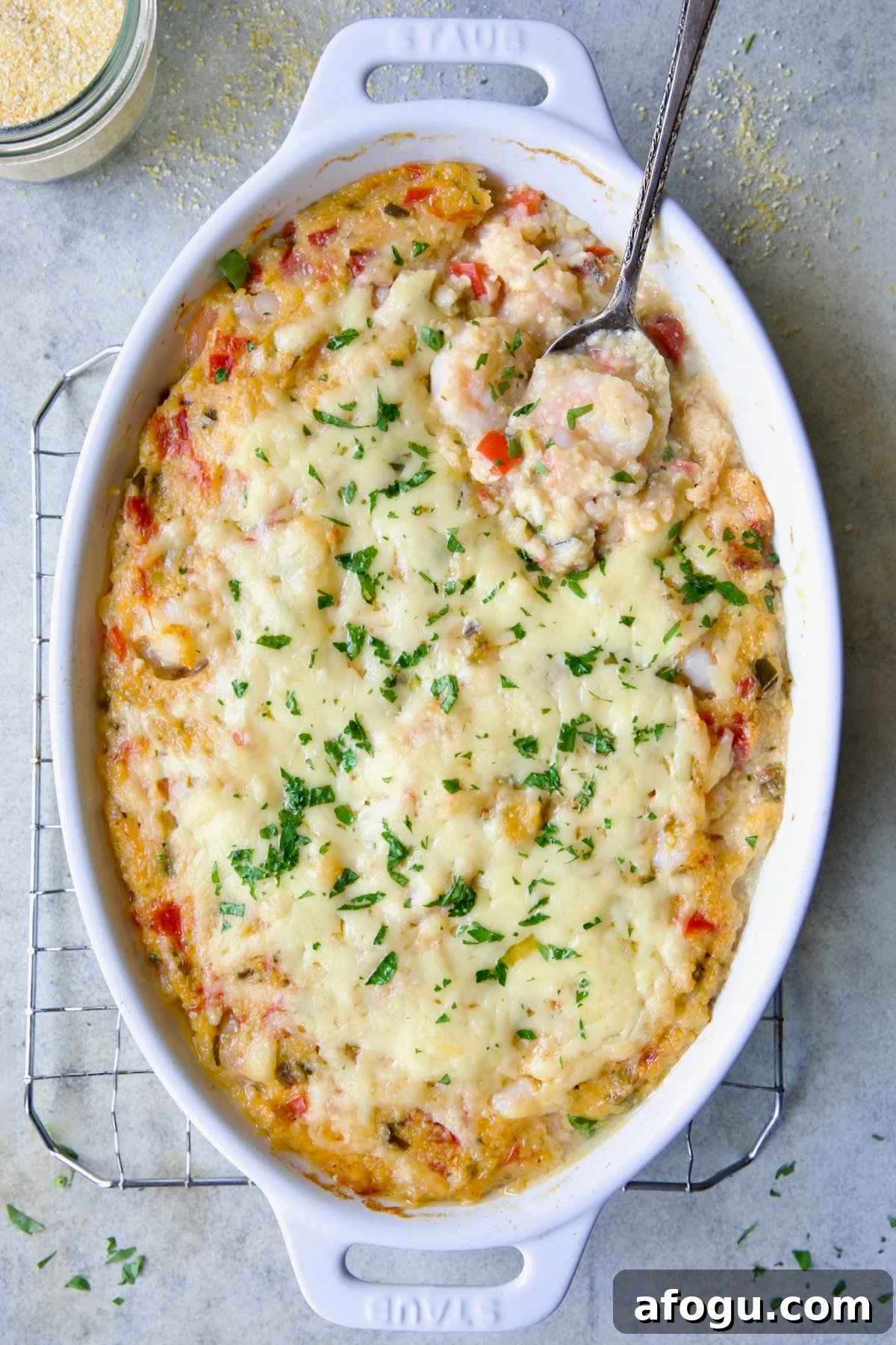
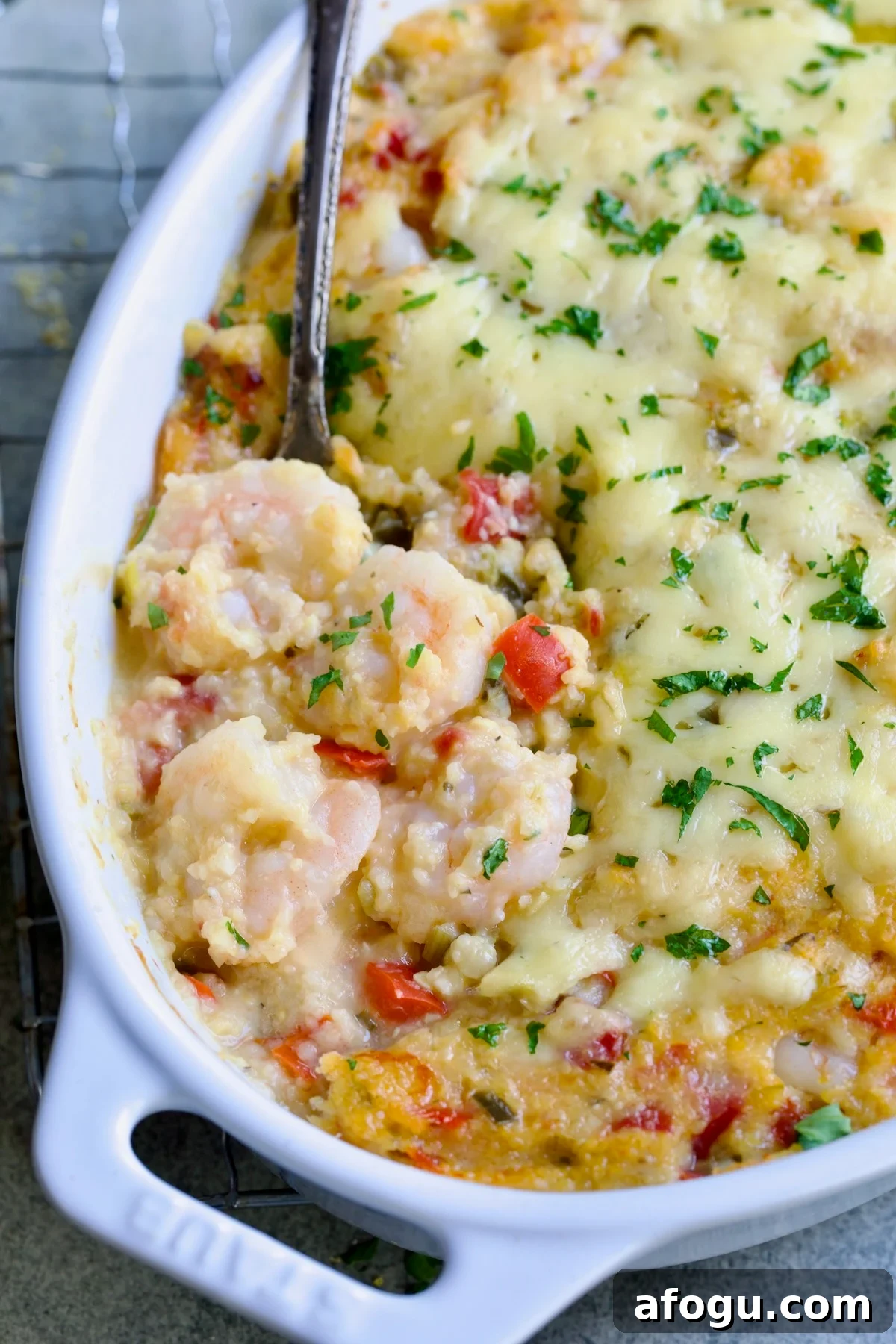
This spicy Shrimp and Grits Casserole reinvents a Southern favorite with creamy grits, tender shrimp, melted Gouda, and a touch of heat. Baked in the oven for an easy one-dish meal, it’s excellent for weeknights, brunch, or casual entertaining — a comforting, crowd-pleasing option that fits any table.
“Oh, my word! I made this–first time cooking grits. It is literally out of this world! Reheats well also. Will make again and again!”

A Brief Intro to Shrimp and Grits
Shrimp and grits is a hallmark of Southern coastal cooking. The dish combines creamy ground-corn porridge—similar in texture to polenta—with seasoned shrimp and flavorful additions. While Charleston, South Carolina, is often credited as the birthplace, the recipe has spread across the South and remains beloved at all hours of the day.
Originally a simple breakfast for fishermen, shrimp and grits now appears at brunches, lunches, and dinners. This casserole captures that classic pairing in an easy, oven-ready format.
Why This Recipe Is a Keeper
This Shrimp and Grits Casserole checks many boxes: comforting, flavorful, and suitable for entertaining. If you haven’t warmed up to grits before, this dish may change your mind — the cheese and spices elevate the grits into something rich and memorable.
Key benefits:
- Reliable and popular: a tested recipe with many high ratings.
- Restaurant-quality at home: Gouda and well-seasoned shrimp create depth of flavor.
- Entertaining-friendly: makes a great brunch or dinner centerpiece.
- Flexible: swap smoked Gouda, pepper jack, or Monterey Jack; add andouille, ham, or crab for variation.
- Make-ahead friendly: assemble earlier and bake when you’re ready, perfect for holidays or gatherings.
Rich, adaptable, and satisfying, it’s a recipe worth keeping in your rotation.
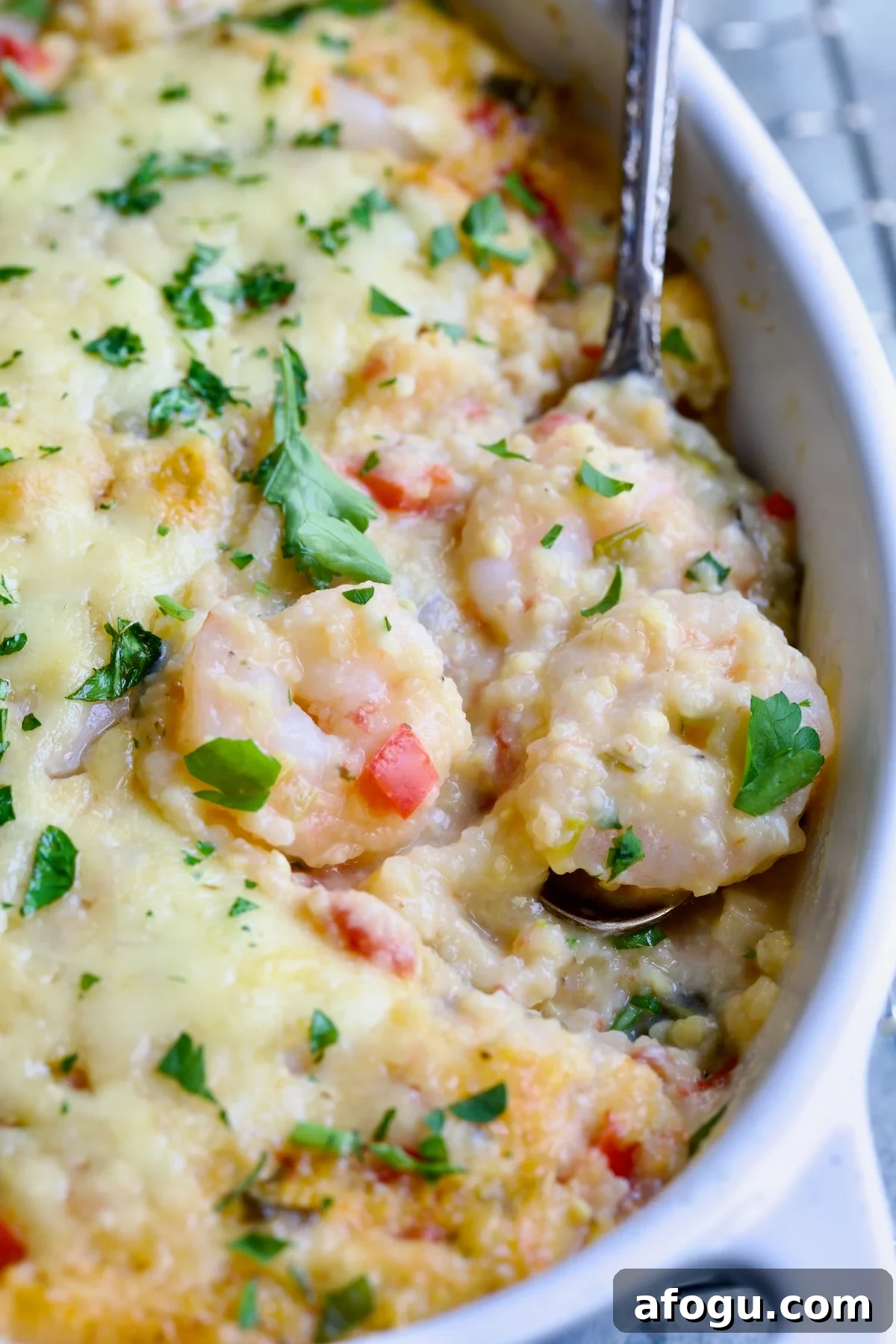
How to Make Shrimp and Grits Casserole
Recipe Ingredients
Below are the main ingredients used in this casserole. Exact quantities are listed in the recipe card further down.
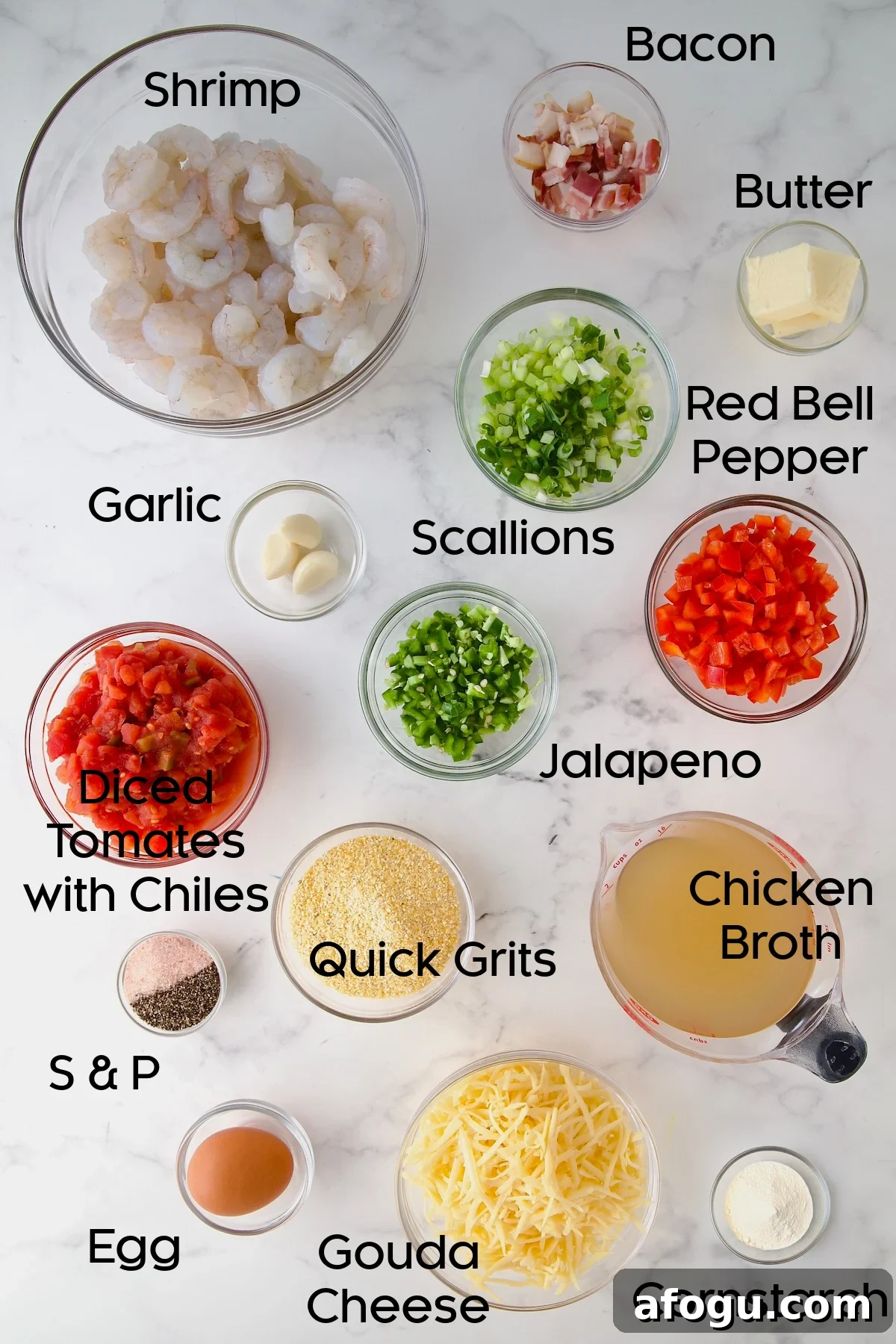
Ingredient Notes and Substitutions
- Shrimp: Use wild-caught U.S. Gulf shrimp when possible — they tolerate reheating better than most farmed varieties. A 31-40 count (medium-large) works well, but you can adjust size to preference.
- Bacon: Substitute turkey or beef bacon, or diced andouille if you avoid pork.
- Diced tomatoes with green chiles: Use drained tomatoes with chiles for flavor and a bit of heat. Substitute regular petite-diced tomatoes if you prefer milder spice and be sure to drain well.
- Jalapeño: Control the heat by adding more or less, and remove seeds for a milder result.
- Quick grits: Quick-cooking (not instant) grits work best for texture and timing. Stone-ground grits can be used but must be cooked separately according to package directions before combining. Avoid instant grits here.
- Broth: Chicken broth is standard; fish stock is an excellent alternative for deeper seafood flavor.
- Gouda: Gouda melts smoothly and complements the shrimp without overpowering it. Smoked Gouda, Monterey Jack, or Pepperjack are viable alternatives.
- Cornstarch: A small amount helps thicken and stabilize the casserole while keeping it gluten-free.
Step-By-Step Instructions
- Gather and prep all ingredients. Preheat the oven to 375°F (190°C).
- Lightly grease a 1½–2 quart baking dish with cooking spray, butter, or oil; set aside.
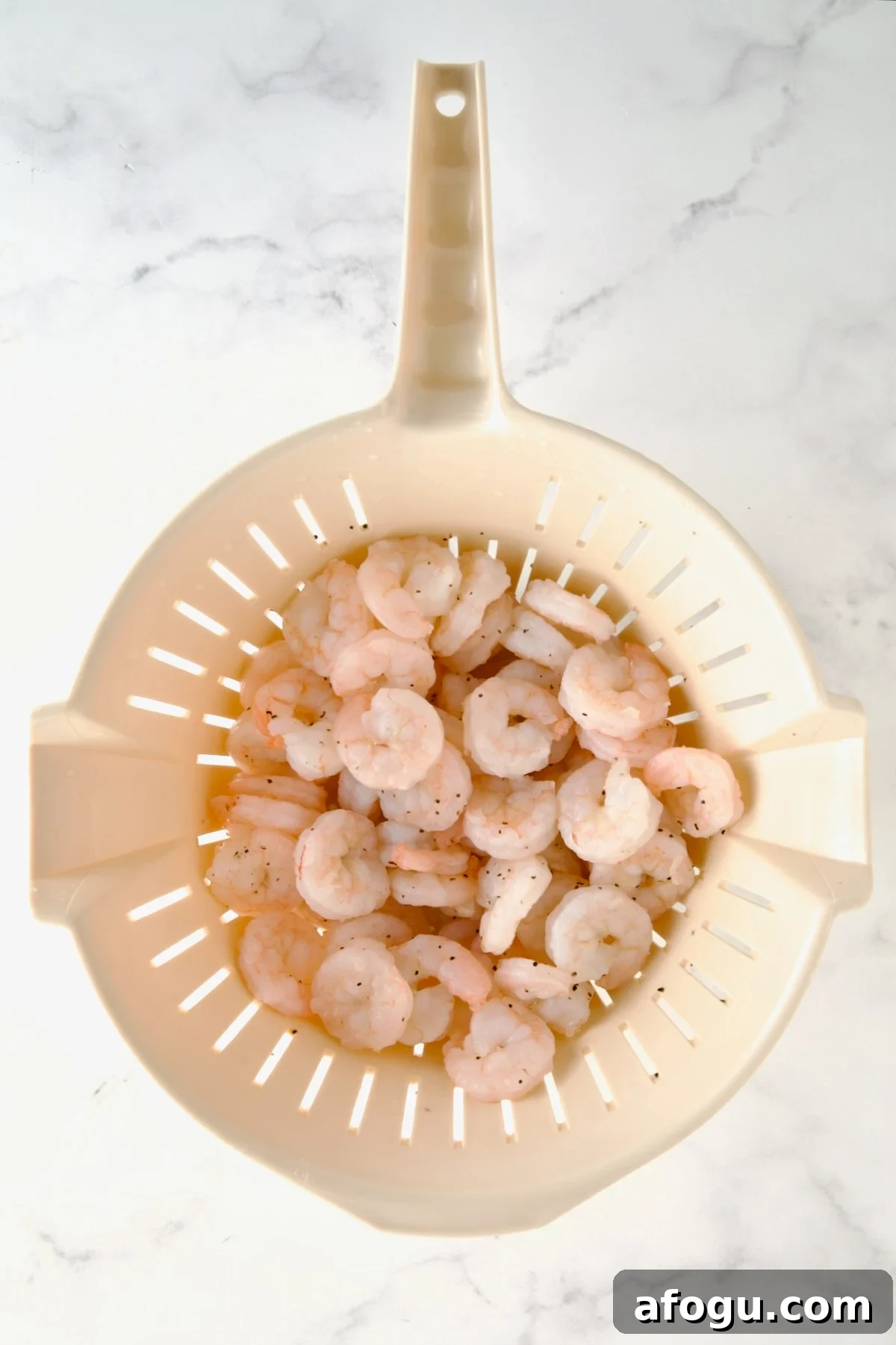
- Cook the shrimp: Place a colander in the sink. Bring a large pot of well-salted water to a boil, then turn the heat off. Add the shrimp and cook 10–15 seconds until they turn pink. Drain immediately and cool under cold running water or in an ice bath. Pat dry.
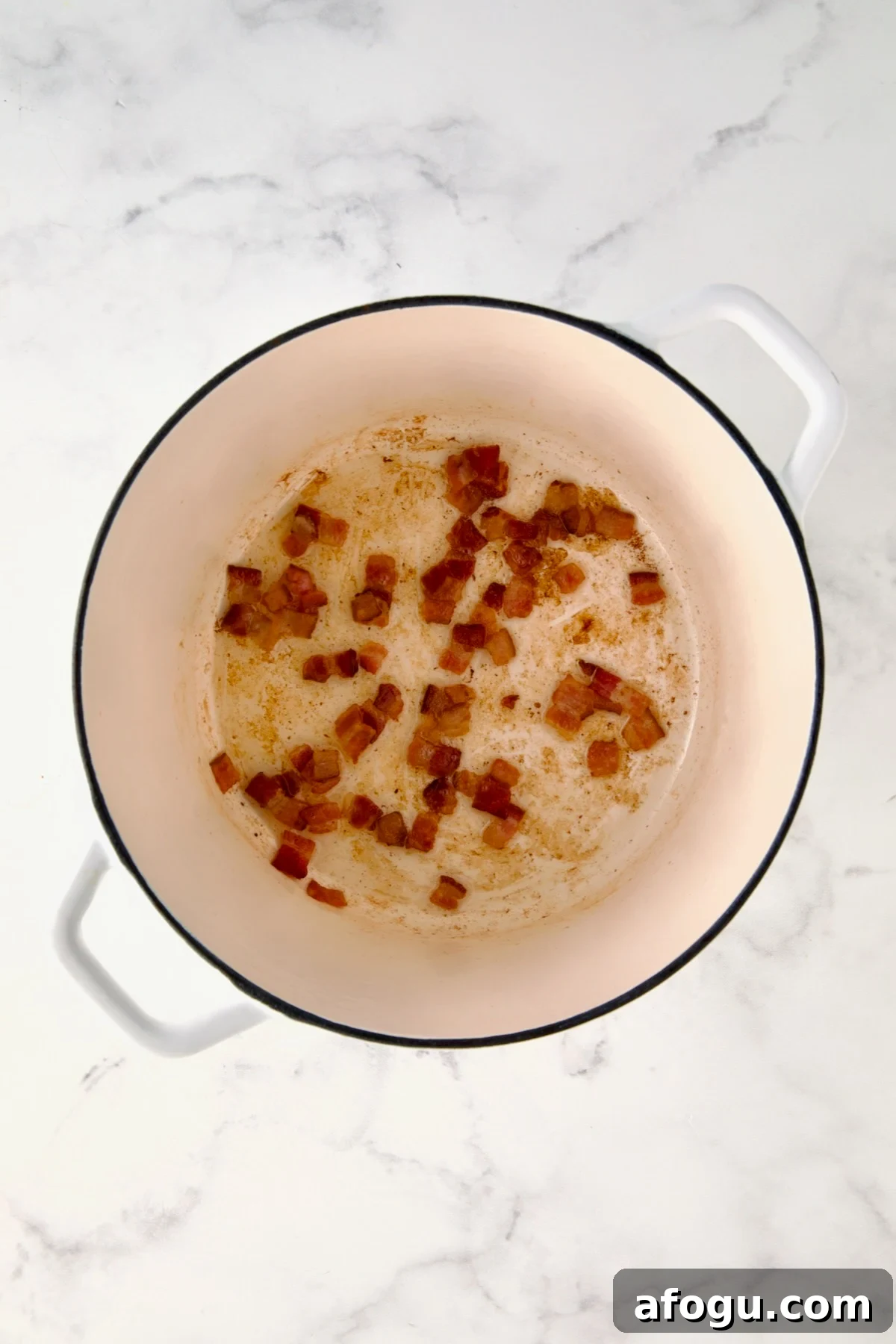
- In a heavy saucepan, cook the bacon over medium heat until crispy. Remove bacon with a slotted spoon and drain on paper towels, reserving drippings in the pan.
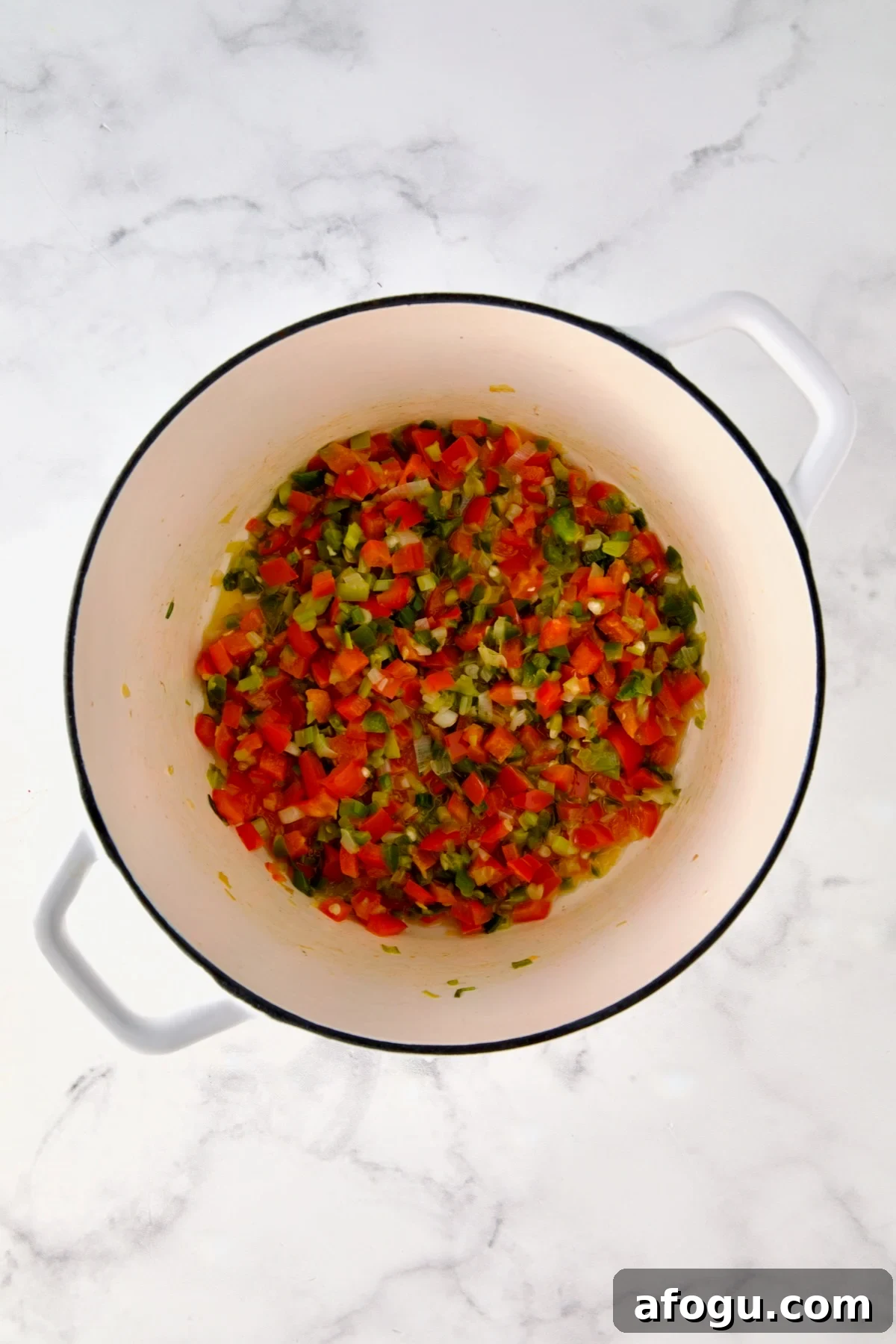
- Return the pan to medium heat and add butter to the drippings. When melted, sauté the scallion, red bell pepper, and jalapeño for 4–5 minutes until softened.
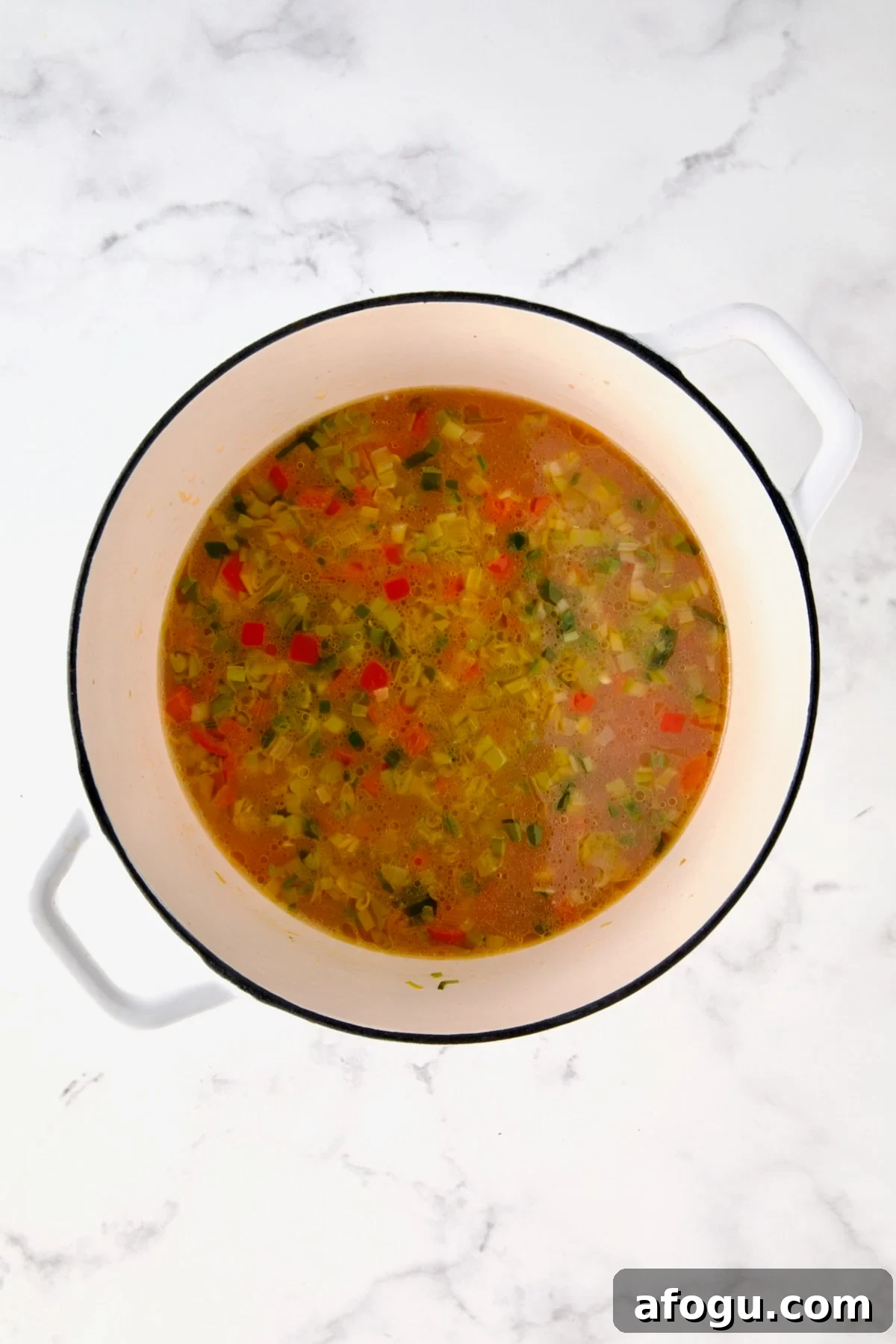
- Stir in garlic, drained diced tomatoes with chiles, and chicken broth (or fish stock). Bring the mixture to a boil.
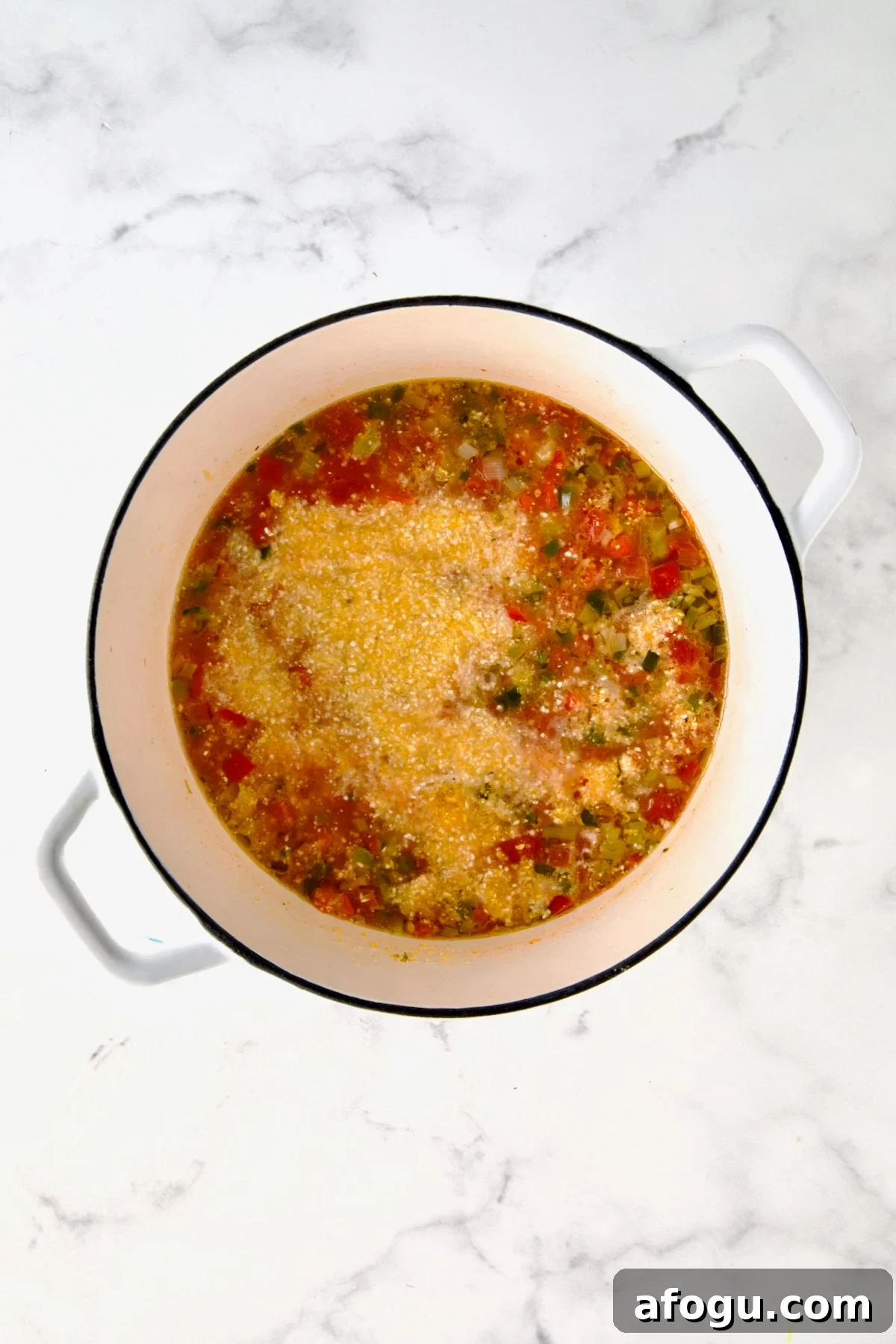
- Slowly whisk in the grits and return to a boil.
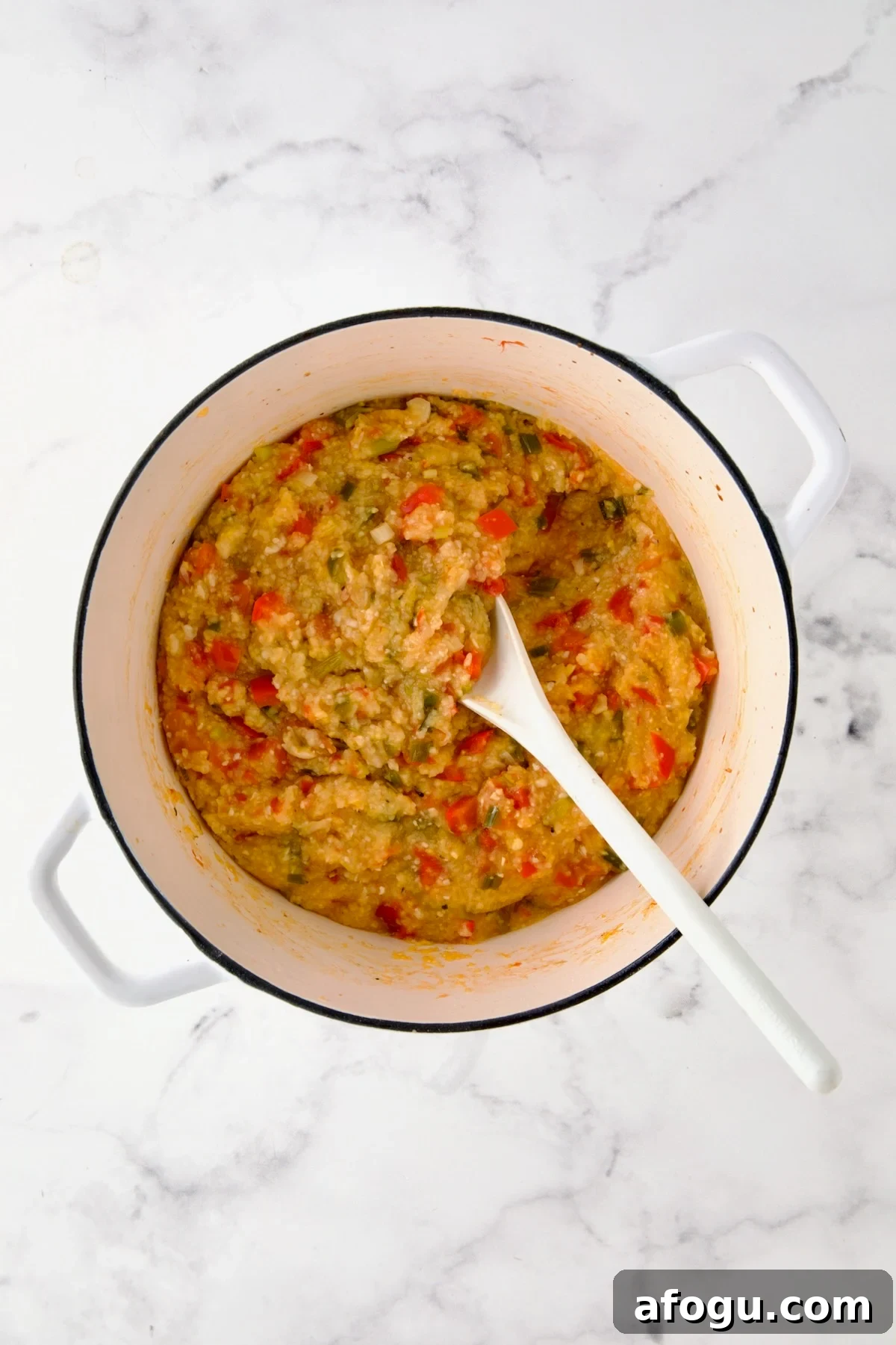
- Reduce heat to low and simmer, stirring occasionally, 5–7 minutes until thickened. Remove from heat and let cool 15 minutes. Season with salt and black pepper.
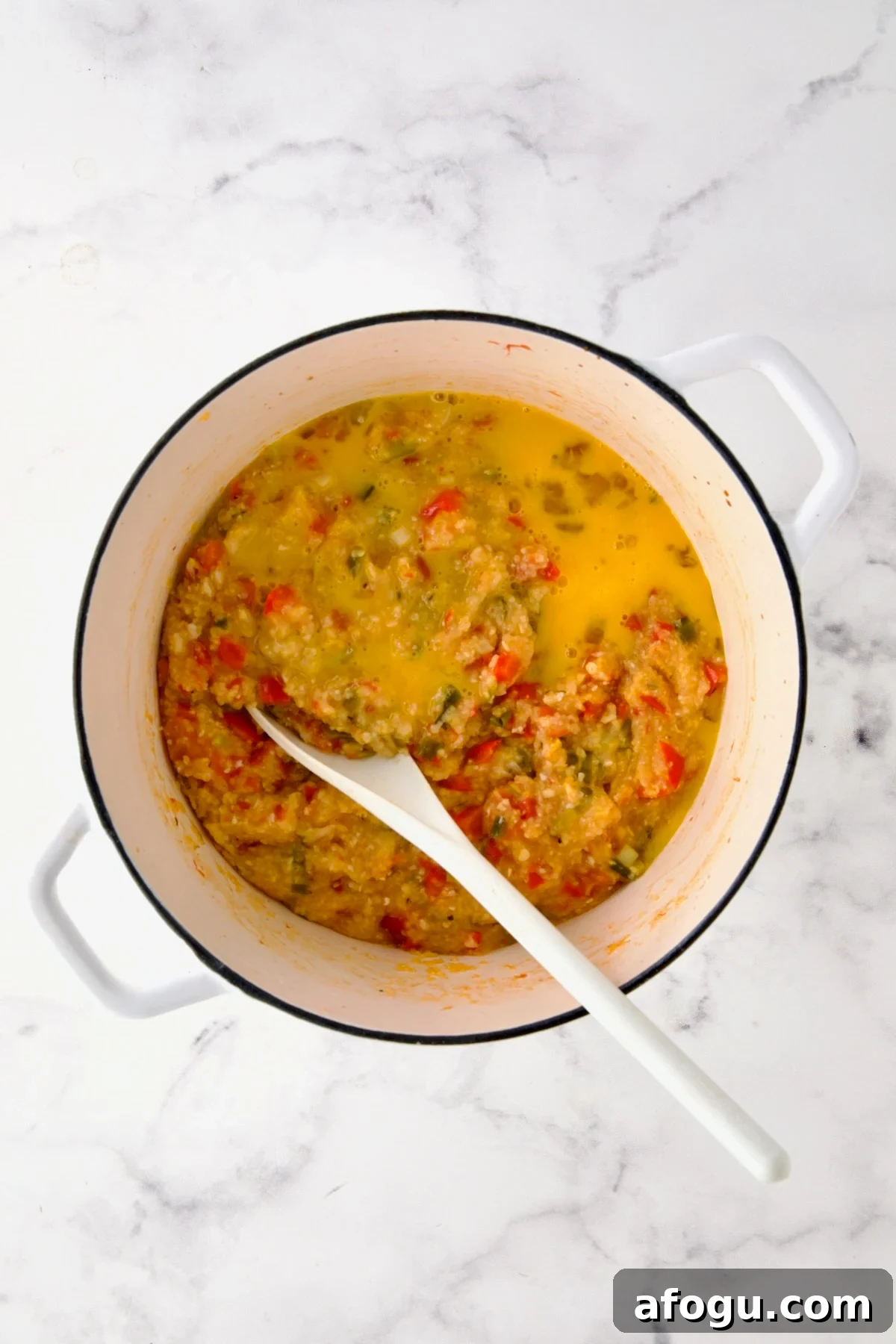
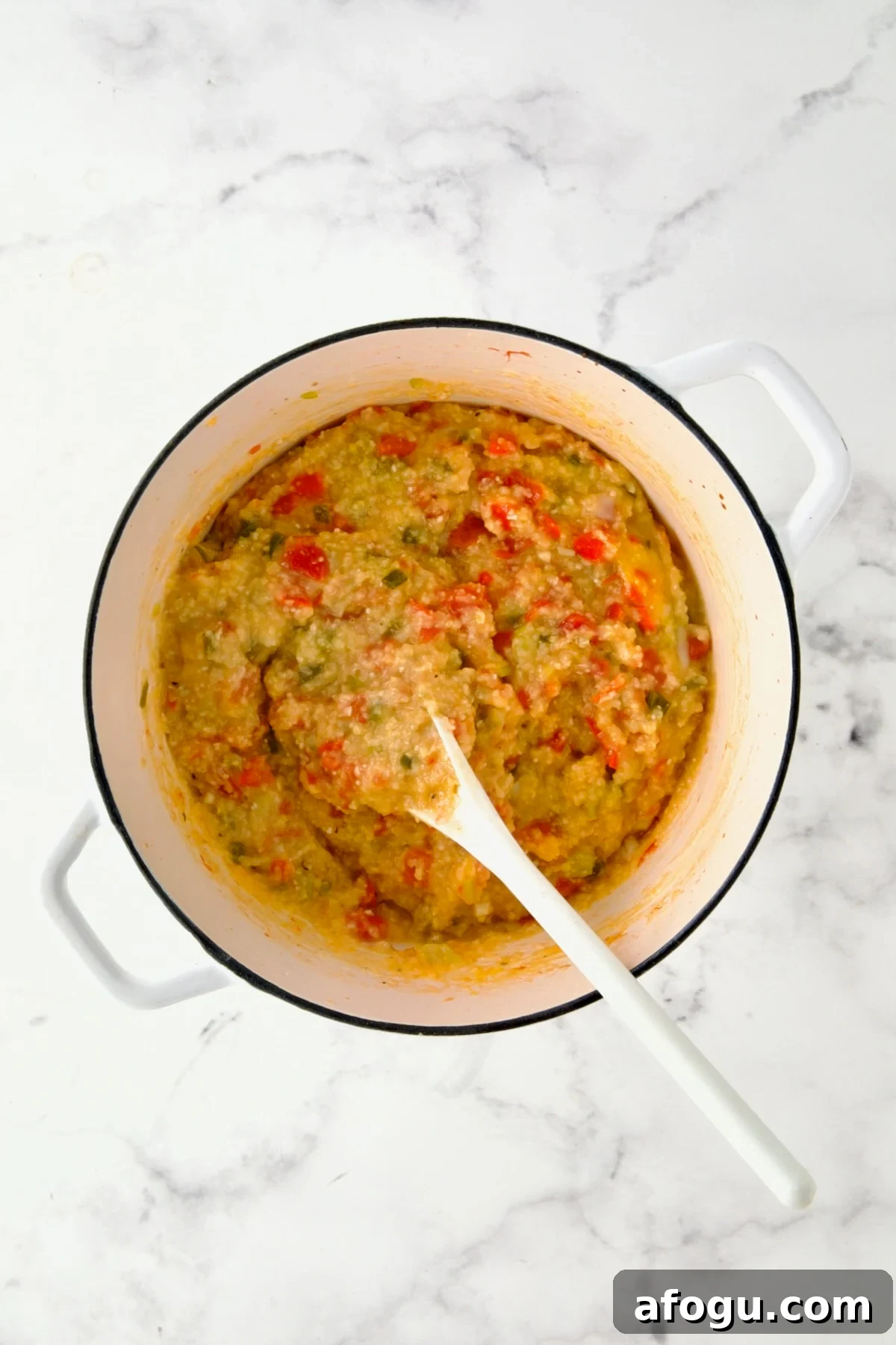
- Whisk cornstarch into the beaten egg, then stir this mixture into the cooled grits and fully incorporate.
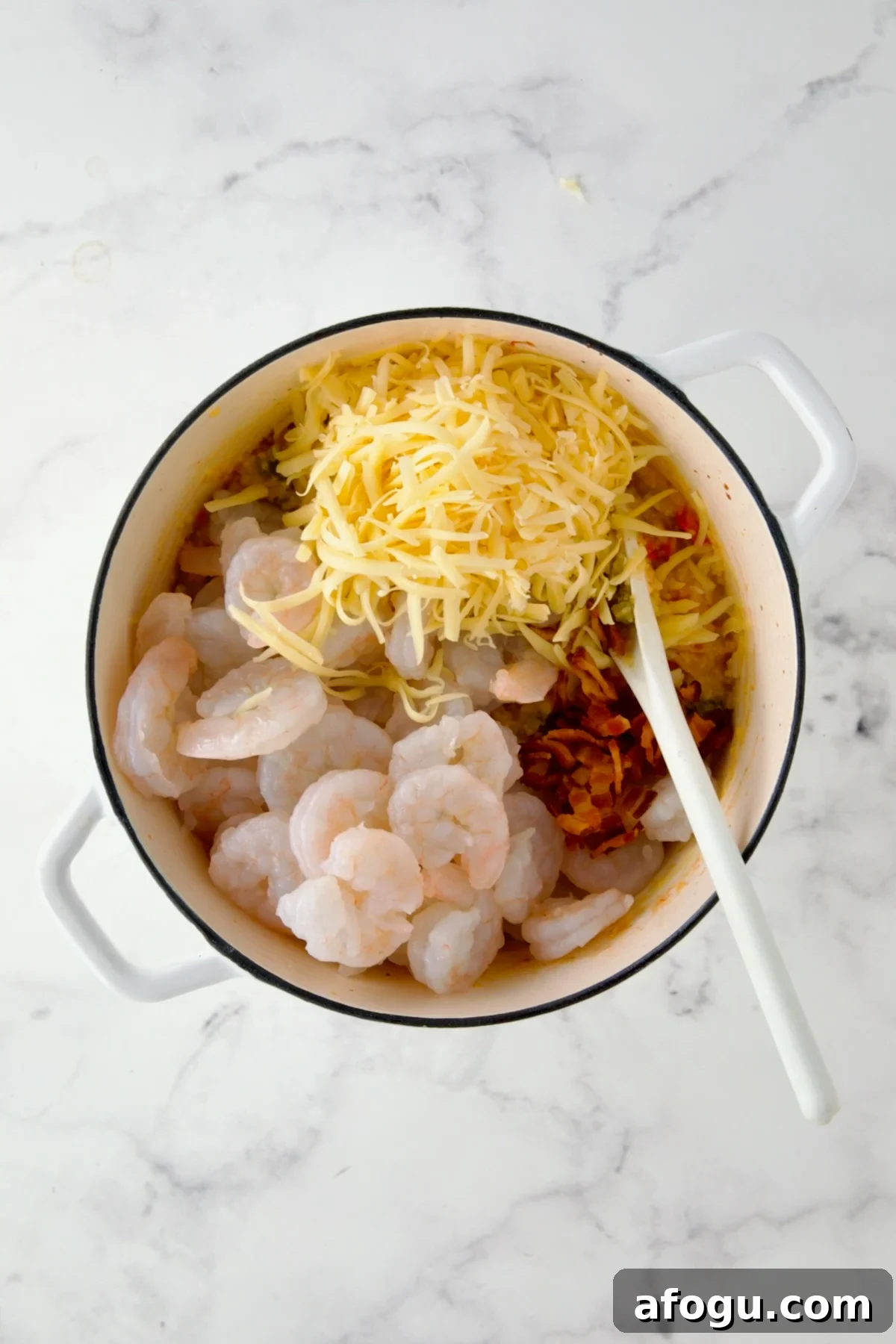
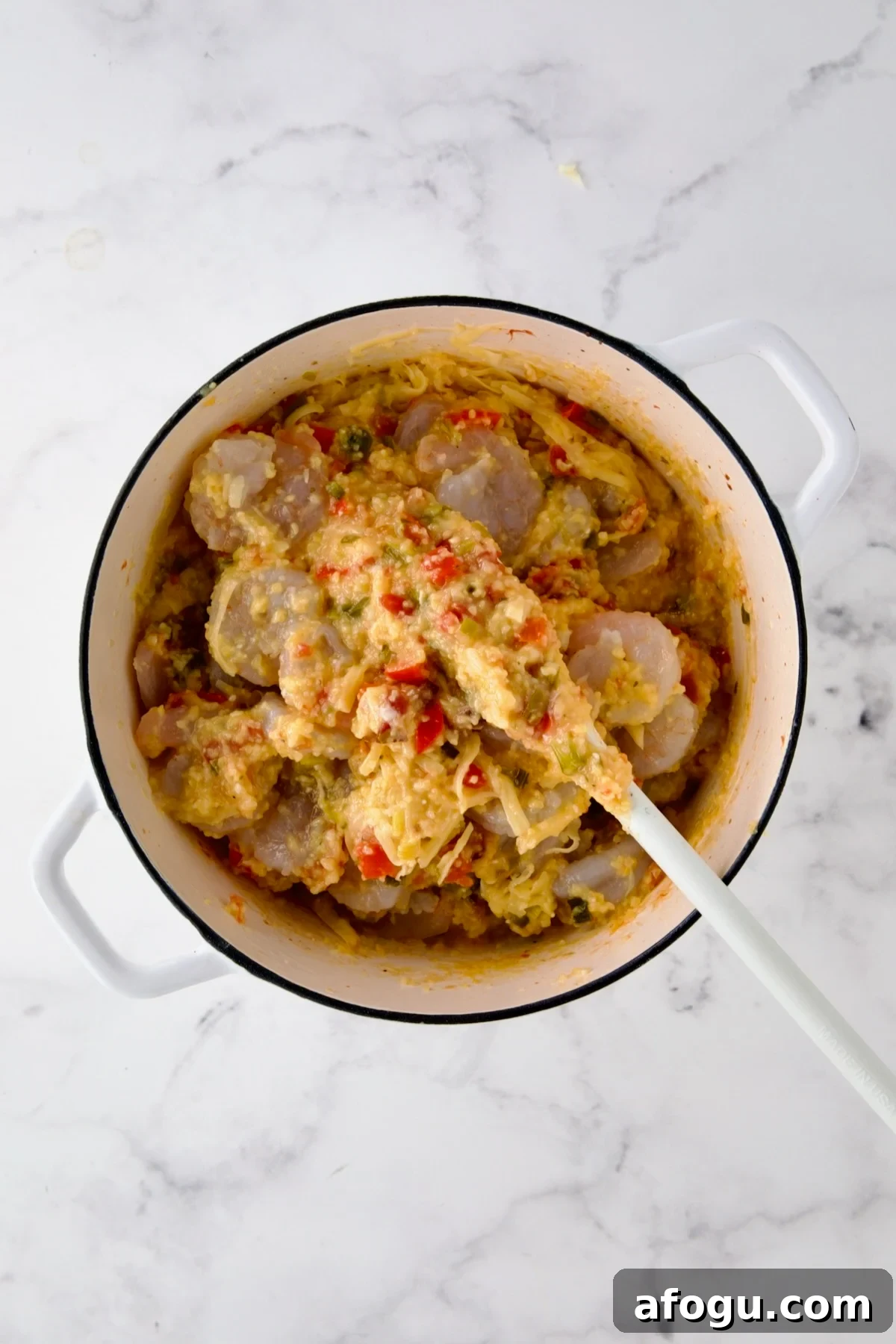
- Fold in the cooked shrimp, reserved bacon, and 1 cup of shredded cheese.
- Transfer the mixture to the prepared baking dish, placing slightly more grits on top than shrimp for a balanced appearance.
- Sprinkle the remaining 1/2 cup cheese over the top.

- Bake uncovered 30–35 minutes until heated through and bubbling and set around the edges. An internal temperature of at least 165°F (74°C) is recommended. Let rest 5–10 minutes before serving.
Chef Tips and Tricks
- Use a shallow 1½–2 quart dish for best results; deeper dishes take longer to set.
- Most commercial shrimp are individually quick-frozen. If buying thawed shrimp from a display case, use it within a day or two and do not refreeze. Thaw frozen shrimp yourself for best control.
- To avoid overcooking shrimp: boil the water, then turn the heat off before adding shrimp. Remove them as soon as they turn barely opaque and cool immediately.
- Ensure the grits are thick and spoon-standing before adding other ingredients; undercooked grits cause a soupy casserole.
- Season the grits with salt before adding the egg/cornstarch mixture.
- Add the egg/cornstarch after the grits have cooled for about 15 minutes so the egg doesn’t scramble and so the mixture binds properly.
- Bake uncovered so excess moisture can evaporate; if the cheese browns too quickly, cover loosely with foil.
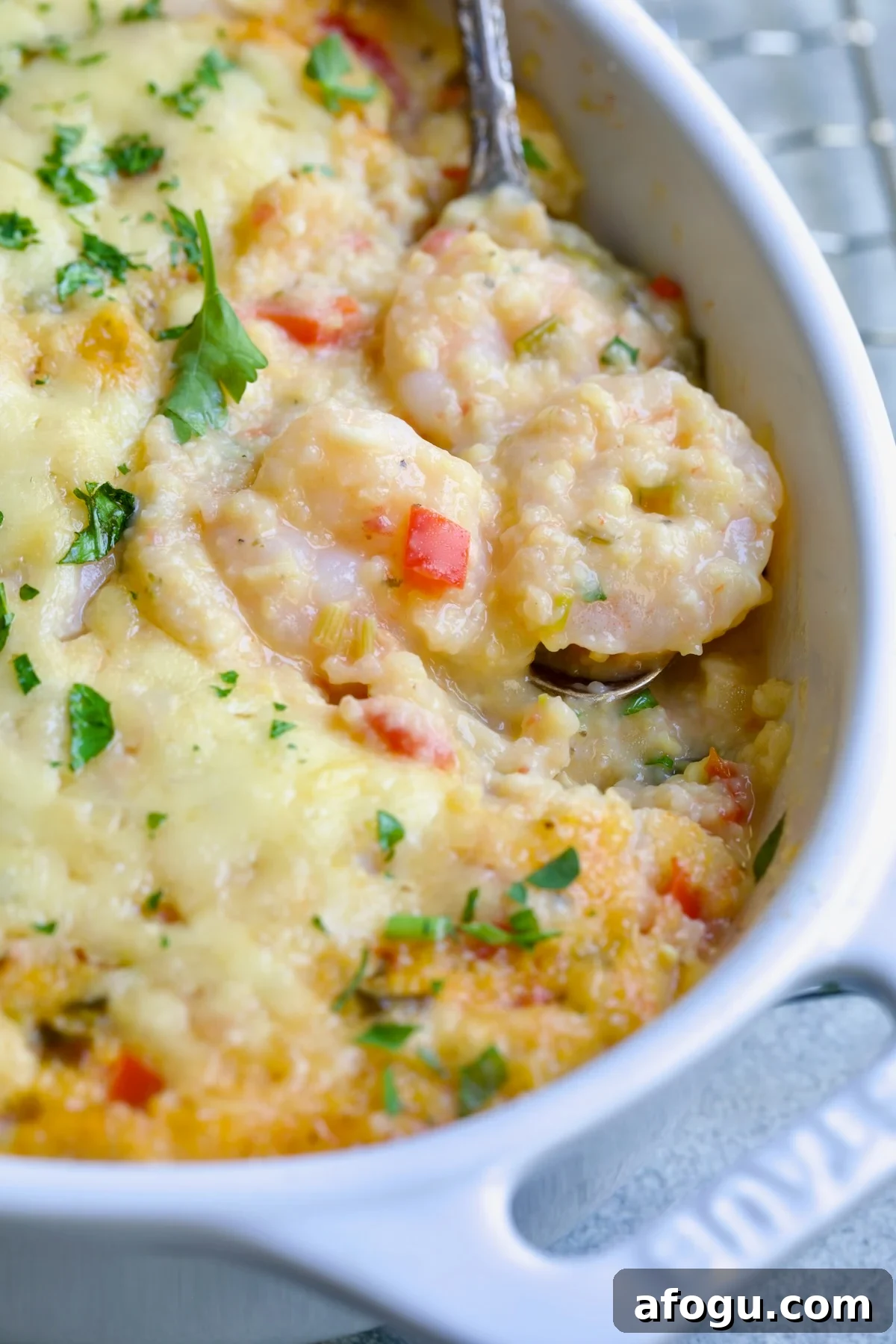
- Let the casserole rest 5–10 minutes after baking so the grits firm up while the center stays creamy.
Recipe FAQs
Yes. Stone-ground grits require much longer cooking, so prepare them separately per package directions before combining with the vegetable mixture and remaining ingredients.
Yes. Pre-cooking the shrimp prevents excess liquid and addresses food safety. Properly cooked and cooled wild-caught shrimp will reheat well in the casserole.
Yes. The egg with cornstarch helps bind the casserole; omitting it can produce a denser result.
Common causes: undercooked grits, too much liquid from ingredients that weren’t drained, incorrect grits-to-liquid ratio, covering before it cooled (causing condensation), or skipping the resting time. Letting the casserole rest 10–15 minutes often resolves a runny texture.
Yes. Assemble up to 24 hours ahead, cool completely before refrigerating to prevent condensation, and bring to room temperature for about 30 minutes before baking. Bake uncovered so moisture can escape; baking time may increase if very cold.
Yes. Cool, wrap securely, and freeze. Thaw in the refrigerator at least 24 hours, bring to room temperature briefly, then bake uncovered. Increase bake time if still very cold.
Serve With
- Garlic green beans
- Braised Southern-style greens
- Grilled corn succotash
- Fried cabbage with bacon
More Shrimp and Grits Ideas
- Smothered shrimp with andouille and creamy Parmesan peppercorn grits
- Cauliflower grits with Gouda and blackened shrimp
- Pumpkin-chipotle grits with bacon-wrapped shrimp
Find the full recipe, ingredient amounts, and step-by-step instructions in the recipe card included in the original post.
 Like this? Leave a comment below!