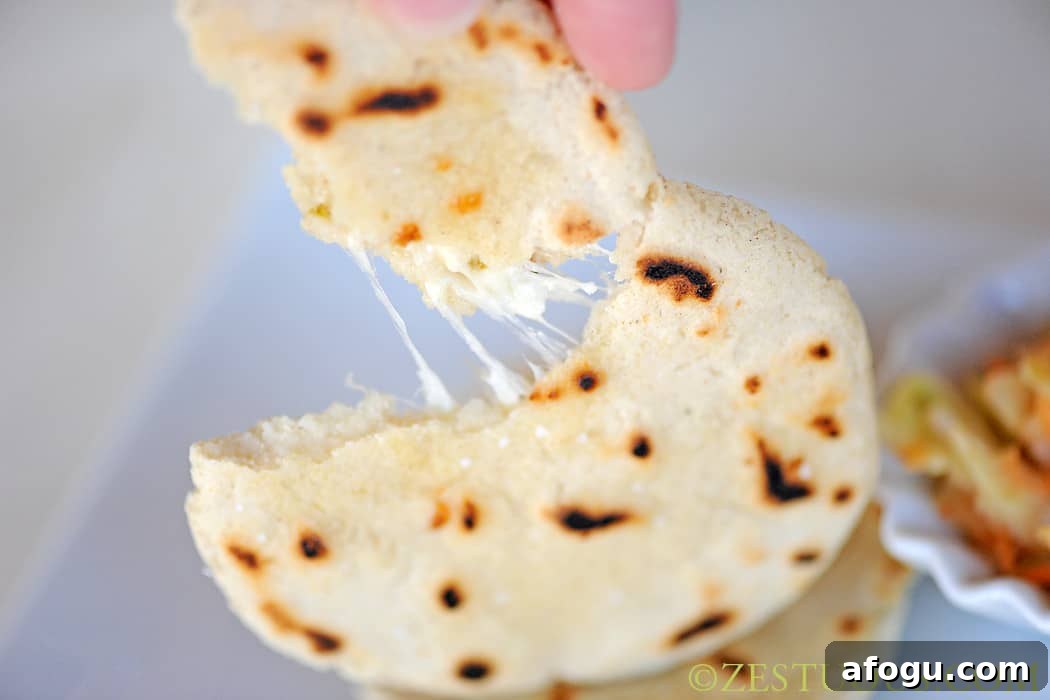
You don’t have to fly to El Salvador to enjoy pupusas. This recipe shows how to make authentic-tasting pupusas and curtido at home with simple ingredients and clear steps.
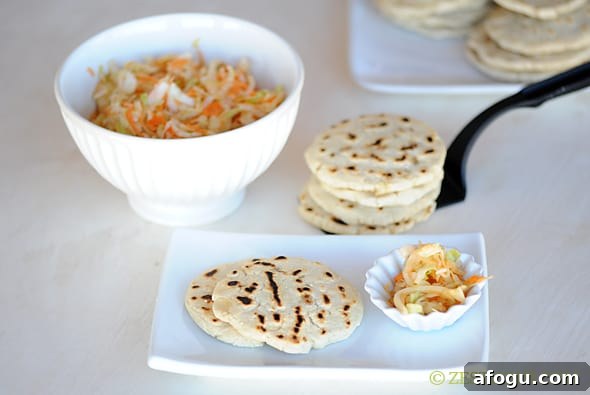
Table of Contents
- How I discovered authentic Pupusas
- How are pupusas made?
- How to make pupusas at home Recipe
- Curtido (slaw) Recipe
- Ingredients for pupusas
- How to make pupusa dough
- Pork Filling
- Cheese Filling
- Curtido
- How to serve Salvadoran pupusas
- Storage
- Frequently Asked Questions
- More main dish recipes
- Latest Recipes
How I discovered authentic Pupusas
One afternoon I was hunting for a real taco — not a fast-food version, but something with heart. I spotted a small café advertising Salvadoran and Mexican food and decided to stop in. Behind the counter three women hustled: one at the register, another prepping, and an elderly woman cooking on the griddle in full view.
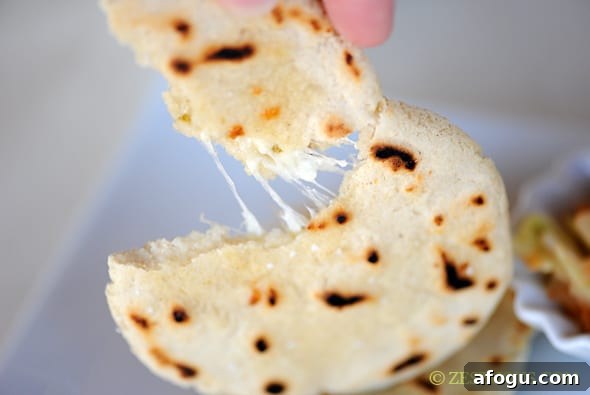
While waiting for my order, I watched her press and shape thick pockets of corn dough. Curious, I checked the menu and discovered pupusas: corn masa pockets filled with cheese, pork, or beans. As someone who loves melted cheese, I had to try one.
The first bite sealed it. The aroma of roasted corn, the pillowy masa, and the gooey salty cheese were irresistible. I returned the next day, asked how they made them, and was shown the simple, hands-on technique. They serve pupusas with curtido, a fermented cabbage slaw that brightened the dish much like kimchi brightens Korean food.
How are pupusas made?
Pupusas use masa harina — the same treated corn flour used for tortillas and tamales. You mix masa with warm water and salt to form a pliable dough, shape it into a ball, make an indentation for the filling, enclose the filling, then flatten into a disc and cook on a hot griddle. They are traditionally served with curtido or salsa roja.
Below is an adapted recipe (with a chicharrón-style pork filling and a cheese filling) that preserves traditional technique while keeping the instructions approachable for a home cook.
How to make pupusas at home
Ingredients
Queso Filling
- 1 cup shredded pepper jack, monterey jack, or Oaxaca
- 1/2 cup cotija cheese
Chicharrón (shredded pork) Filling
- 1 lb pork butt, cubed
- 1 cup water
- 3 cloves garlic, chopped
- 1 tsp kosher salt
- 8 cherry tomatoes
- 1/4 white onion
- 1 tbsp canned green chiles
- 1 cup shredded pepper jack, monterey jack, or Oaxaca
- 1/4 cup cotija cheese
Pupusa Dough
- 2 cups masa harina
- 1 1/2 – 1 3/4 cups warm water
- 1/2 tsp salt
Instructions
- Prepare either the pork filling, the cheese filling, or both before forming the pupusas.
Queso Filling
- Combine the shredded cheeses in a bowl and set aside to use as a filling.
Pork Filling
- Cook Pork: Put the pork, water, garlic and salt in a large pot and cook over medium heat for 30 minutes.
- Brown Pork: Turn heat to medium-high and let the liquid boil off (about 10 minutes). Reduce to medium and cook 5 more minutes, stirring occasionally, to brown the fat.
- Chop: Transfer the cooked meat to a food processor and pulse 8–10 times to chop. Move to a large bowl.
- Make Salsa: Pulse the tomatoes and onion in the food processor, then add the mixture to the bowl with the meat.
- Finish: Add green chiles and cheeses to the meat and mix with your hands until combined. Set aside as filling.
Pupusa Dough
- Mix: In a large bowl, combine masa harina, salt, and 1 1/2 cups warm water. Mix with your hands until a dough forms.
- Adjust: Turn the dough out onto the counter. If it cracks when pressed, knead in a bit more water until the surface is smooth and pliable.
Filling and Cooking Pupusas
- Roll: Break off a golf-ball-sized piece of dough and roll it into a ball.
- Flatten: Slightly flatten the ball and make an indentation in the center.
- Fill: Add about a tablespoon of filling into the dent.
- Fold: Fold the dough over the filling, pinch the edges, then fold and pinch the opposite sides to seal.
- Press: Place the sealed ball on the counter and gently press or pat it into a 1/4-inch-thick disc. Be gentle so the filling doesn’t break through.
- Cook: Heat a skillet or griddle over medium–medium-high. Cook pupusas 4–5 minutes per side until golden brown and slightly blistered.
- Serve: Remove and cook remaining pupusas. Serve hot with curtido or your favorite salsa.
Nutrition
Calories (per pupusa): 175 kcal (approximate). Nutrition values are estimates.
Additional Info
Course: Main Course • Cuisine: El Salvadoran-style
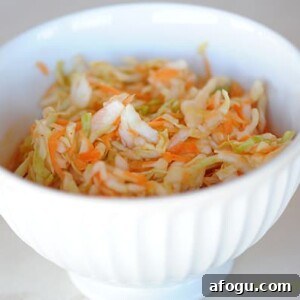
Curtido (slaw)
Ingredients
- 3 cups water
- 1 bag shredded cabbage (8 oz)
- 2 tbsp lime juice
- 1 tbsp sriracha
- 1 tbsp olive oil
- 1 tsp sugar
- 1/2 tsp salt
- 1/4 cup water (additional)
- 1/2 cup grated carrot
- 1/4 cup grated onion
Instructions
- Soften: Microwave 3 cups water in a microwave-safe pitcher for 3 minutes. Place the shredded cabbage in a large bowl and pour the hot water over it. Let sit 3 minutes.
- Drain: Drain the cabbage in a colander and return to the bowl.
- Dressing: Whisk together lime juice, sriracha, olive oil, sugar, salt, and 1/4 cup water.
- Combine: Toss the cabbage with grated carrot and onion, then pour the dressing over it.
- Ferment: Transfer the mixture to a resealable bag, press out excess air, and seal so the cabbage sits submerged in the liquid. The flavor improves the longer it sits.
- Serve: Serve chilled or at room temperature alongside pupusas.
Nutrition
Calories (per serving): 76 kcal (approximate).
Additional Info
Course: Side • Cuisine: El Salvadoran-style
Ingredients for pupusas
- Masa harina: Treated corn flour used for pupusas, tortillas and tamales.
- Water: Binds the masa and softens cabbage for curtido.
- Salt
- Cotija cheese: Crumbly Mexican cheese.
- Shredded melty cheese: Pepper jack, monterey jack or Oaxaca work well.
- Pork butt: Shoulder cut used for the chicharrón-style filling.
- Fresh garlic
- Cherry tomatoes
- White onion
- Canned green chiles: Adds mild heat to the pork filling.
- Shredded cabbage: Base for curtido.
- Lime juice: Brightens curtido.
- Sriracha: Optional heat in curtido.
- Olive oil
- Sugar: Balances acidity in curtido.
- Carrot: Adds color and texture to curtido.
See the full recipe cards above for exact amounts and servings.
How to make pupusa dough
- Mix: In a large bowl, combine masa harina, 1 1/2 cups warm water and salt. Work with your hands until a cohesive dough forms.
- Test: Place a piece on the counter. If it cracks when pressed, add a little more water and knead until smooth.
- Form: Break off a golf-ball-sized portion, flatten, indent the center, add about 1 tbsp filling, seal and gently flatten into a 1/4-inch disc.
- Cook: Heat a skillet or griddle over medium–medium-high and cook each pupusa 4–5 minutes per side until golden and slightly blistered.
Pork Filling
- Simmer: Combine pork, water, garlic and salt in a pot. Cook over medium heat for 30 minutes.
- Reduce: Raise heat to medium-high and boil off liquid for about 10 minutes. Reduce heat and brown the fat for 4–5 minutes.
- Chop: Pulse the pork in a food processor 8–10 times to shred, then transfer to a bowl.
- Salsa: Pulse tomatoes and onion in the processor, mix with the meat, then stir in chiles and cheeses by hand.
- Use: Spoon the chicharrón mixture into pupusas as directed above.
Cheese Filling
- Combine: Mix shredded melty cheese with cotija in a bowl and use as the cheese filling.
Curtido
- Soften: Pour hot water over shredded cabbage and let sit 3 minutes, then drain.
- Dress: Whisk lime juice, sriracha, olive oil, sugar, salt and water. Toss with cabbage, carrot and onion.
- Ferment: Pack into a resealable bag so the cabbage sits in the liquid; refrigerate—flavor develops the longer it sits.
- Serve: Offer curtido with pupusas for a bright, tangy contrast.
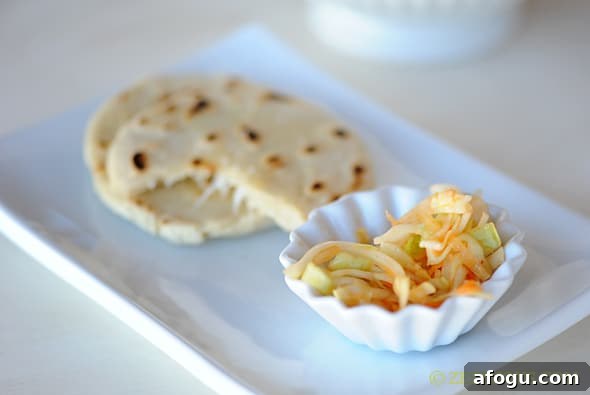
How to serve Salvadoran pupusas
Serve pupusas hot from the griddle with a generous side of curtido and optional salsa roja. Eat them immediately for the best texture and melty filling.
Storage
Keep leftovers in an airtight container in the refrigerator for up to 3 days. Freeze cooked pupusas for up to 3 months; thaw before reheating on a skillet over medium heat.
Frequently Asked Questions
Reheat on a warm skillet over medium heat until heated through. If frozen, thaw to room temperature first for best results.
No. Masa harina is treated with lime (nixtamalized), giving it the flavor and texture pupusa dough needs. Regular corn flour won’t produce the same result.
They originate from different regions and use different doughs. Gorditas often include wheat flour or lard and are cooked before filling; pupusas are sealed with the filling inside and cooked together. Arepas use pre-cooked cornmeal (masarepa) with a different texture.
More main dish recipes
- Grilled Garlic Pork Loin Salad
- Grilled Red, White and Blue New York Strip Steak
- Smoked Sausage Alfredo
- Grilled Zaatar Pork Loin
Latest Recipes
Ube Stuffed French Toast with King’s Hawaiian Rolls
Purple Ube Waffles
Chocolate Ganache Cake with Chocolate Truffle Icing