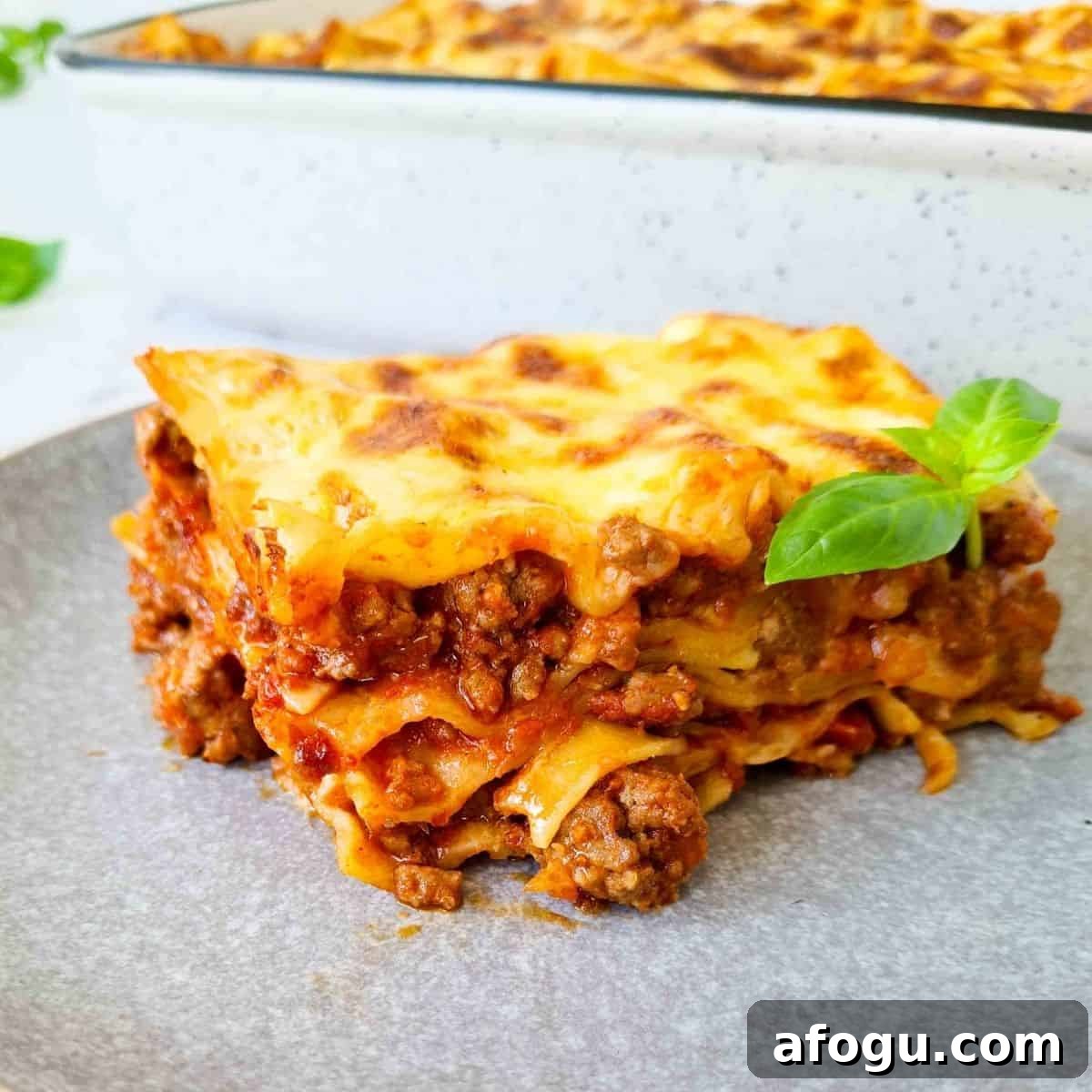
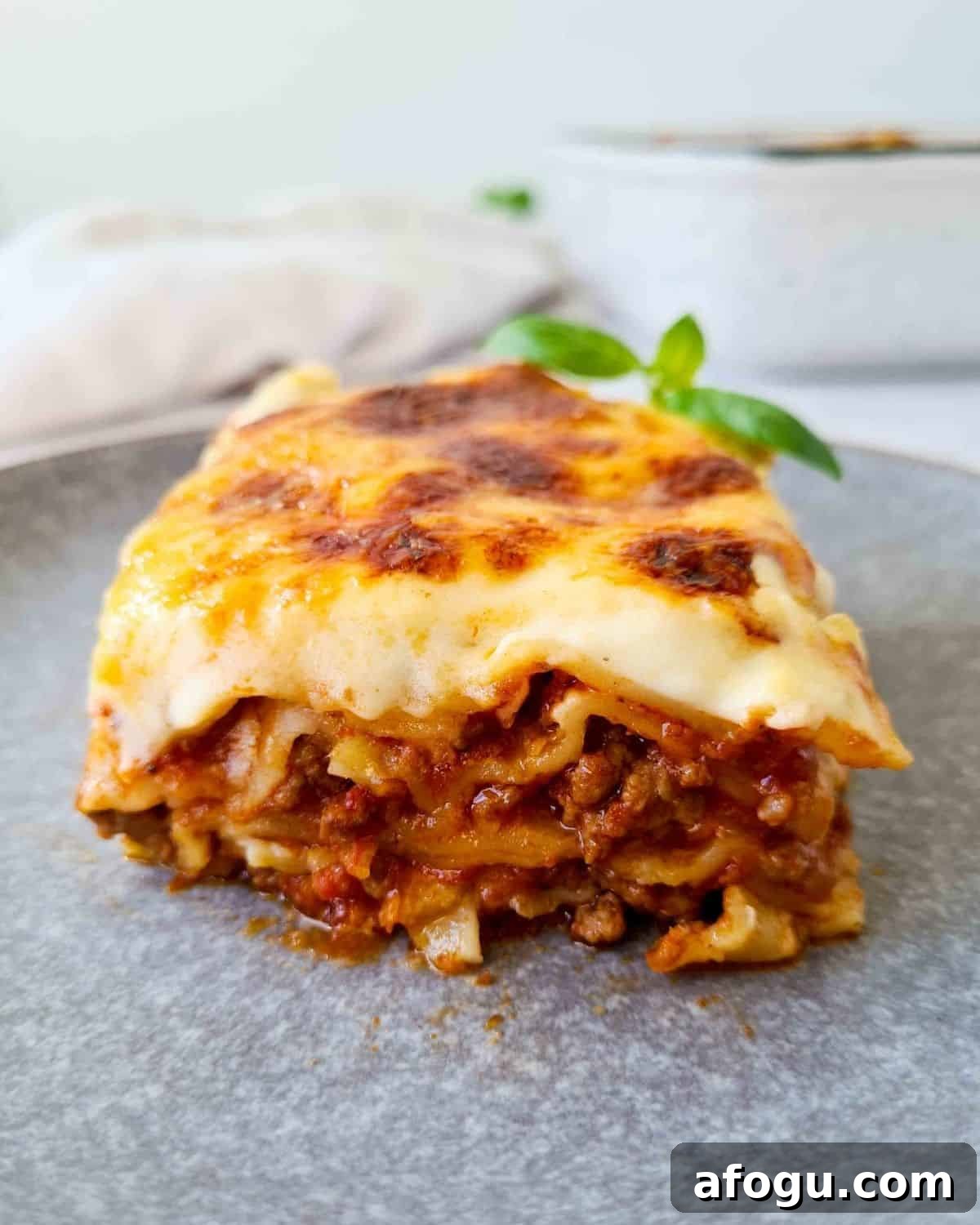
BIG flavours, rich, moreish and filling. The ultimate comfort food. There are many ways to make lasagna, and this is my family’s favourite. Homemade lasagna doesn’t need to be difficult or intimidating — I’ve laid out easy steps so you can make a crowd-pleasing lasagna every time.
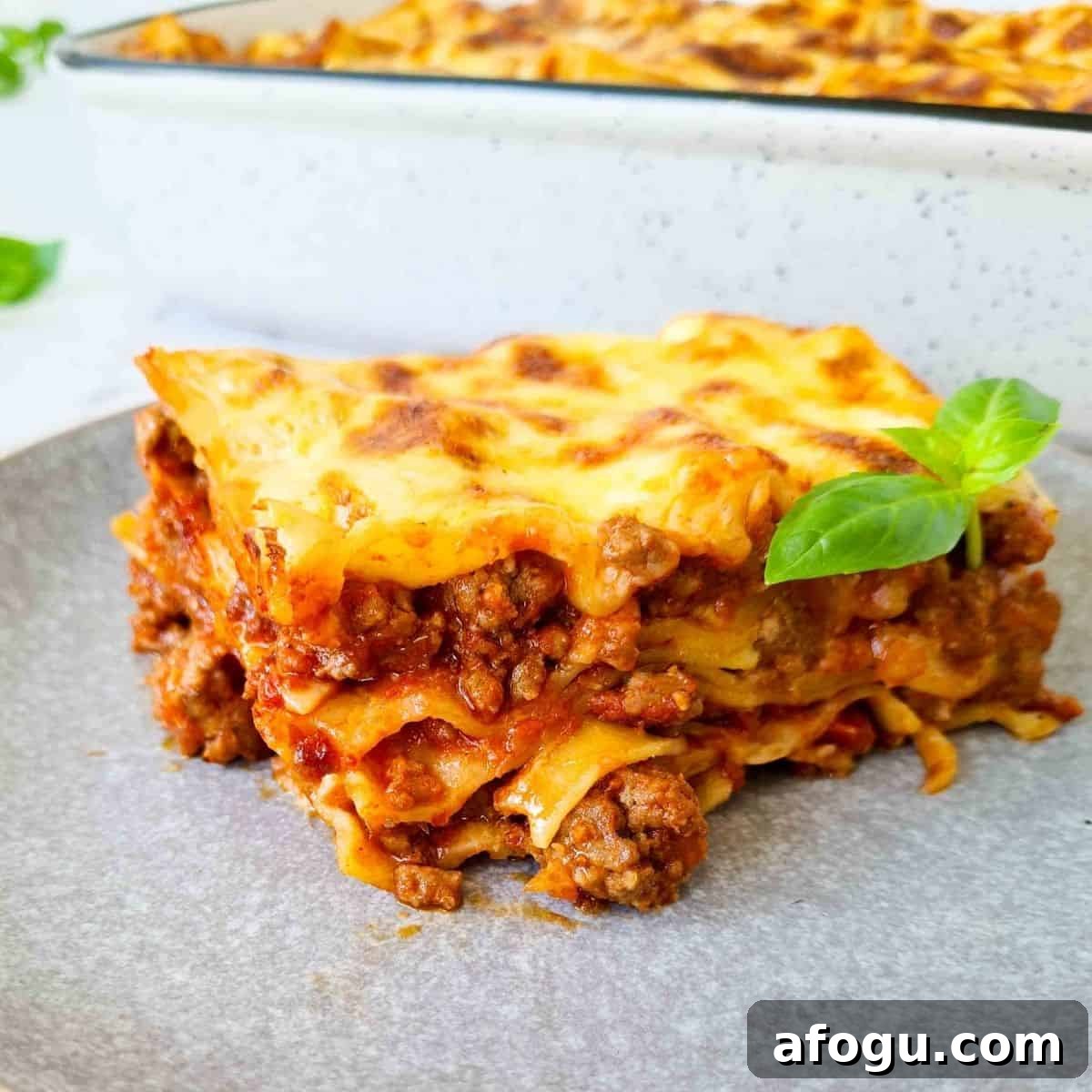
Store-bought versions are convenient, but homemade lets you load each layer with more meat and flavour. Look at those generous layers and chunky saucy meat!
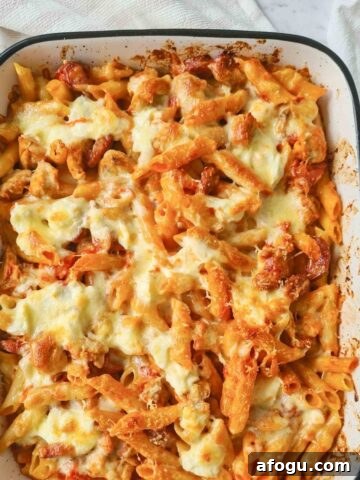
If you enjoy pasta bakes, try my Chicken and Chorizo Pasta Bake for bold flavour and melty cheese. If you love bolognese, my Spaghetti and Meatballs recipe makes juicy, hearty meatballs.
Ingredients
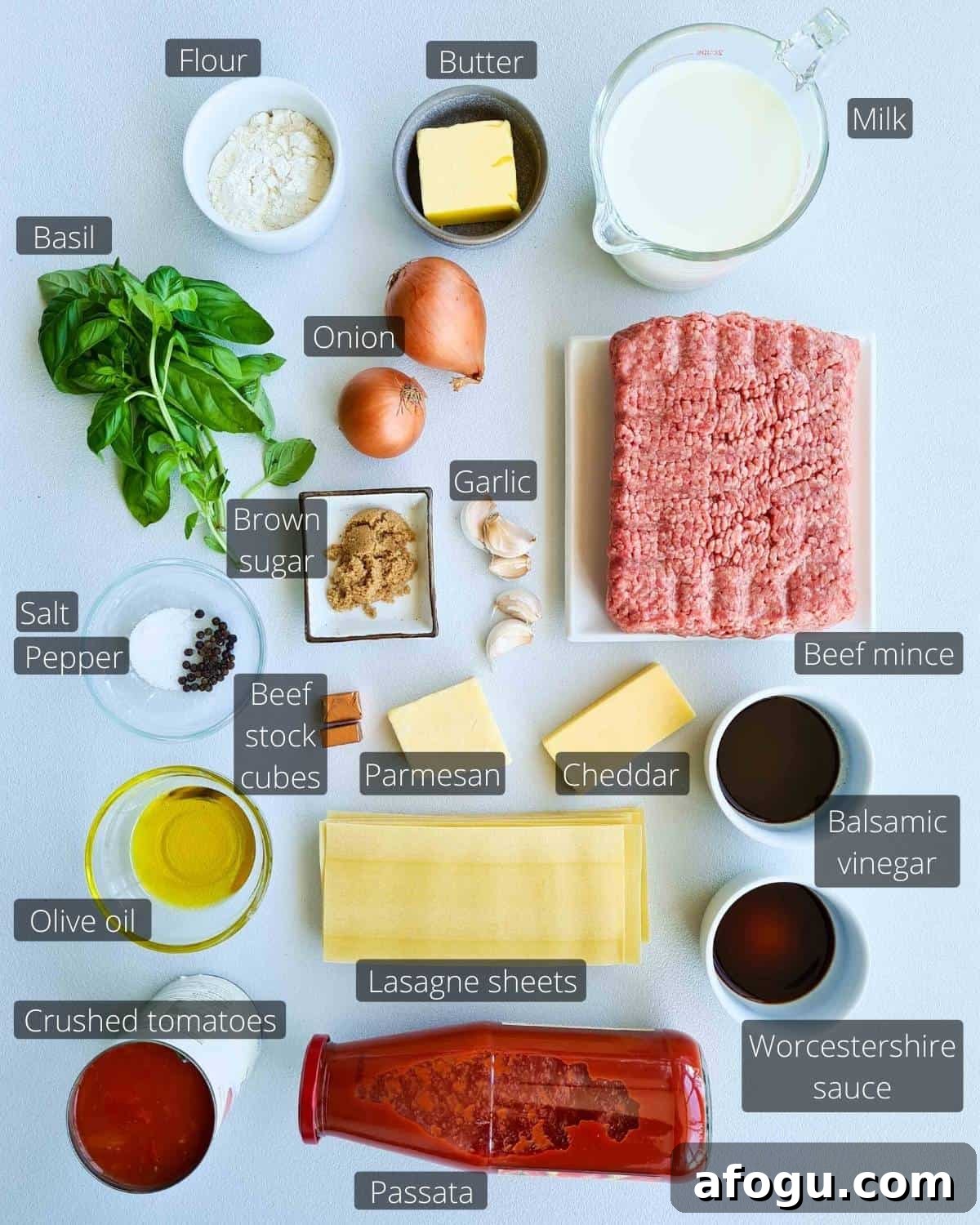
- Beef mince (ground beef) — I recommend a fattier mince for more flavour. You can also try:
- Half beef, half pork — adds sweetness and richness.
- Half beef, half sausage meat — gives a robust, seasoned flavour; Italian sausages work well.
- Passata (tomato purée) — thick and smooth, perfect for a rich bolognese.
- Fresh basil — use fresh leaves for the best aroma and authentic flavour.
- Balsamic vinegar — balances tomato acidity and adds depth.
- Worcestershire sauce — adds tangy, savoury depth in small amounts.
- Lasagne sheets — dried or fresh; I prefer dried for its firmer texture and pantry storage.
- Cheddar cheese — freshly grated cheddar works well in the bechamel; shredded mozzarella or other cheeses can be used, but this recipe doesn’t use ricotta.
Step by step instructions
There are three core parts to this lasagna:
- The bolognese (meat sauce)
- The bechamel (white) sauce
- Assembly and baking
Making the bolognese
This bolognese skips celery and carrots to reduce prep without losing flavour. The real flavour boosters are beef stock cubes, Worcestershire sauce and balsamic vinegar, balanced with a little sugar, salt and pepper.
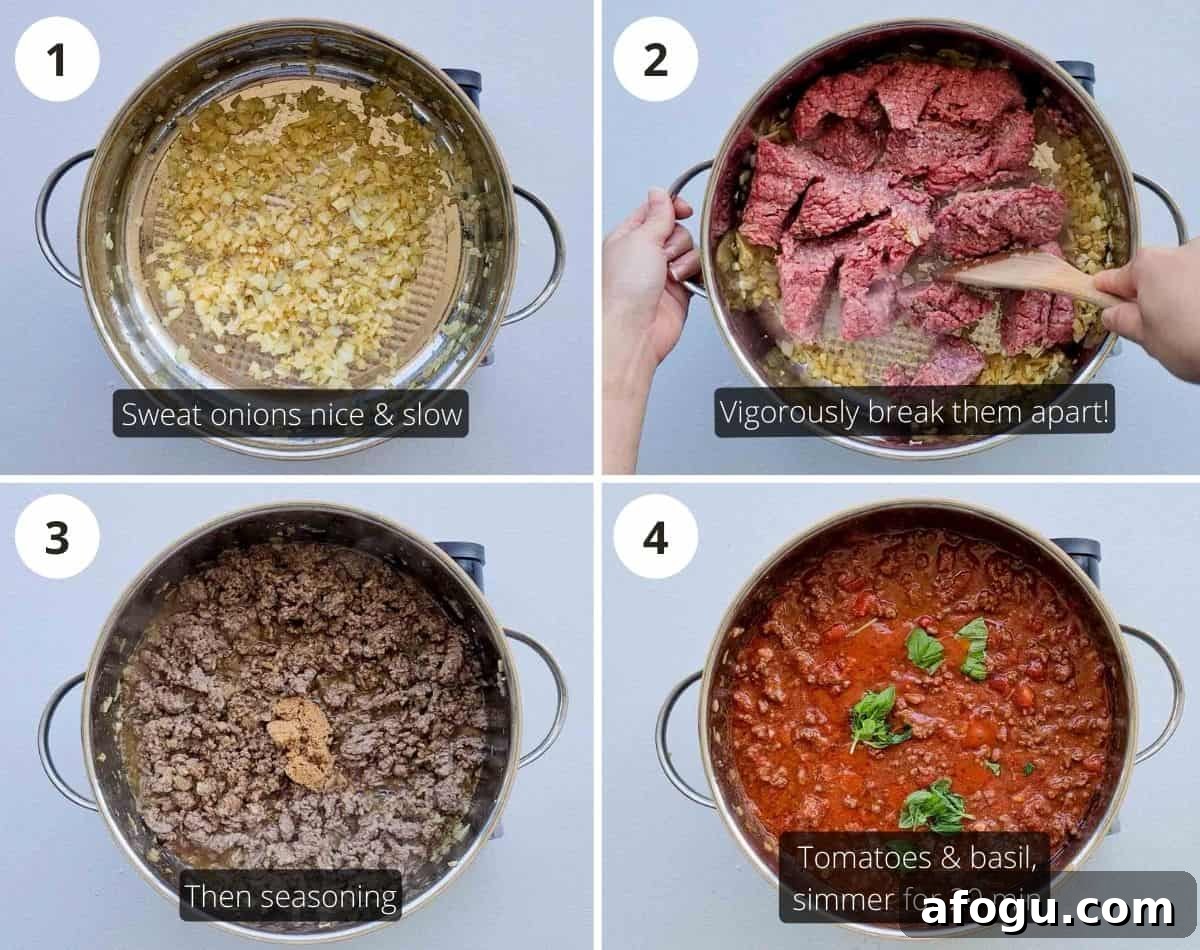
Start by sweating onions in olive oil over low heat for about 7 minutes until soft, then stir in garlic for a minute. Increase the heat, add the mince and break it up, browning it well to develop caramelisation. Add salt, pepper, Worcestershire sauce, balsamic vinegar and a spoonful of flour, sauté briefly, then add crushed tomatoes, passata, beef stock, sugar and torn basil. Bring to a boil, reduce to a simmer and cook uncovered for 20 minutes, stirring every 5 minutes to prevent sticking and to reduce the sauce.
Making the bechamel sauce
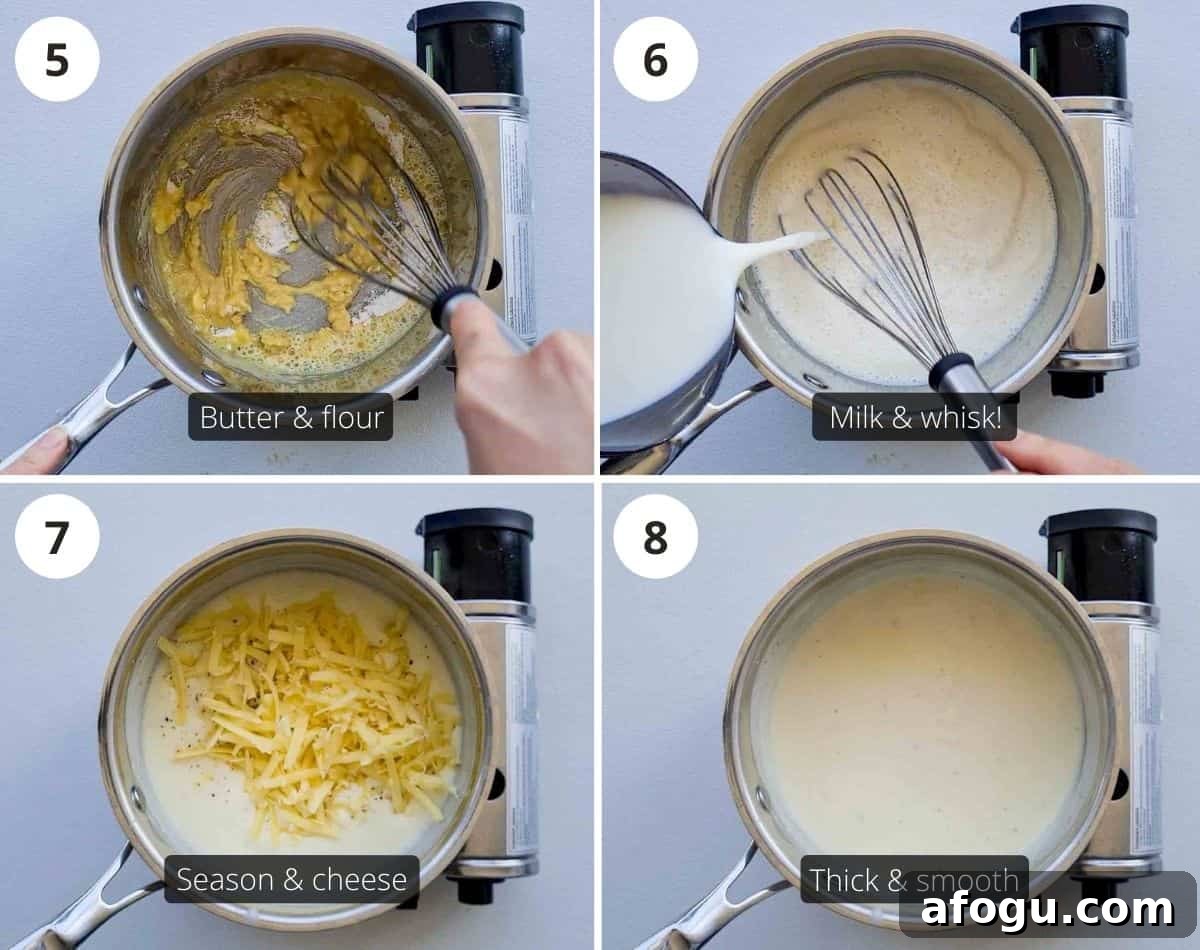
Use a whisk to keep the sauce smooth and lump-free. Melt butter in a small saucepan over medium heat, whisk in flour until a paste forms, then gradually add milk while whisking constantly. Continue whisking as the sauce thickens (about 6–7 minutes). When it coats the back of a spoon, remove from heat and stir in freshly grated cheddar, then season with salt and pepper.
Time to layer up!
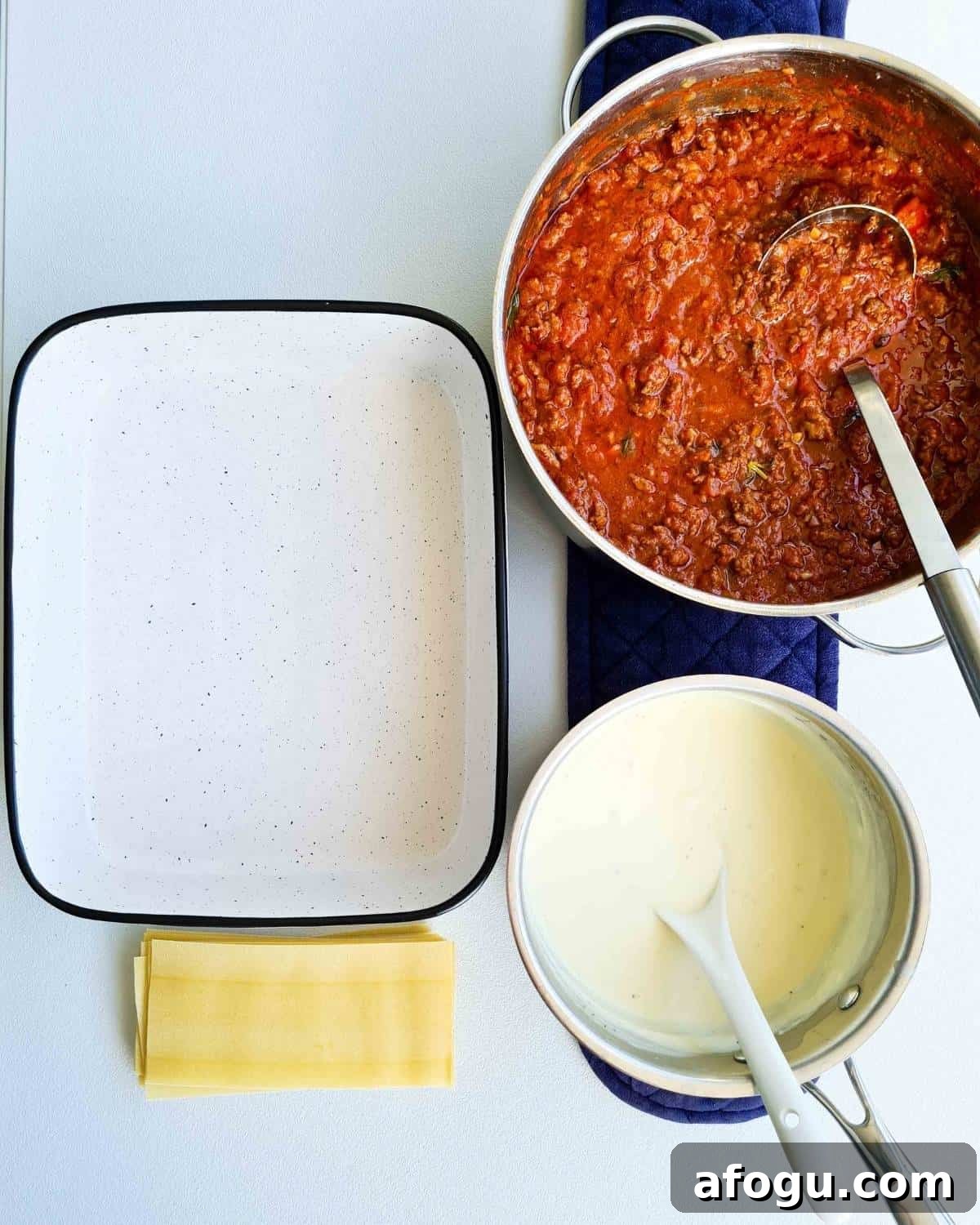
Set up your workstation with the bolognese, bechamel and lasagne sheets within easy reach. A standard baking dish (about 27x33cm / 9×13 inches) works well. This recipe makes four generous layers.
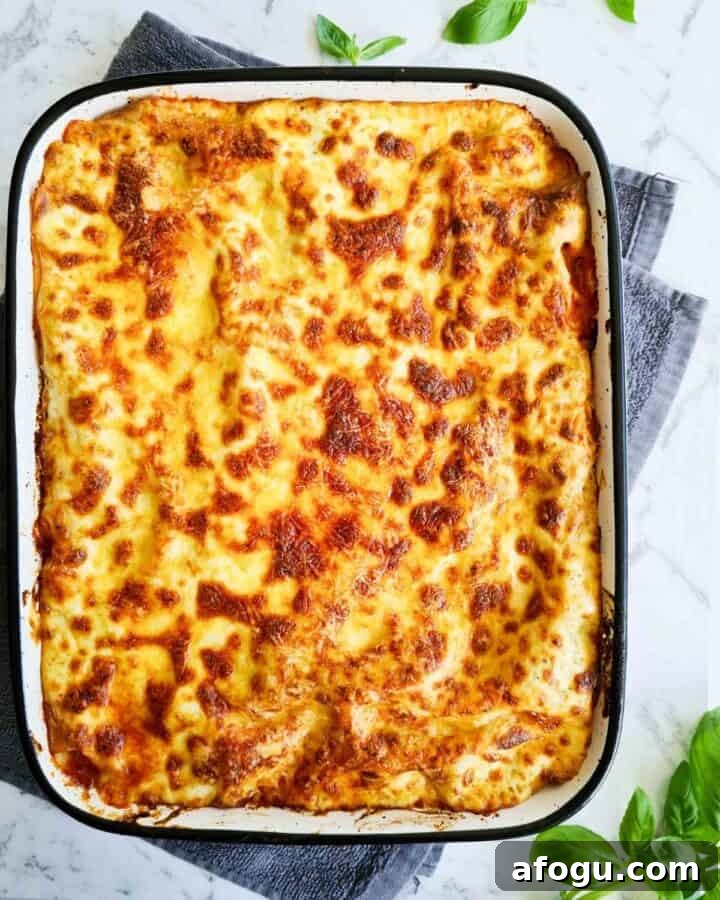
Coat the base of the dish with a thin layer of bolognese to prevent sticking, then place a single layer of lasagne sheets (break sheets to fill gaps). Spread a thin layer of bechamel over the sheets. Repeat three more times, using roughly a quarter of the bolognese for each layer — I make the first layer a little thinner so the remaining layers are meatier. After the final layer of sheets, pour the remaining bechamel over the top to form a thick top layer (about half the bechamel). Sprinkle freshly grated Parmesan across the top and bake at 180°C / 350°F for about 40 minutes, or until the top is golden and bubbling.
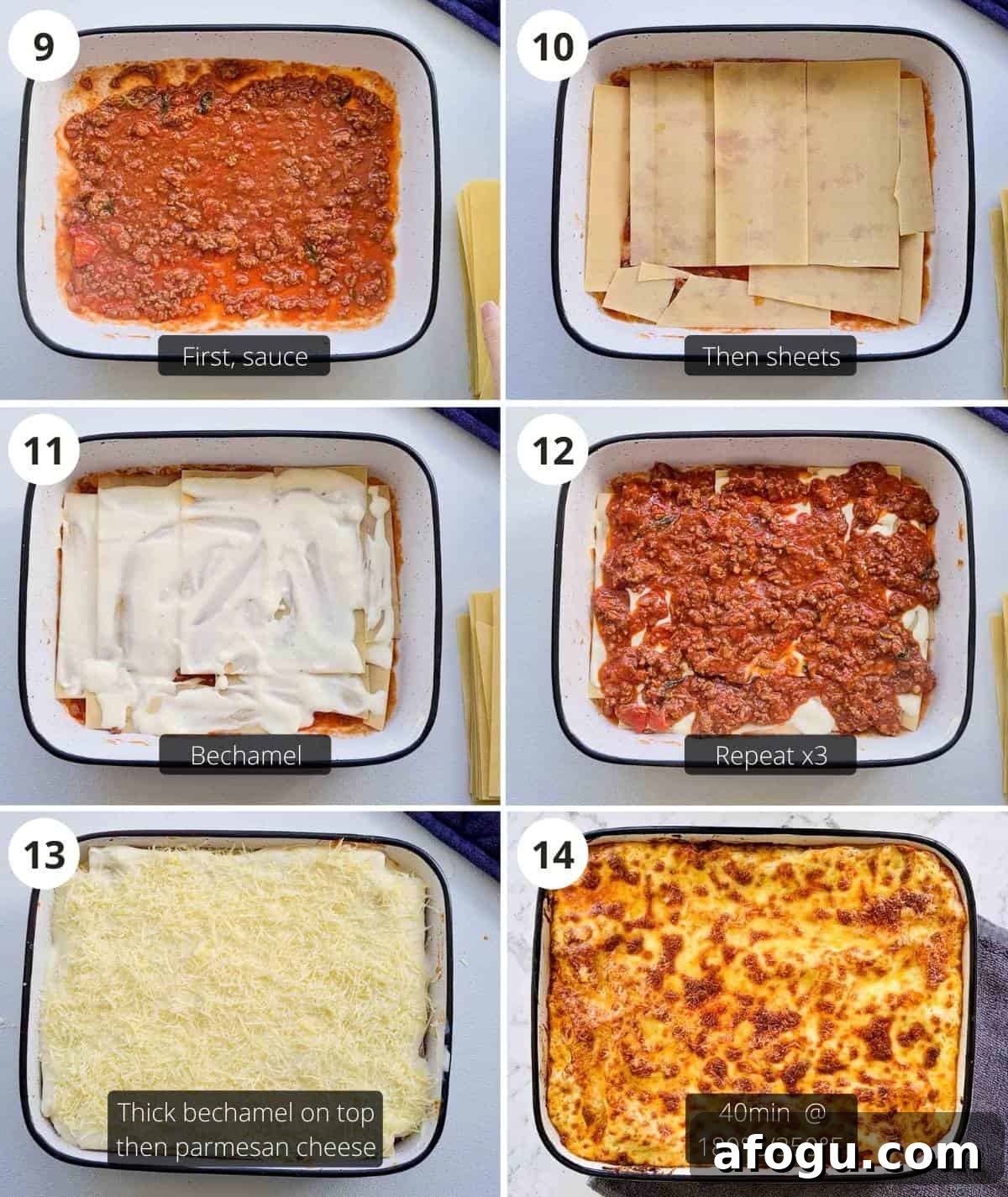
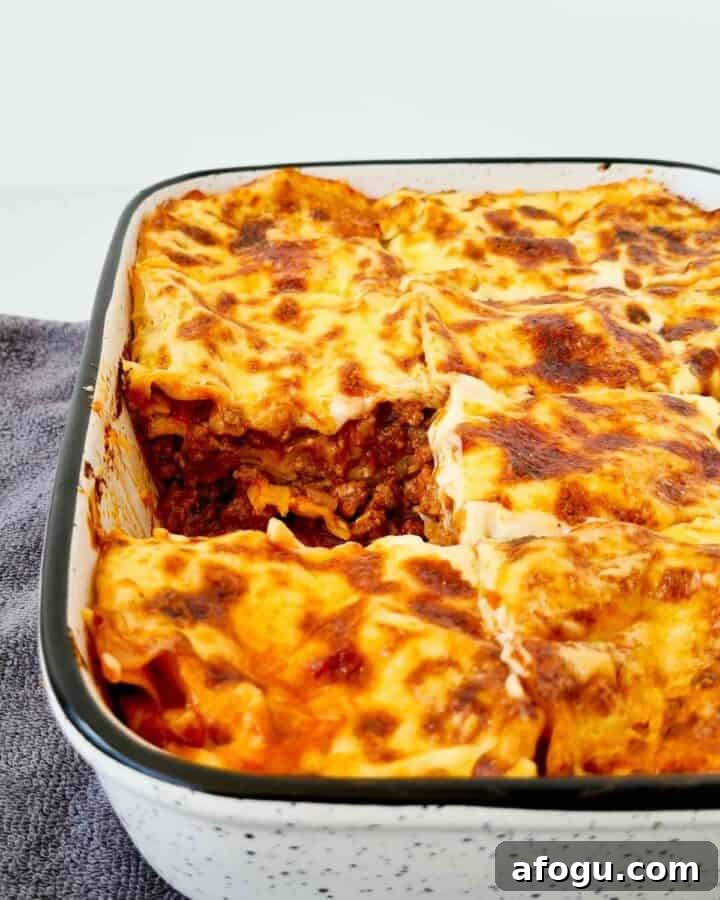
Why spread a thin bechamel layer between sheets? It adds creaminess, tones down tomato acidity, and the milk helps tenderise the meat, resulting in juicy layers. Rest the lasagna for 20 minutes before slicing — this is essential to achieve clean, defined layers.
Tips for making this perfect every time
- Grate cheese yourself. Pre-shredded cheese contains anti-caking agents that can affect melt and texture — freshly grated cheese melts better and tastes cleaner.
- If using fresh mozzarella, layer it in. Fresh mozzarella can turn grainy if melted into bechamel; grate hard mozzarella if you want it mixed in, or add fresh slices between layers instead.
- Simmer the bolognese uncovered and stir frequently. Stir every 5 minutes while simmering to prevent sticking and to reduce the sauce properly.
- Whisk the bechamel constantly while cooking. This prevents lumps and a scorched bottom.
- Rest for 20 minutes before serving. Letting the lasagna set gives perfect slices — rush it and the layers will collapse.
Good to know (FAQs)
After resting for 20 minutes, use a sharp knife to cut through the lasagna. Run the knife blade along the dish rim to loosen edges, then lift portions with a thin spatula or fish turner for clean slices.
Yes. Assemble the lasagna but don’t bake. Cover with baking paper and wrap tightly in cling film. Refrigerate for up to 3 days. Bring to room temperature for 30 minutes before baking.
Yes — use hard, grateable mozzarella if you want it melted into the bechamel. Fresh mozzarella is best layered between sheets rather than stirred into the bechamel, which can make it grainy.
Leftovers and freezing
Store leftovers in an airtight container in the fridge for up to 5 days, or freeze for up to 3 months. This recipe yields about 8 generous or 12 sensible servings — ideal for meal prep and freezing.
Made this recipe? Leave a comment and tell me how it turned out — I’d love to hear from you.
Happy cooking and eating! — Gen
📖 Recipe
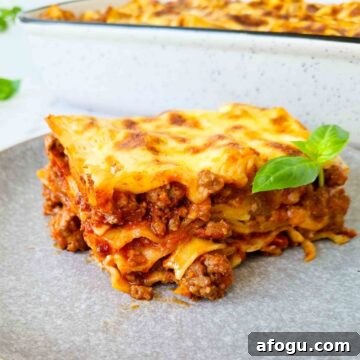
Lasagna
Ingredients
Bolognese (meat sauce)
- 1 kg beef mince (fatty)
- 2 onions, finely diced
- 5 cloves garlic, minced
- 1 can crushed tomatoes (425 g / 15 oz)
- 700 ml passata (tomato purée)
- 1 tbsp balsamic vinegar
- 1 tbsp Worcestershire sauce
- 1 tbsp brown sugar
- 2 beef stock cubes
- 1 tbsp plain flour
- 1 tbsp olive oil
- ½ tbsp salt
- 1 tsp black pepper
- Handful fresh basil leaves, torn
Bechamel sauce (white sauce)
- 4 cups milk
- ⅓ cup plain flour
- 60 g unsalted butter
- 1 cup cheddar cheese, freshly grated
- Salt and pepper, to taste
Lasagna
- 250 g dried lasagne sheets (or 375 g fresh)
- 1 cup Parmesan, freshly grated
Instructions
Making the bolognese
- Sweat onions in olive oil over low heat for about 7 minutes until soft and translucent. Stir in garlic for 1 minute.
- Add beef mince, break up and brown on high heat.
- Add salt, pepper, Worcestershire sauce, balsamic vinegar and flour. Sauté for about 1 minute.
- Reduce heat to medium, add crushed tomatoes, passata, crumbled beef stock cubes, sugar and torn basil. Bring to a boil, then simmer uncovered on low for 20 minutes, stirring every 5 minutes.
Making the bechamel
- Melt butter in a saucepan over medium heat. Whisk in flour to form a paste.
- Slowly add milk while whisking constantly. Continue whisking as the sauce thickens (about 6–7 minutes).
- When the sauce coats the back of a spoon, remove from heat, stir in grated cheese and season to taste. Set aside.
Assembling the lasagna
- Preheat oven to 180°C / 350°F. Use a standard baking dish (approx. 27×33 cm / 9×13 in).
- Spread a thin layer of bolognese on the base, add a single layer of lasagne sheets and spread a thin layer of bechamel on top.
- Spoon about ⅓ of the remaining bolognese for the next layer, add sheets and a thin bechamel layer. Repeat to create four layers total.
- After the final sheet layer, pour the remaining bechamel over the top (it should be the thickest layer) and sprinkle with Parmesan.
- Bake for 40 minutes or until the top is golden and blistered. Let rest for at least 20 minutes before cutting and serving.
Notes
Note 1. Other excellent meat combinations: half beef/half pork or beef mixed with sausage meat for extra flavour.
Note 2. Always grate cheese fresh — pre-shredded cheeses contain anti-caking agents that can affect melting and texture.
Note 3. To test bechamel thickness: dip a spoon into the sauce. If it coats the back of the spoon and you can draw a line through the sauce with your finger, it’s ready.
To serve neatly: rest for 20 minutes, cut with a sharp knife, loosen the edges with the knife blade and lift portions with a thin spatula.
Make ahead: assemble (don’t bake), cover with baking paper and cling wrap, refrigerate up to 3 days. Bring to room temperature 30 minutes before baking.
Leftovers: refrigerate up to 5 days or freeze up to 3 months in an airtight container.
Nutrition
Carbohydrates: 48.9 g |
Protein: 43 g
More pasta recipes to make
-
Creamy garlic prawn pasta
-
Baked Chicken and Broccoli Risoni
-
Easy Garlic Prawn Pasta
-
Chicken and chorizo pasta bake